News Summary
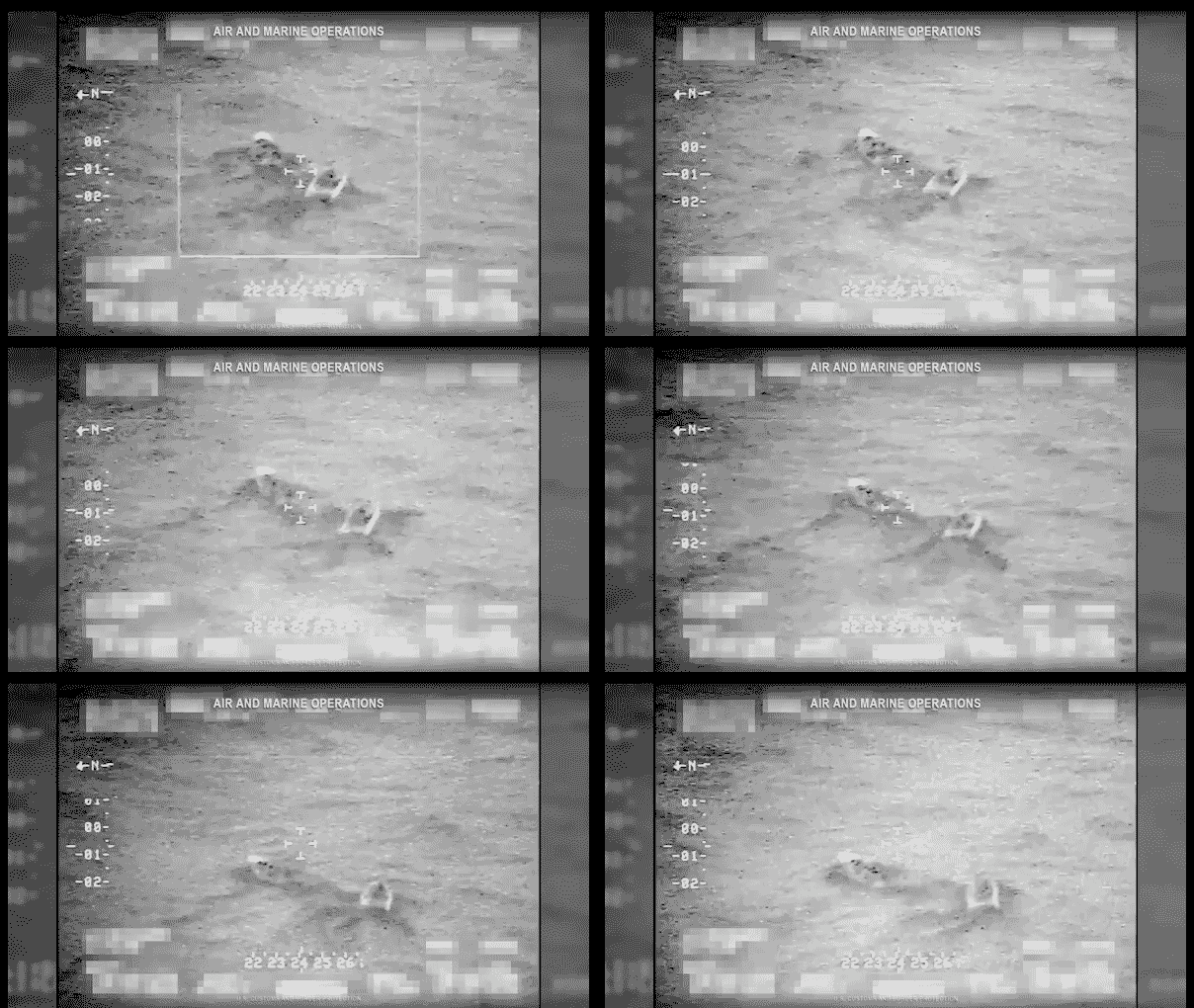
In the early hours of June 6, CBP Air and Marine Operations detected a 25–30-foot rustic vessel west of Desecheo Island, Puerto Rico. A CBP DHC-8 aircrew tracked the boat, which initially appeared disabled, and guided a U.S. Coast Guard cutter to the location. As the cutter approached, the vessel began moving toward Puerto Rico; the Coast Guard intercepted it around 2:00 a.m. Authorities detained all 40 people on board: 34 men and two women from the Dominican Republic, three men from Haiti, and one man from Uzbekistan. The migrants were apprehended by CBP and Coast Guard personnel; the article gives no further details about their medical condition, motives for travel, claims for asylum, or subsequent processing and disposition.
Biblical Reflection
The report is primarily operational and enforcement-focused: it records detection, interception, and detention without broader context about why people undertook the journey or what will happen next. That narrow framing serves public information but can obscure the human realities driving migration—poverty, violence, natural disaster, or persecution—and the legal and pastoral responsibilities that follow when people cross borders. From a Christian perspective, we are called both to uphold the rule of law and to show mercy to strangers. Truth requires acknowledging both legitimate public-safety and immigration-enforcement concerns and the dignity and vulnerability of those risking dangerous sea travel. Readers should be wary of implicit threat-framing that reduces people to statistics; likewise, calls for compassion should not ignore legal processes or public-safety needs. The article’s omission of follow-up outcomes (medical care, screenings, asylum access, repatriation plans) limits our ability to evaluate whether authorities acted with both justice and mercy.
Scripture in context
This outlook does not yet include contextual Scripture citations. Do not treat a general biblical theme as an exegetical conclusion.
Faithful Response
No prescribed response is offered. Consider the reflection prompts below in your own church context.
Reflection and Discussion
- 1What important facts are missing here (medical condition, reasons for travel, asylum screening, and final disposition), and how would those details change my understanding?
- 2Does the report frame the migrants primarily as security risks or as vulnerable people, and what assumptions does that framing encourage?
- 3How can Christians hold a posture that values lawful order while also advocating for humane treatment and timely access to due process for migrants?
Sources
Reporting links are evidence inputs; Sanctuary News' biblical reflection is commentary.
This outlook currently relies on fewer than two linked sources. Broaden verification before teaching from it.
- 1.Original reportprimary