News Summary
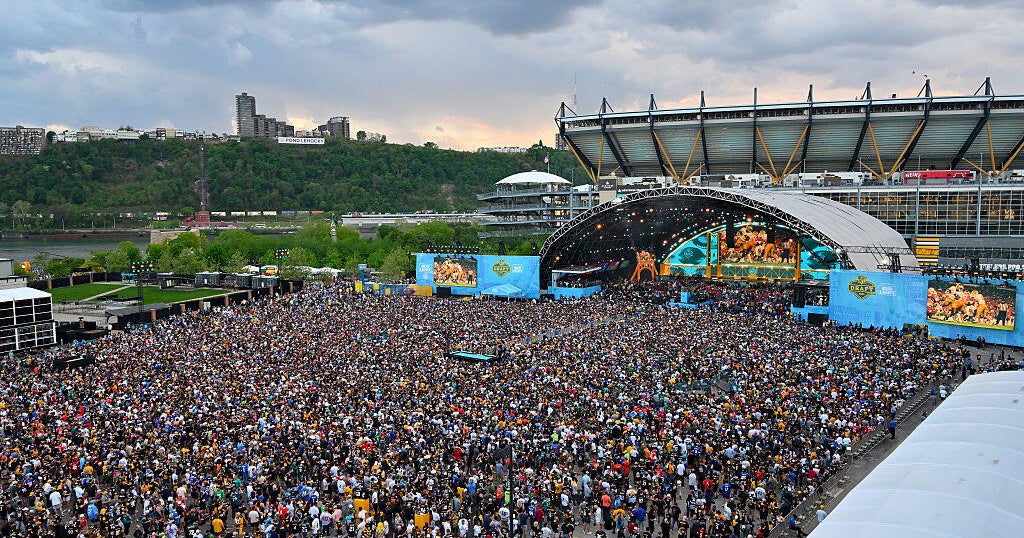
The 2026 NFL Draft opened in Pittsburgh with the Las Vegas Raiders selecting quarterback Fernando Mendoza No. 1 overall. Mendoza, the Heisman winner who led Indiana to its first national title, drew media attention as the Raiders’ new franchise QB and as a potential mentee of Raiders minority owner Tom Brady. Arizona selected Notre Dame running back Jeremiyah Love No. 3 overall; Love was the first running back taken in the top three since 2012. Another Notre Dame back, Jadarian Price, was taken with the No. 32 pick by the Seattle Seahawks. The Los Angeles Rams selected quarterback Ty Simpson at No. 13. Ohio State players accounted for four of the top 11 picks: Carnell Tate (No. 4, Tennessee), Arvell Reese (No. 5, New York Giants), Sonny Styles (No. 7, Washington), and Caleb Downs (No. 11, Dallas) — the last via a trade up with Miami. Kansas City traded up from No. 9 to No. 6 to select LSU cornerback Mansoor Delane. The New York Giants used a previously acquired No. 10 pick (from Cincinnati in exchange for Dexter Lawrence) on offensive tackle Francis Mauigoa. Miami edge rusher Rueben Bain Jr. slid to No. 15 and was selected by the Baltimore Ravens; reporting noted Bain had been cited for careless driving in a 2024 Florida crash but was not criminally charged. The Buffalo Bills traded back multiple times and finished without a first-round pick. NFL Commissioner Roger Goodell said opening night attendance at Acrisure Stadium was an estimated 320,000, a reported record.
Biblical Reflection
This article reports the spectacle and transactional reality of a major sporting event: talent evaluation, team needs, trades, and high-profile signings. From a Christian perspective, several themes stand out. First, the coverage naturally elevates celebrity (players, owners, legendary figures like Tom Brady) and success metrics (draft position, Heisman, championships). That emphasis can subtly encourage idolizing athletic achievement and celebrity status over character, service, and humility. Second, the draft is framed as a restart or redemption for franchises and figures — a reminder that sport often markets hope and renewal, which can be positive (mentorship, second chances) but also masks underlying pressures on young athletes. The article briefly notes a legal/ethical background (the Bain driving incident) but otherwise focuses on on-field value, illustrating a common media bias that privileges performance narratives over the full moral and human story. Biblically, we are called to prize character, stewardship of gifts, and care for vulnerable people (Philippians 2, Micah 6:8). Fans and faith communities should celebrate skill and teamwork, but also insist on integrity, advocate for player welfare, and resist treating athletes as ultimate role models or commodities. Praise and excitement for competition are not wrong in themselves, but Christians should ask whether admiration for sports displaces worship of God or ignores moral accountability. Finally, mentorship (Tom Brady’s role) can be a Gospel-like good if it promotes humility, wisdom, and service rather than merely producing successors to continued celebrity.
Scripture in context
This outlook does not yet include contextual Scripture citations. Do not treat a general biblical theme as an exegetical conclusion.
Faithful Response
No prescribed response is offered. Consider the reflection prompts below in your own church context.
Reflection and Discussion
- 1Whose story does the article prioritize—the athlete’s character, the team’s needs, or the entertainment value—and what does that reveal about our cultural values?
- 2How does the focus on celebrity mentorship and high draft status shape our perception of success, and where should humility and stewardship fit into that picture?
- 3What details are omitted (player well-being, long-term support systems, accountability) and how would including them change the narrative?
Sources
Reporting links are evidence inputs; Sanctuary News' biblical reflection is commentary.
This outlook currently relies on fewer than two linked sources. Broaden verification before teaching from it.
- 1.Original reportprimary