News Summary
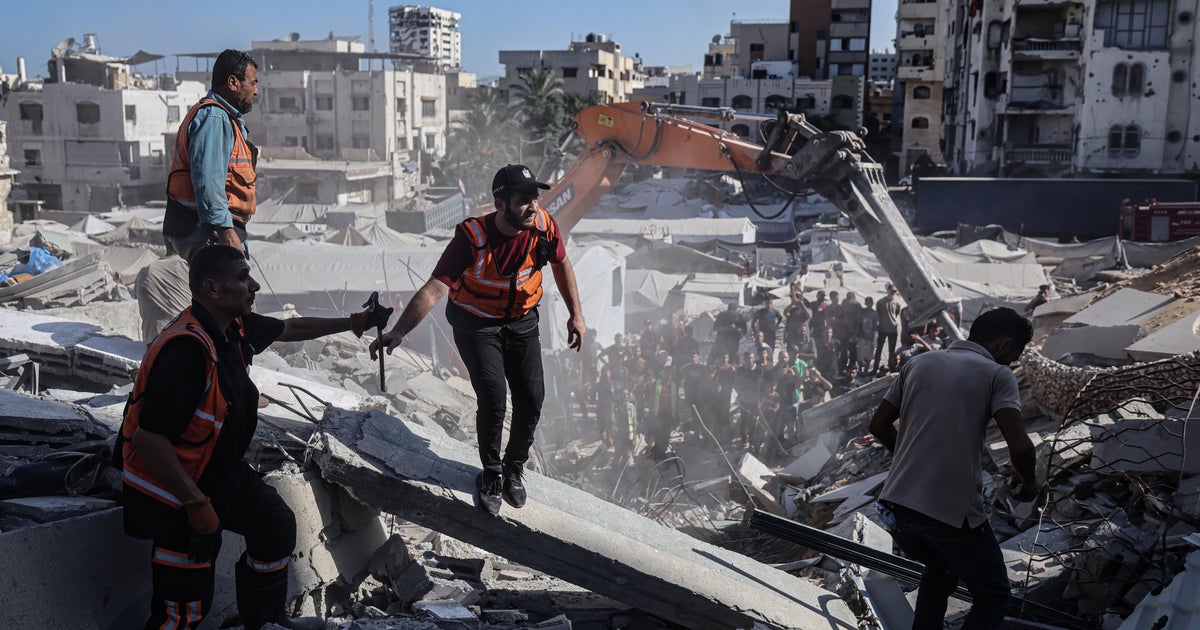
News reports from CBS and BBC say a war-damaged building in Gaza City that had been sheltering displaced families collapsed, killing at least 20 people. CBS attributes its account to Gaza health officials and says the structure was damaged months earlier by an Israeli strike and that victims were from six displaced families who had taken shelter there. BBC reports that roughly ten families had been living in the building and that 'dozens' may be missing beneath the rubble; the BBC excerpt supplied for this cluster does not include clear source attribution for those counts. Independent forensic or international-agency confirmation of casualty totals, the number missing, and the technical cause and timing of the structural failure were not provided in the cited reporting; those specifics remain provisional.
Source and Framing Analysis
Both outlets center civilian harm and humanitarian consequences but differ in attribution and some counts. CBS explicitly attributes casualty and causal claims to 'Gaza health officials,' stating the building had been damaged months earlier by an Israeli strike and that victims came from six displaced families. BBC emphasizes that about ten families had been sheltering in the building and that dozens may be missing beneath the rubble, but the supplied BBC excerpt lacks clear attribution for those figures. Neither report in the supplied excerpts includes independent engineering analysis or an international-agency confirmation of cause, timing, or final casualty totals. The consistent, strongly supported core claim is that a war-damaged building collapsed while being used as shelter and that at least 20 people were killed; discrepancies concern family counts, the scale of missing people, and sourcing for the prior-damage claim. Framing in both pieces is humanitarian rather than inflammatory, but the provisional nature of technical and casualty details should caution readers against definitive conclusions about responsibility or precise totals.
Free every morning
Get the Daily Briefing
The stories shaping today—sourced carefully and considered through Scripture. No outrage bait.
Confirm by email. Unsubscribe at any time.
How sources covered this story
Sanctuary separately assesses reporting quality and alignment with Christian virtues. The virtues assessment considers truthfulness, dignity, compassion, justice, peacemaking, humility, and care for vulnerable people. It does not assess a publisher's faith or reward religious language.
Compare 2 reports
Reporting 74/100Virtues 78/100
- Distinctive contribution
- Reports that 'dozens' are missing beneath the rubble and that roughly 10 families had been living in the building—details about missing persons and the number of household units sheltered there that are not present in the other excerpt.
- Framing
- Straightforward, human-centered phrasing emphasizing missing people and families sheltering in a damaged building; no explicit attribution in the excerpt and language is tentative ('dozens', 'some 10 families').
- Omissions or uncertainty
- No explicit attribution or source named for the 'dozens' missing or the 'some 10 families.' The excerpt does not state death toll, cause of the building damage, or timing. Its 'some 10 families' figure conflicts with the other excerpt's '6 displaced families.'
- Why these scores
- The excerpt is concise and gives useful human-scale detail (missing people, families, location). However, it lacks explicit sourcing or precise numbers and uses hedged language, limiting verifiability. For a short excerpt it responsibly conveys uncertainty but would benefit from attribution and more specific counts. The language is compassionate and human-focused (emphasizing missing people and families), avoids dehumanizing rhetoric, and does not sensationalize. The absence of clear sourcing reduces transparency slightly but the excerpt treats affected people with dignity.
Reporting 78/100Virtues 75/100
- Distinctive contribution
- Provides attribution ('Health officials in Gaza say') and links the collapse to prior damage from an Israeli strike months earlier; specifies that those killed were from six displaced families who had taken shelter there.
- Framing
- Attributive framing that ties the collapse to prior strike damage and cites local health officials. The phrasing presents cause and source rather than asserting an unattributed fact.
- Omissions or uncertainty
- The excerpt does not give an exact death toll in this text (the headline does, but was not assessed); it relies on local health officials without further corroboration in the excerpt. The count of '6 displaced families' conflicts with the other excerpt's 'some 10 families.' Timing and details of the earlier strike are not specified beyond 'months ago.'
- Why these scores
- The excerpt responsibly attributes the cause and the claim to a named source (health officials), which is good practice. It gives a plausible timeline ('months ago') and context (displaced families sheltering). Lacks numeric precision in the excerpt itself but includes key sourcing and causal detail. The attribution to health officials and focus on displaced families treats victims with dignity and avoids inflammatory language. The reference to an Israeli strike is attributed rather than asserted as proven fact. The excerpt is sober and avoids sensationalism, though fuller context would strengthen accountability and clarity.
Biblical Reflection
Truth and compassion must guide Christian response. Truth requires acknowledging limits in the reporting: casualty and missing-person figures and cause attributions are provisional and source-dependent. Compassion calls Christians to mourn with those who grieve, to support impartial humanitarian relief for displaced civilians, and to press for stronger protections for noncombatants. Public Christian witness should avoid exploiting victims for partisan ends; instead emphasize dignity for the dead, urgent aid for survivors, accountability for civilian protection, and sustained peacemaking. Practically, this outlook means praying for victims and responders, giving through reputable impartial relief channels, offering pastoral care and public lament within congregations, advocating for safe humanitarian access and independent inquiry where warranted, and approaching contested facts with humility.
Scripture in context
- 1Luke 10:25–37 (Parable of the Good Samaritan) — Jesus tells a story about a neighbor who shows practical mercy across social boundaries in response to a question about who qualifies as 'neighbor.' — This story calls Christians to practical, cross-boundary compassion for those who are injured and vulnerable; it motivates direct aid and hospitality to displaced civilians regardless of political identity.
- 2Matthew 5:9; Matthew 25:35–40 — Jesus blesses peacemakers and identifies caring for the hungry, thirsty, stranger, and prisoner with serving him. — These teachings press believers toward peacemaking and concrete acts of care for those who lack safety and shelter, reinforcing prayer for peace, material support for victims, and advocacy for civilian protection.
Faithful Response
Pray specifically for victims, survivors, rescuers and medical teams in Gaza City, asking for comfort, wisdom, and protection.
Give to vetted, impartial humanitarian organizations working in Gaza that provide shelter, medical care, food, and search-and-rescue support; prioritize agencies with transparent reporting and local partnerships.
Host congregational lament and prayer services that name human loss without using victims as political symbols; create opportunities for sustained, informed engagement rather than episodic outrage.
Encourage informed advocacy calling for stronger protections for civilians, safe humanitarian access, and independent investigations where appropriate; press public officials to support impartial relief efforts.
Discourage sharing unverified casualty or causal claims on social media; emphasize source attribution and the provisional nature of reported figures.
Free every morning
Get the Daily Briefing
The stories shaping today—sourced carefully and considered through Scripture. No outrage bait.
Confirm by email. Unsubscribe at any time.
Reflection and Discussion
- 1Which uncertainties in the reporting should make me hold my judgments lightly rather than assume full knowledge of responsibility or motive?
- 2How can my congregation balance calling for justice and accountability with providing immediate, nonpartisan relief to people who are suffering?
- 3In what concrete ways can I support victims and displaced families that respect their dignity and do not exploit their suffering for political ends?
Sources
Reporting links are evidence inputs; Sanctuary News' biblical reflection is commentary.
- 1.War-damaged Gaza building collapses, killing at least 20 peopleprimary_reporting
- 2.At least 20 killed and dozens missing after war-damaged Gaza building collapsesadditional_reporting