A little more detail
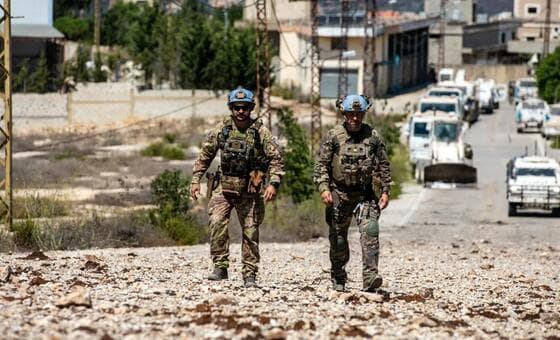
The UN peacekeeping chief told UN News that the withdrawal of UN "Blue Helmets" from Lebanon and Western Sahara risks leaving a dangerous security vacuum. The article names those two missions specifically and reports an active division within the Security Council over whether and how to replace them.
The UN News piece does not supply troop numbers, exact withdrawal timetables, which Council members oppose replacements, or detailed evidence linking withdrawals to specific security incidents. The warning is presented as the UN leadership’s assessment rather than a fully independently corroborated operational report.
Source and Framing Analysis
Source: a single UN News report that quotes the UN peacekeeping chief. Framing emphasizes the risk language used by UN leadership and flags a diplomatic split in the Security Council. The piece is authoritative about the chief’s warning but short on operational details (no troop counts, timelines, or named Council positions). That limits how far readers can infer concrete short-term outcomes. The reporting is cautious and properly attributed but relies on one institutional voice.
How sources covered this story
This section compares the evidence and framing in linked reports. The Christian assessment above addresses the conduct described in the story; it does not grade a journalist’s faith or the morality of covering an event.
Compare 1 reports
Reporting 78/100
- Distinctive contribution
- Specifically names the two missions (Lebanon and Western Sahara), reports the UN chief’s warning about a potential security vacuum, and notes an active division within the Security Council over replacement options.
- Framing
- Cautionary and authoritative: frames the development as a risk (security vacuum) conveyed by the UN peacekeeping chief and highlights political division in the Security Council.
- Omissions or uncertainty
- No details on timing or scale of withdrawals, which troop contingents are leaving, what factors caused the departures, what replacement options are under consideration, or evidence supporting the claimed risk.
- Why these scores
- Clear attribution to the UN peacekeeping chief and concise presentation of the central concern and diplomatic division. Uses cautious language and does not overstate conclusions. Limited in specificity and context (timelines, actors, evidence), but appropriate for a short news lead.
Christian commentary · About the conduct described in this story
Biblical Reflection
calls Christians to value peacemaking and care for neighbors in conflict. In context, Jesus blesses those who actively pursue reconciliation, not those who step away when people are vulnerable.
Practically, this means praying for civilians and peacekeepers, supporting credible humanitarian and reconciliation work, and urging leaders toward responsible plans that preserve safety rather than leaving a protection gap.
Scripture in context
- 1 — Part of the Sermon on the Mount where Jesus blesses those who pursue reconciliation and describes the character of life in God's kingdom. — This passage invites Christians to value peacemaking and neighbor-care; it frames concern when withdrawal of protective presence might leave vulnerable people exposed.
A suggested response for readers, separate from the assessment above.
Faithful Response
Pray for affected civilians and peacekeepers, give to vetted humanitarian or reconciliation groups, and contact relevant policymakers urging careful, peace-preserving plans.
Reflection and Discussion
- 1How should our prayers and advocacy respond when peacekeeping forces withdraw?
- 2What practical support can our community offer people affected by reduced international protection?
Sources
Reporting links are evidence inputs; Sanctuary News' biblical reflection is commentary.
This is a developing, single-source report. Details may change as more reporting becomes available.
- 1.UN peacekeeping chief warns of ‘security vacuum’ as Blue Helmets leave Lebanon and Western Saharaofficial_document