News Summary
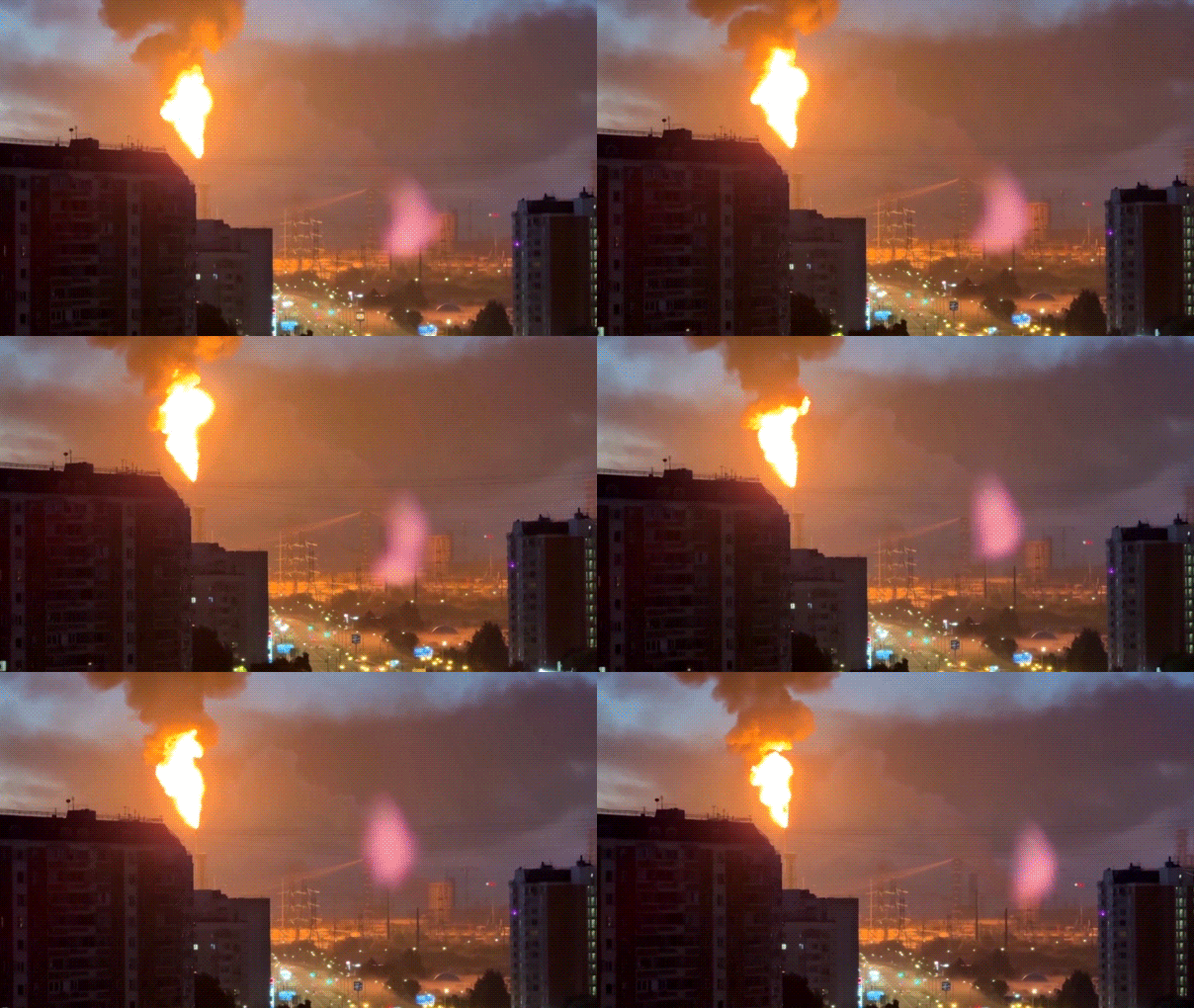
Multiple outlets report that on Sept. 20, 2026 a wave of more than 1,000 aerial weapons — described variously as drones or as drones and missiles — was launched at targets in Russia, with hundreds directed at the Moscow area. Moscow officials called the incident the largest attack on the capital to date. Reported damage included a major oil refinery and at least one residential building. Russian/local authorities cited by media reported two people killed and about 20 wounded in the wider Moscow region. Reporting in the supplied sources relies heavily on statements from Russian and municipal officials; independent on‑the‑ground verification, a detailed ordnance breakdown, and any public Ukrainian comment are not documented in the supplied reporting.
Source and Framing Analysis
Three mainstream outlets (Fox News, CBS, NPR) corroborate the core claim of a very large wave of aerial weapons striking Russian territory and the Moscow area, but all three draw primarily on Russian and municipal official statements. Distinct contributions: Fox News used the explicit phrasing 'drones and missiles' and linked the timing to the final day of Russian voting; CBS supplied casualty figures (two killed, about 20 wounded) attributed to a local official; NPR quoted Moscow's mayor calling the wave the 'largest ever' and noted damage to both an oil refinery and a residential building. Framing patterns to note: the evaluative claim 'largest' is presented as an attribution to Moscow officials and may reflect political rhetoric; some accounts foreground scale and infrastructure damage while others foreground human casualties. Key reporting uncertainties remain in the supplied material: the exact ordnance breakdown (drones versus missiles), independent verification of the ordnance count and damage, fuller casualty identification, and any documented Ukrainian statement taking responsibility or commenting on the operation.
Free every morning
Get the Daily Briefing
The stories shaping today—sourced carefully and considered through Scripture. No outrage bait.
Confirm by email. Unsubscribe at any time.
How sources covered this story
Sanctuary separately assesses reporting quality and alignment with Christian virtues. The virtues assessment considers truthfulness, dignity, compassion, justice, peacemaking, humility, and care for vulnerable people. It does not assess a publisher's faith or reward religious language.
Compare 3 reports
Reporting 82/100Virtues 82/100
- Distinctive contribution
- Quotes Moscow's mayor calling it the 'largest ever' attack on the capital and notes damage to a residential building in addition to an oil refinery, thereby highlighting civilian harm and an official local characterization of the event.
- Framing
- Frames the event through local official characterization and noted damage to both industrial and residential targets, balancing authority-sourced description with attention to civilian property impacts.
- Omissions or uncertainty
- Excerpt does not provide independent verification of the mayor's claims, lacks casualty figures, does not identify the extent of residential damage or whether civilians were harmed, and does not indicate Ukrainian statements or objectives.
- Why these scores
- The excerpt attributes a strong descriptive claim to a named local official (the mayor) and notes specific types of damage (refinery and residential building), which is responsible and informative. It still leaves open verification and casualty details, but attribution and inclusion of civilian-impact detail improve its quality. By citing a local official and calling out damage to a residential building, the excerpt shows attention to human impact and dignity and avoids sensationalism. The explicit acknowledgment of civilian infrastructure harm aligns with concern for vulnerable people and truthful attribution.
Reporting 78/100Virtues 75/100
- Distinctive contribution
- Reports the human toll (two dead, 20 wounded) and attributes that figure to a local official, giving specific casualty data missing from the other supplied excerpts.
- Framing
- Frames the event through human consequences by reporting casualties, which foregrounds civilian impact rather than only scale or infrastructure damage.
- Omissions or uncertainty
- The excerpt does not name the local official, lacks detail on where the casualties occurred, whether they were military or civilian, the timing of the figures, or independent verification of the toll.
- Why these scores
- The excerpt provides a specific casualty figure with explicit attribution to a local official, which is responsible reporting practice. It would be stronger with the official's identity, corroboration, and more detail about circumstances, but as a brief report it responsibly conveys key human-impact information. Reporting centers human harm with clear attribution, demonstrating attention to human dignity and accountability. The lack of additional detail or named source slightly reduces the score, but the focus on casualties reflects compassion and concern for vulnerable people.
Reporting 68/100Virtues 60/100
- Distinctive contribution
- Confirms reported scale (over 1,000 drones/missiles) and notes damage to a major oil refinery while attributing the claim of it being the "largest" to Russian characterization.
- Framing
- Frames the event primarily by scale and infrastructural damage, using the phrasing that it was "what Russia calls the largest attack of the war," which highlights the Russian perspective on significance.
- Omissions or uncertainty
- Excerpt gives no named sources for the drone count, no casualty figures or details, no independent verification of damage, no timeline or precise locations, and no Ukrainian confirmation or stated objectives.
- Why these scores
- The excerpt provides a clear, concise claim about scale and an infrastructure impact and attributes the 'largest attack' characterization to Russian sources, which is appropriate. It lacks named sources for the drone/missile tally, independent verification, casualty detail, and contextual specifics (timing, precise locations), limiting its completeness. The language is not dehumanizing and attributes claims, but the excerpt emphasizes scale/infrastructure over direct attention to civilian harm or suffering; it provides limited evidence of compassion or attention to vulnerable people and omits casualty/context details that would better reflect concern for human dignity.
Biblical Reflection
Christians should respond first with sorrow for human suffering, seeking truth without triumphalism and pursuing mercy, justice, peacemaking, humility, and care for vulnerable neighbors. Relevant biblical wisdom calls believers to mourn with those who mourn, to value peacemakers, and to avoid repaying evil for evil — guiding a posture of lament, protection for noncombatants, and restraint in public words and actions. Practically this means grieving loss, pressing for verified information before amplifying claims, supporting impartial humanitarian relief that aids civilians, advocating for measures that reduce harm to noncombatants, and cultivating church practices that sustain dignity and care for displaced or wounded people.
Scripture in context
- 1Matthew 5:9 — In the Sermon on the Mount Jesus blesses peacemakers and frames peacemaking as a mark of God's people in a world of competing powers. — This passage calls Christians to value and work for peace amid violent conflict: to mourn losses, to resist gloating over an enemy's suffering, and to pursue reconciliation and protection for the innocent where possible.
- 2Romans 12:17-18 — Paul instructs Christians not to repay evil for evil and to live peaceably with others as much as it depends on them. — This text urges restraint and prudence: believers should avoid language or actions that escalate violence and should seek avenues to foster peace and practical care for those harmed.
Faithful Response
Pray specifically for those killed, wounded, displaced, and for first responders and medical personnel; lament human loss without partisan triumphalism.
Support vetted humanitarian organizations providing medical care, shelter, and relief to civilians affected by the conflict; prioritize aid that helps noncombatants.
Avoid sharing unverified claims or sensational framing; favor reports that clearly attribute statements and indicate verification limits.
Encourage local church ministries to prepare to assist refugees and to offer trauma‑sensitive hospitality; provide forums for measured, compassionate conversation rather than partisan debate.
Advocate with civic and denominational leaders for diplomatic efforts and protections that reduce harm to civilians and create space for humanitarian access.
Free every morning
Get the Daily Briefing
The stories shaping today—sourced carefully and considered through Scripture. No outrage bait.
Confirm by email. Unsubscribe at any time.
Reflection and Discussion
- 1How does love for neighbor shape what we say and do when we hear reports of attacks that cause civilian harm?
- 2What standards of evidence should we require before amplifying claims about scale, responsibility, or motive in a conflict?
- 3In what concrete ways can our congregation relieve suffering at home and support impartial humanitarian work abroad while maintaining a commitment to truth and peace?
Sources
Reporting links are evidence inputs; Sanctuary News' biblical reflection is commentary.
- 1.Ukraine targets Russia with over 1,000 drones, killing 2 as Moscow holds last day of electionsprimary_reporting
- 2.Ukraine launches 1,000 drones at Russia, including hundreds fired at Moscowadditional_reporting
- 3.Ukraine fires over 1,000 drones at Russia, including hundreds launched at Moscowadditional_reporting