News Summary
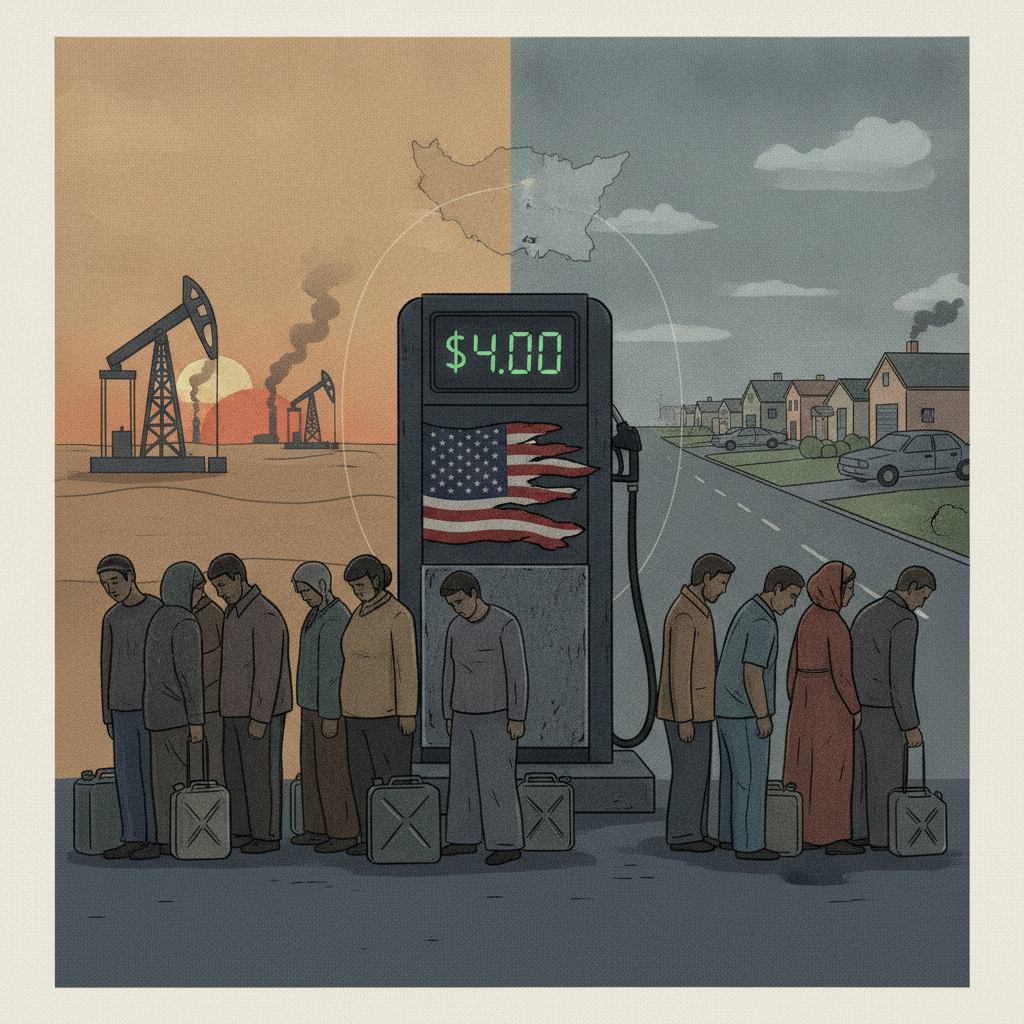
Reported facts: AAA data cited by national reporting put the U.S. national average for a gallon of regular gasoline at about $4.00 on July 20, 2026 (CBS reports $4.003). Both PBS and CBS frame the price move alongside recent escalation in military actions involving the U.S. and Iran. Attributed claims: the articles attribute an upward movement in gasoline prices to the escalation between the U.S. and Iran. Uncertainty: the reporting does not supply detailed oil-market data (e.g., crude price moves, supply disruptions, or inventory statistics) that would definitively measure how much of the price change is directly caused by the specific military actions.
Source and Framing Analysis
The two supplied reports (PBS and CBS) agree on the AAA national-average figure and place that number in the context of rising geopolitical tensions. The framing — putting the price headline next to U.S.-Iran attacks — is newsworthy but risks implying a simple, immediate causal relationship. Oil and gasoline prices respond to a mix of factors (global crude prices, refinery output, inventories, seasonal demand, OPEC decisions, market expectations, and supply disruptions). The articles do not provide the market-level data needed to quantify how much the reported attacks contributed to the price move.
Free every morning
Get the Daily Briefing
The stories shaping today—sourced carefully and considered through Scripture. No outrage bait.
Confirm by email. Unsubscribe at any time.
Biblical Reflection
The article highlights a real economic burden for many motorists and ties it to international instability. Factually, the reported AAA national average is supported by independent reporting; the broader causal link between military actions and oil/gasoline prices is plausible but complex and influenced by multiple market and policy factors. From a Christian pastoral perspective, this story should prompt concern for neighbors who will feel immediate financial strain, encourage prudent stewardship, and call Christians to pray and work for peace. Christians should also be cautious about simplistic cause-and-effect claims in media framing and resist allowing economic discomfort to harden hearts toward scapegoating or escalation rhetoric.
Scripture in context
- 1Luke 10:25-37 (Parable of the Good Samaritan) — Jesus tells a parable in response to a question about 'who is my neighbor,' using a wounded man and a Samaritan’s merciful care to redefine neighbor-love beyond ethnic and religious boundaries. — The passage challenges Christians to practical compassion for those harmed by circumstances — whether personal injury or rising costs because of distant conflicts — and to cross social boundaries to provide aid and care.
Faithful Response
Pray for de-escalation of conflict and for people who are economically harmed by rising prices.
Exercise practical stewardship: reduce unnecessary travel, lower household fuel use, and adjust budgets while helping neighbors with immediate needs.
Give or volunteer with local charities and church benevolence funds that assist with transportation, fuel, or utility needs.
Seek reliable market information before joining or amplifying simplified causal claims about complex economic changes.
Free every morning
Get the Daily Briefing
The stories shaping today—sourced carefully and considered through Scripture. No outrage bait.
Confirm by email. Unsubscribe at any time.
Reflection and Discussion
- 1Who in our local community bears the greatest burden from rising fuel prices, and what practical steps can we take to help?
- 2How do we evaluate media narratives that link a single economic number to a geopolitical event, and how does that evaluation affect our prayers and actions?
- 3Are our personal and communal responses shaped more by fear, by love for neighbor, or by political alignment — and how should that shape change?
Sources
Reporting links are evidence inputs; Sanctuary News' biblical reflection is commentary.
- 1.U.S. gas prices hit an average of $4 a gallon again as the U.S. and Iran launch attacksprimary_reporting
- 2.Gas prices top $4 a gallon again as U.S.-Iran conflict escalatesadditional_reporting