News Summary
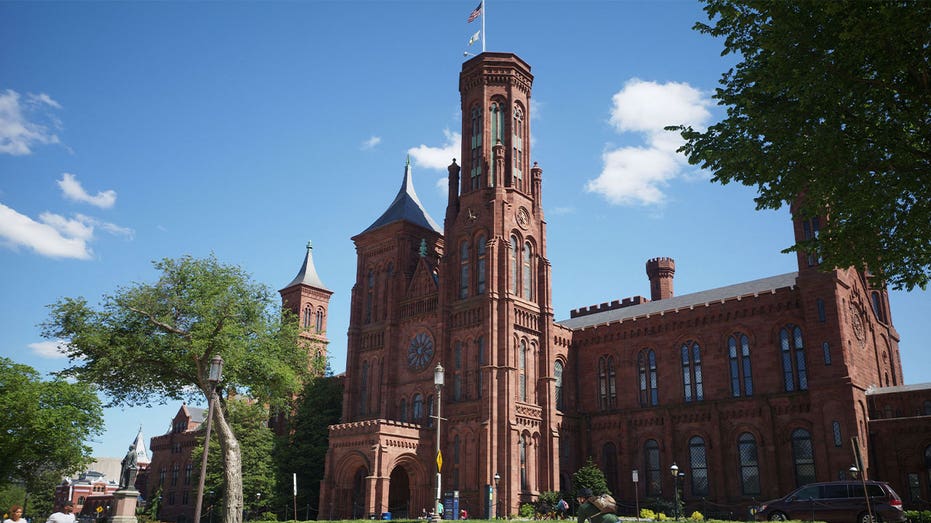
Reported facts: President Trump issued an order directing federal officials to install signs on federal sidewalks outside the Smithsonian’s National Museum of American History that will point visitors to a White House report. Attributed claims: The administration says the report identifies "inaccurate" information in the museum’s depiction of American history. Uncertainties: The text of the executive order, the exact wording and placement of the signs, the content and scope of the White House report, the Smithsonian’s response, and any legal or administrative steps required to implement the signage were not provided in the articles.
Source and Framing Analysis
Two independent mainstream outlets (Fox News and CBS News) reported the same central action: an order to place signs directing visitors to a White House report. Both reports emphasize the administration's contention that the museum presents inaccuracies. Neither source published the full executive order text or the White House report content in the supplied articles, so readers lack primary-source detail. The framing focuses on a political dispute over historical narrative rather than on technical legal processes, which creates uncertainty about implementation and legal authority.
Free every morning
Get the Daily Briefing
The stories shaping today—sourced carefully and considered through Scripture. No outrage bait.
Confirm by email. Unsubscribe at any time.
Biblical Reflection
This story is primarily about the exercise of executive authority over federal property and a public dispute about historical interpretation. Christians should notice two dynamics: the search for truth about the past, and the use of government power to influence how that past is presented to the public. Seeking accurate history is a legitimate public good; so is protecting institutional independence and scholarly integrity. When government uses regulatory power to require signage that directs visitors to a politically produced report, it raises questions about the proper boundary between civic authority and independent cultural institutions.
Evaluate both the motives and the methods. The motive—correcting errors in public education about history—can be consistent with Christian commitments to truth and teaching. The method—ordering signs on federal sidewalks outside a museum to direct visitors to an official critique—uses state authority to shape visitor context and may undermine public trust in impartial scholarship if perceived as political intervention. Christians should be wary of reflexively siding with power or with institutions; instead we should prize truth, institutional accountability, humility about our own historical memory, and the welfare of neighbors who are shaped by how history is told.
At a pastoral level this episode invites Christians to resist partisan simplifications and to press for careful, evidence-based history. It also calls the church to model how to hold competing truths together: to hold historical critique and institutional independence in tension, to speak truth with humility, and to protect the dignity of vulnerable neighbors whose stories are most affected by historical narratives.
Scripture in context
- 1John 8:32 — In its literary setting, Jesus is speaking to people about the relationship between discipleship and truth; the larger passage challenges listeners to live in the reality that truth brings, contrasted with falsehood and the consequences of unbelief. — Christians should value truth-seeking and public honesty; when civic life contends over historical claims, bring a commitment to careful evidence and a posture of humility rather than triumphal certainty.
Faithful Response
1) Read the primary sources: review the executive order text and the White House report before forming a settled judgment. 2) Ask local historical or museum experts to explain how museums make curatorial decisions and what standards of accuracy apply. 3) Practice charitable listening toward neighbors affected by historical narratives, especially communities whose histories have been marginalized. 4) Advocate for transparent, evidence-based review processes rather than unilateral political dictates when public institutions’ representations of history are contested.
Free every morning
Get the Daily Briefing
The stories shaping today—sourced carefully and considered through Scripture. No outrage bait.
Confirm by email. Unsubscribe at any time.
Reflection and Discussion
- 1What standards of truth and evidence should guide Christians' responses when public narratives about the past are challenged?
- 2How can the church advocate for both accuracy and the independence of cultural institutions in ways that protect vulnerable communities?
- 3When government exercises power over cultural life, how should Christians weigh the common good against risks to impartial scholarship?
Sources
Reporting links are evidence inputs; Sanctuary News' biblical reflection is commentary.
- 1.Trump orders signs outside Smithsonian museum amid row over its depiction of American historyprimary_reporting
- 2.Trump orders signs placed outside Smithsonian warning of "inaccurate" informationadditional_reporting