A little more detail
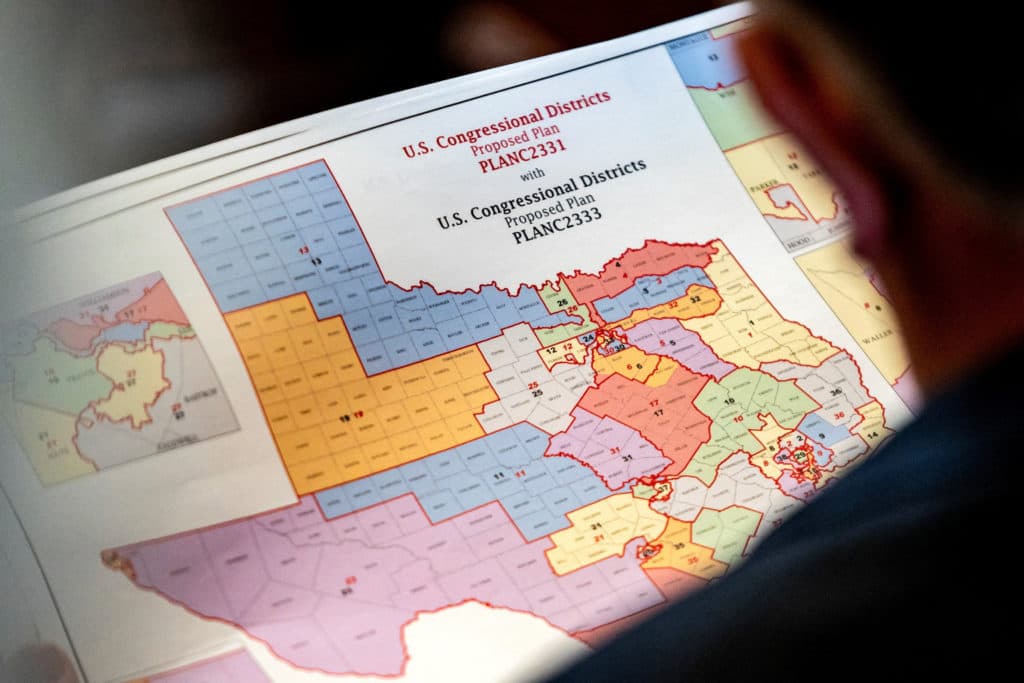
PBS reports that Republican-backed, Trump-supported redistricting aimed to flip Democratic-held seats in the 2026 midterms. Despite those efforts, Republicans lost most targeted seats, forfeited others they expected to hold, and Democrats swept to power. The article attributes the Democratic surge to voter dissatisfaction with Trump, the economy, and the war with Iran, presenting those causes as the outlet’s analysis of voter motivations.
Source and Framing Analysis
The PBS piece attributes the election outcome and voter motivations to dissatisfaction with Trump, the economy, and the Iran war; those causal statements are presented as analysis rather than proven causal facts. The article summarizes high-level results without providing seat-by-seat data or independent redistricting analysis, leaving evidentiary gaps about how much maps alone affected outcomes.
How sources covered this story
This section compares the evidence and framing in linked reports. The Christian assessment above addresses the conduct described in the story; it does not grade a journalist’s faith or the morality of covering an event.
Compare 1 reports
Rank 1
PBS NewsHour: Trump-backed redistricting sought a midterm edge for Republicans. It didn't workReporting 72/100
- Distinctive contribution
- Summarizes that Trump-backed redistricting did not produce the expected midterm advantage: targeted flips failed, held seats were lost, and the losses are attributed to a Democratic surge tied to voter dissatisfaction with Trump, the economy, and the war with Iran.
- Framing
- Presents the outcome as a decisive failure for Republicans ('swept out of power') and attributes causation to voter dissatisfaction on three specific fronts, framing the result as driven by popular reaction rather than purely structural factors.
- Omissions or uncertainty
- No supporting data (vote totals, seat counts, which districts), no time frame or election year stated in the excerpt, no sourcing or evidence for the attribution to voter dissatisfaction, and no alternative explanations or voices (e.g., Republican strategists, independent analysts) are provided.
- Why these scores
- The excerpt delivers a clear, concise summary of outcomes and a plausible causal interpretation appropriate for a news-summary lead. However, it lacks supporting specifics, attribution, and evidentiary detail in the supplied text, which limits its standalone evidentiary strength. For a brief summary this is adequate but not deeply substantiated.
Christian commentary · About the conduct described in this story
Biblical Reflection
Efforts to shape political outcomes through mapmaking raise serious moral questions about the means we use to pursue power. Christians are called to seek justice, honesty, and the common good; using structural advantages to entrench partisan control conflicts with those commitments.
At the same time, electoral loss is not primarily a spiritual failure; it is a civic reality that invites repentance where manipulation occurred, prayer for rulers of every party, and renewed commitment to fair processes and neighborly service.
Scripture in context
- 1 — In its literary context Proverbs contrasts honest measures and just behavior with dishonest gain, teaching that integrity matters in business and public life. — Applied here, the passage challenges leaders and systems that seek advantage through unfair measures and calls Christians to advocate for honest, impartial practices in civic life.
A suggested response for readers, separate from the assessment above.
Faithful Response
Pray for leaders and the electorate, support nonpartisan reforms that protect fair maps, and engage locally—vote, hold officials accountable, and build relationships across divides.
Reflection and Discussion
- 1Where does pursuit of partisan advantage cross the line from legitimate advocacy into actions that harm the common good?
- 2How should Christians balance allegiance to a political vision with obligations to truth, mercy, and institutional integrity?
Sources
Reporting links are evidence inputs; Sanctuary News' biblical reflection is commentary.
This is a developing, single-source report. Details may change as more reporting becomes available.
Download source notes