News Summary
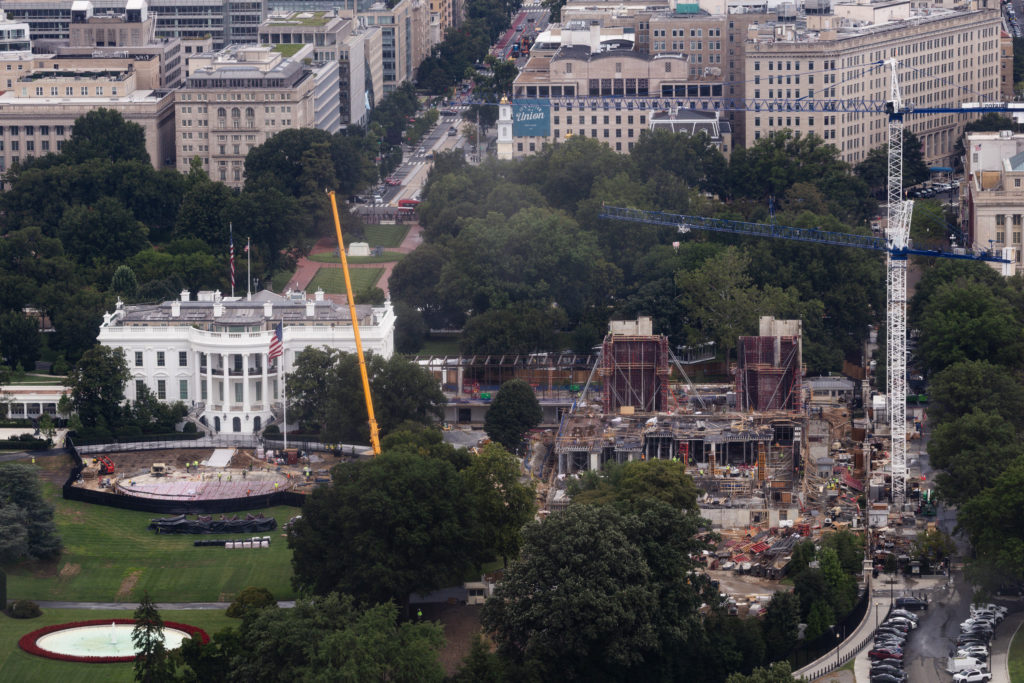
On Aug. 31, 2026, the U.S. Supreme Court entered a temporary stay permitting above‑ground work on a planned $400 million White House ballroom to continue while the administration appeals lower‑court injunctions. Multiple outlets report the stay preserves the ability to appeal and does not decide the underlying merits. Coverage differs in emphasis: some outlets report a narrowly divided Court (reported as 5–4), PBS NewsHour highlights that lower courts had ordered work stopped because the project lacked required congressional approval, and one outlet attributes to Chief Justice John Roberts a characterization that the project is 'likely unlawful.' The stay maintains the status quo for above‑ground construction while litigation continues; key legal texts and detailed orders have not been published in the supplied reporting.
Source and Framing Analysis
Reporting is consistent on the central procedural fact—the Supreme Court issued a stay allowing above‑ground construction to continue while appeals proceed—but outlets differ in emphasis and in the selective details they present. • PBS NewsHour foregrounds legal context, reporting that lower courts had found work must stop because the project lacked required congressional approval; this frames the stay as intervening against a specific lower‑court finding. • The Guardian and CBS independently report a narrowly divided Court (reported as 5–4) and stress the immediate practical effect on above‑ground construction. • Fox News highlights a quoted judicial caution attributed to Chief Justice John Roberts that the project is 'likely unlawful,' framing the decision as a provisional reprieve amid a contentious dispute. These differences shape public perception (process‑centered explanation versus urgency/skepticism versus narrow split) but do not contradict the core procedural account. Missing from the supplied coverage are the full text and precise scope of the Supreme Court’s order (any explicit limits on types of work), the exact vote breakdown with written opinions, the specific statutes or authorities relied on by the lower courts, the name(s) of the preservation group in some excerpts, and documentary records about congressional approvals, funding, and internal administrative approvals. Readers should consult the actual court orders and filings for definitive legal language and scope; the reporting here points to relevant lines of inquiry but is not a substitute for primary documents.
Free every morning
Get the Daily Briefing
The stories shaping today—sourced carefully and considered through Scripture. No outrage bait.
Confirm by email. Unsubscribe at any time.
How sources covered this story
Sanctuary separately assesses reporting quality and alignment with Christian virtues. The virtues assessment considers truthfulness, dignity, compassion, justice, peacemaking, humility, and care for vulnerable people. It does not assess a publisher's faith or reward religious language.
Compare 5 reports
Reporting 80/100Virtues 78/100
- Distinctive contribution
- Reports that lower courts ordered a stop on work due to lack of congressional approval (legal basis), and gives the $400 million figure in the title.
- Framing
- Frames the Supreme Court action as an intervention after lower courts had required work to stop; presents the procedural escalation.
- Omissions or uncertainty
- Doesn't specify which lower courts, the plaintiff(s) (historic preservation group mentioned in other excerpts but not here), the precise legal statute or constitutional claim, or the scope (above- vs below-ground).
- Why these scores
- Provides useful legal context (reason lower courts halted work) and a clear headline; responsibly frames judicial intervention. Higher score limited only by the excerpt's lack of named parties and detailed legal citations. Measured, explanatory reporting that helps readers understand legal stakes; presents information without inflammatory language and thus aligns well with truthfulness and respect for persons.
Reporting 78/100Virtues 76/100
- Distinctive contribution
- Gives the dollar figure ($400 million) and specifies that the court permitted an appeal to block a lower-court order halting above-ground construction, and reports the 5-4 division.
- Framing
- Frames the ruling as enabling continued construction amid controversy and legal challenge; emphasizes the contentious nature of the project.
- Omissions or uncertainty
- Doesn't name the lower court, the plaintiff group, the specific legal claims, which justices joined the majority or dissent, or what the lower court's factual findings were.
- Why these scores
- Adds specific, verifiable details (vote split, cost, above-ground focus) and succinctly summarizes the core legal procedural posture; would be stronger with named parties and more on legal basis but solid for a news story. Language is measured and factual, avoiding demonization; highlights controversy without sensationalism and therefore aligns reasonably well with values of truthfulness and respect for persons.
Reporting 70/100Virtues 72/100
- Distinctive contribution
- Confirms the court was divided 5-4 in permitting construction to proceed.
- Framing
- Straightforward news report focusing on the outcome and the divided nature of the Court.
- Omissions or uncertainty
- No detail on the legal basis for the lower-court halt, which parts of the project are affected, plaintiff identities, or statements from justices or parties.
- Why these scores
- Clear, factual, and appropriately cautious given brief excerpt; meets standards for concise reporting though lacks depth in the excerpt. Neutral and factual tone supports truthful reporting and respect; no inflammatory language or dehumanization in the excerpt.
Reporting 66/100Virtues 70/100
- Distinctive contribution
- Briefly corroborates that the Supreme Court permitted construction to proceed while legal challenges continue (no additional legal detail).
- Framing
- Very short news-wrap style: presents the item as one of several headlines, framing the decision as one development among other national news items.
- Omissions or uncertainty
- No vote breakdown, no legal reasoning, no plaintiffs or lower-court specifics, no timeline or mention of alleged statutory issues.
- Why these scores
- Fulfills a headline/brief role accurately but adds little detail; clear and non-misleading for its genre, but too short to provide substantive context or attribution beyond the basic outcome. Neutral, non-inflammatory wording that respects truthfulness and avoids dehumanizing language; lacks broader context about impacts or parties but presents no evident moral distortion.
Reporting 68/100Virtues 64/100
- Distinctive contribution
- Reports that Chief Justice John Roberts warned the project is 'likely unlawful' while the Court nonetheless allowed construction to continue for now.
- Framing
- Somewhat sensationalized headline language ('lifeline,' 'heated legal fight') paired with the substantive detail of Roberts' warning — frames the decision as a temporary reprieve amid contention.
- Omissions or uncertainty
- Excerpt doesn't give the full context of Roberts' remark (was it from the order, a concurrence, or a public statement), lacks vote tally in the excerpt, does not identify plaintiffs or lower-court findings, and omits specifics about which aspects of construction are affected.
- Why these scores
- Supplies a consequential quote from a named justice, which is valuable; however, the headline wording is more sensational, and the excerpt lacks context about the quote's provenance and the broader legal posture that would aid comprehension. The inclusion of a strong warning from Chief Justice Roberts is important factual reporting, but the excerpt's more charged headline language ('lifeline,' 'heated') leans toward dramatization, slightly reducing alignment with restraint and respect for balanced truth-telling.
Biblical Reflection
A Christian response distinguishes careful factual reporting from moral judgment. The Supreme Court’s stay is a procedural preservation of the status quo while litigation continues; it does not settle whether the project complied with legal requirements or exemplified good stewardship. Christians should pray for impartiality and wisdom for judges and integrity from public officials, seek primary documents (court orders and filings) before drawing firm conclusions, and advocate for transparent, lawful oversight of public property and historic sites. This posture centers truth, mercy, justice, peacemaking, humility, dignity, and care for vulnerable neighbors: demand accountability without partisan triumphalism, protect common heritage and public trust, and model civility and patient discernment in civic life.
Scripture in context
- 1Romans 13:1-7 — Paul’s instruction about respect for governing authorities set within a broader ethic of Christian life under civic powers. — When responding to this Supreme Court action Christians are called to respect judicial and governmental institutions and processes, while also using lawful means to pursue justice when official action appears to bypass required oversight.
- 2Isaiah 1:17 — The prophetic call to pursue justice and defend the vulnerable, urging concrete action beyond ritual. — Applied here, this passage urges Christians to evaluate public projects by their effects on the common good and to advocate for fair stewardship and preservation of shared heritage when legal processes or oversight seem compromised.
Faithful Response
Pray for wisdom, humility, and integrity for judges, public officials, litigants, and those who care for historic preservation.
Seek primary sources before drawing conclusions: read the lower‑court injunctions, the Supreme Court order, and the parties’ filings to understand the precise legal claims and any limits the Court placed on work.
Support lawful, transparent oversight: engage elected representatives, participate in legitimate public comment or preservation processes, and consider collaborating with nonpartisan civic groups that defend stewardship of public property.
Model congregational civility: explain the procedural nature of appellate stays, discourage partisan escalation, and teach how appellate process and injunctions function.
Offer educational programming (e.g., explain appellate procedure, historic‑preservation law, and congressional‑approval processes) and, where appropriate, host balanced forums on stewardship and public accountability.
Free every morning
Get the Daily Briefing
The stories shaping today—sourced carefully and considered through Scripture. No outrage bait.
Confirm by email. Unsubscribe at any time.
Reflection and Discussion
- 1Does my immediate reaction prioritize loyalty to particular leaders or fidelity to lawful process and the common good, and why?
- 2How can my congregation advocate for responsible stewardship of public resources and historic sites without turning that concern into partisan identity?
- 3What lawful, concrete steps can I or my congregation take if we believe a public project bypassed required approvals or harmed a shared heritage site?
- 4How do respect for authority and the prophetic call to justice shape how we speak and act about contested public projects?
Sources
Reporting links are evidence inputs; Sanctuary News' biblical reflection is commentary.
- 1.Supreme Court allows White House to continue construction on Trump's $400 million ballroomprimary_reporting
- 2.US supreme court allows Trump to keep building $400m White House ballroomadditional_reporting
- 3.Trump's White House ballroom construction gets another lifeline from SCOTUS amid heated legal fightadditional_reporting
- 4.Supreme Court continues to allow construction of Trump's White House ballroomadditional_reporting