A little more detail
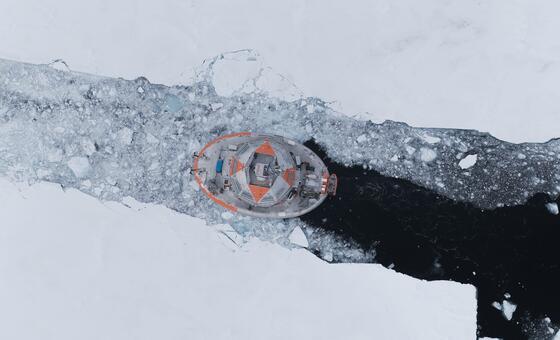
Scientists aboard a ship frozen into Arctic ice are documenting rapid environmental change, the UN News piece reports. The article says sea ice is retreating in the region and that oil tankers are starting to use newly accessible routes.
It also describes a conversation between the scientific team and the UN Secretary-General, who urged world leaders to trust climate science, arguing that Arctic changes have consequences far beyond the North Pole.
Source and Framing Analysis
This is a single UN News report summarizing observations and a conversation with the UN chief. The piece emphasizes urgency and advocacy for trusting scientific findings. It provides general claims (retreating sea ice, increasing tanker traffic) but lacks detailed, independently cited data points (rates of ice loss, tanker counts, named scientific studies). The framing is unsurprisingly sympathetic to climate science and global policy action; readers should note the article is reporting a perspective and call to action rather than presenting new, fully documented primary data.
How sources covered this story
This section compares the evidence and framing in linked reports. The Christian assessment above addresses the conduct described in the story; it does not grade a journalist’s faith or the morality of covering an event.
Compare 1 reports
Reporting 72/100
- Distinctive contribution
- Conveys the scene of scientists physically aboard a ship frozen into Arctic ice documenting rapid change, and connects that on‑site work to a conversation with the UN chief arguing that trust in climate science has global implications.
- Framing
- Frames the situation as a warning directed at world leaders, emphasizing urgency and the need to 'trust the science.' Presents the Arctic as both a site of observable environmental change and a stage for geopolitical/economic pressure (oil tankers).
- Omissions or uncertainty
- The excerpt lacks specific data, dates, location coordinates, names of the scientists or vessel, the identity of the UN chief (not explicit here), details of the conversation, evidence for the claim about oil tankers moving in, and any attribution or methodology for the 'documenting' work.
- Why these scores
- As a short news summary/teaser it responsibly signals urgency and links field observation to policy without making extravagant or unsupported claims. However, it is general and lacks specific attribution, data, named sources, and contextual details that would strengthen evidentiary value. For its likely purpose (lead/teaser) the language is appropriate, but it falls short of a full, well‑sourced report.
Christian commentary · About the conduct described in this story
Biblical Reflection
The report invites a Christian response rooted in truth, mercy, and stewardship. Scripture honors wise, humble listening; James encourages seeking wisdom, and the prophetic tradition warns leaders to care for the vulnerable. Trusting credible scientific evidence is compatible with Christian discipleship when it aims to protect human life and creation.
At the same time, Christians should avoid alarmism and polarized hostility. We can hold urgent concern for the planet and neighbor alongside humility about policy specifics, advocating for equitable solutions that protect poor and Indigenous communities who bear disproportionate harms.
Scripture in context
- 1 — In its original context, James advises believers to ask God for wisdom when they lack it; the letter addresses how a mature faith should handle trials and community life, encouraging dependence on God for insight. — This passage supports praying for discernment and humility when interpreting complex evidence and making public policy choices; it encourages Christians to seek wisdom rather than rely on partisan assumptions.
A suggested response for readers, separate from the assessment above.
Faithful Response
Pray for wisdom, read reputable scientific summaries, and support policies that protect vulnerable communities and creation while seeking equitable solutions.
Reflection and Discussion
- 1Are we listening to scientific evidence with humility, or dismissing it for convenience?
- 2How can care for creation be expressed as tangible justice for those most at risk?
Sources
Reporting links are evidence inputs; Sanctuary News' biblical reflection is commentary.
This is a developing, single-source report. Details may change as more reporting becomes available.
- 1.From a ship frozen into Arctic ice, a warning to world leaders: Trust the scienceofficial_document