News Summary
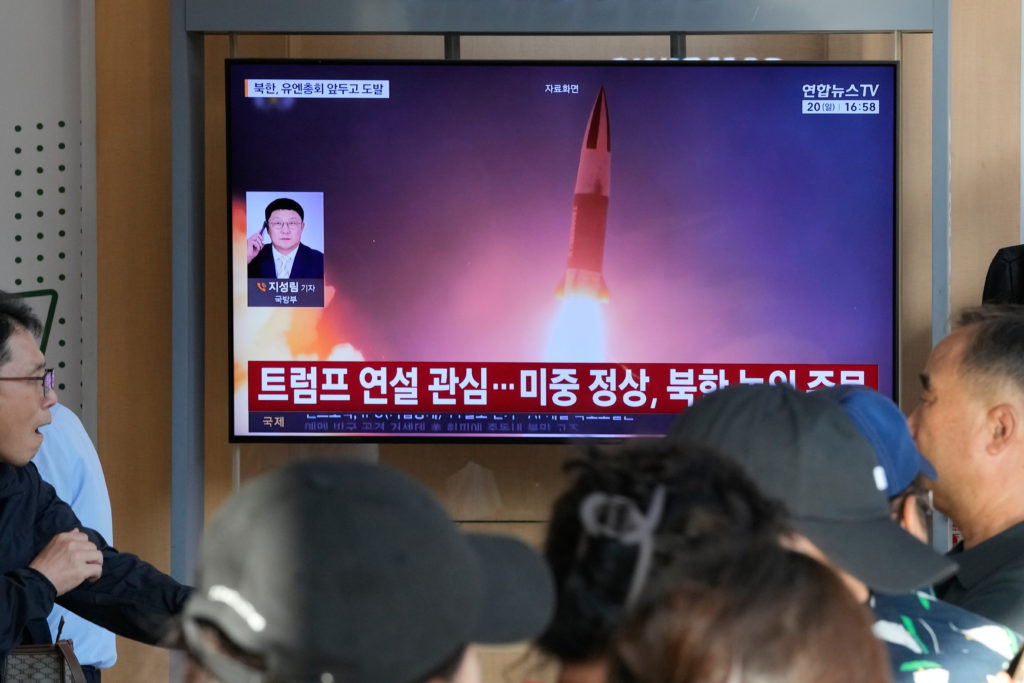
Reporting from PBS and CBS corroborates that North Korea conducted ballistic-missile launches directed toward the sea. PBS specifies two ballistic missiles and places the launches in the context of an ongoing series of weapons demonstrations, noting they followed President Donald Trump’s decision to scale back a joint U.S.–South Korea exercise as an apparent effort to revive diplomacy. CBS links the launches temporally to Pyongyang’s recent reassertion of its nuclear status and to a rejection of a U.N. action or finding (the supplied CBS excerpt is truncated and does not fully identify the U.N. item). The supplied excerpts do not include missile technical specifications, exact launch times or sites, or full official statements from DPRK, U.S., South Korean, or U.N. sources.
Source and Framing Analysis
PBS NewsHour: Reports the operational detail that two ballistic missiles were launched toward the sea and frames the event as part of continuing weapons demonstrations; it links timing to the U.S. decision to scale back a joint military exercise — framing that connection as diplomatic context and a possible motive. (Source: PBS NewsHour.)
CBS News: Emphasizes political signaling by placing the launches days after Pyongyang’s reassertion of its nuclear status and a reported rejection of a U.N. action; the supplied excerpt is truncated and omits the specific U.N. item. (Source: CBS News.)
Convergence and limits: The two outlets converge on the basic operational claim (missile launches toward the sea) and on an interpretation that the launches are part of coercive signaling. They differ in emphasis — PBS supplies a specific missile count and a link to U.S.–ROK exercise changes, while CBS supplies broader diplomatic context tied to North Korea’s statements about its nuclear posture. Neither excerpt supplies technical confirmation (missile type, ranges), exact timing or launch locations, nor full official statements; the depiction of motive ("dials up pressure") is a reasonable interpretive frame but remains inference rather than a direct DPRK declaration of intent.
Free every morning
Get the Daily Briefing
The stories shaping today—sourced carefully and considered through Scripture. No outrage bait.
Confirm by email. Unsubscribe at any time.
How sources covered this story
Sanctuary separately assesses reporting quality and alignment with Christian virtues. The virtues assessment considers truthfulness, dignity, compassion, justice, peacemaking, humility, and care for vulnerable people. It does not assess a publisher's faith or reward religious language.
Compare 2 reports
Reporting 75/100Virtues 75/100
- Distinctive contribution
- Connects the missile launches to a recent U.S. decision (Trump scaled back a joint military exercise) and frames the launches as part of an ongoing series of weapons demonstrations aimed at increasing pressure on the U.S.
- Framing
- Frames the launches as deliberate pressure on the U.S. and as part of a continuing series of demonstrations; links military signaling to diplomatic maneuvering (the scaled-back exercise intended to revive diplomacy).
- Omissions or uncertainty
- No specifics about missile types, ranges, trajectories, or impact area; no sourcing or direct quotes; timing is relative rather than specific (no dates); no mention of South Korean, U.S., or U.N. official reactions in the supplied excerpt.
- Why these scores
- The language is concise and plausibly factual, and it supplies useful context (linking launches to a change in U.S.-ROK exercises). However, the supplied excerpt lacks concrete specifics (dates, technical details, attributions or named sources) that would strengthen verifiability and precision. Neutral, non-sensational wording that avoids dehumanization or inflammatory rhetoric; provides context that helps readers understand motives without vilification. Lacks explicit attention to humanitarian consequences or affected civilians, so score reflects solid neutrality but not exceptional compassion framing.
Reporting 70/100Virtues 72/100
- Distinctive contribution
- Links the launches temporally to North Korea’s recent reassertion of being a nuclear-armed state and to a rejection of a U.N. action/position, adding a political/regulatory context to the weapons demonstrations.
- Framing
- Frames the launches as escalation/dialing up pressure against the U.S. and ties them to North Korea’s declarative posture on its nuclear status and its pushback against international (U.N.) positions.
- Omissions or uncertainty
- Excerpt is truncated and vague about what was 'rejected' at the U.N.; it does not specify dates, missile technical details, who provided the information, or responses from other governments; incomplete sentence reduces clarity of the underlying claim.
- Why these scores
- Provides useful temporal and political context and a clear overall claim, but the supplied excerpt is vague/incomplete (truncated phrase about the U.N.), lacks sourcing and technical detail, and therefore is adequate but not fully robust on the supplied text alone. Language is factual and not inflammatory, avoiding dehumanizing descriptors; it helps readers understand geopolitical moves without sensationalism. The excerpt does not address humanitarian impacts or explicitly promote reconciliation, so the score reflects responsible neutrality with limited compassionate/contextual emphasis.
Biblical Reflection
This incident highlights recurring instability on the Korean Peninsula and the tension between coercive military signaling and the search for diplomacy. Christians should keep facts clearly in view while resisting binary reactions of alarmism or triumphalism. The faithful posture centers truth, mercy, justice, peacemaking, humility, human dignity, and care for vulnerable neighbors: pray for civilians and leaders, press for measures that reduce the risk of miscalculation (communication channels, confidence-building), support transparent diplomacy that prioritizes protecting human life, prepare to assist humanitarian needs if tensions deepen, and practice humility about complex geopolitical motives that are seldom fully disclosed in short reports.
Scripture in context
- 1Matthew 5:9 — Part of the Beatitudes in Jesus’ Sermon on the Mount, commending those who actively pursue peace and reconciliation within a community shaped by God's justice. — This passage redirects attention from partisan triumph to the vocation of peacemaking: Christians are called to pray for peace, advocate for nonviolent solutions, and work to protect those endangered by conflict.
Faithful Response
Pray regularly and specifically for civilians in the region, for diplomats and leaders making high-stakes decisions, and for restraint that prevents escalation.
Stay informed from multiple reputable sources and avoid sharing unverified or sensational claims that inflame fear or dehumanize people involved.
Advocate for verified diplomacy, transparency between states, and policies that reduce the risk of miscalculation (for example, communication hotlines and confidence-building measures).
Support or prepare to support humanitarian organizations that assist civilians affected by regional tensions and press for protections for refugees and displaced people.
Provide pastoral care for those in your congregation who feel anxiety or fear; emphasize lament, hope, and practical guidance rather than partisan rhetoric.
Free every morning
Get the Daily Briefing
The stories shaping today—sourced carefully and considered through Scripture. No outrage bait.
Confirm by email. Unsubscribe at any time.
Reflection and Discussion
- 1Which specific facts in reports about missile launches should prompt prayer, and which should prompt civic or policy engagement?
- 2How does the Christian call to be peacemakers shape our assessment of state actions that use military demonstrations as leverage?
- 3In what concrete ways can churches and believers advocate for policies that protect human life and reduce the chance of armed conflict?
Sources
Reporting links are evidence inputs; Sanctuary News' biblical reflection is commentary.
- 1.North Korea launches 2 ballistic missiles toward the sea and dials up pressure on the U.S.primary_reporting
- 2.North Korea launches missiles as it dials up pressure against U.S.additional_reporting