News Summary
Source and Framing Analysis
Free every morning
Get the Daily Briefing
The stories shaping today—sourced carefully and considered through Scripture. No outrage bait.
Confirm by email. Unsubscribe at any time.
How sources covered this story
Sanctuary separately assesses reporting quality and alignment with Christian virtues. The virtues assessment considers truthfulness, dignity, compassion, justice, peacemaking, humility, and care for vulnerable people. It does not assess a publisher's faith or reward religious language.
Compare 2 reports
Rank 1
The Guardian: Minnesota sues Texas to force extradition of ICE agent accused of lying about shooting- Distinctive contribution
- Specifies the exact legal relief sought (asking a federal judge to bar the Cameron County sheriff from releasing Castro and to order Governor Abbott to sign an extradition warrant), names the ICE agent (Christian Castro) and accuses him of wounding a man and lying to justify the shooting, and places the case within the agency's Minneapolis crackdown.
- Framing
- Frames the story as an adversarial legal effort to secure custody and accountability for an ICE agent amid a 'controversial crackdown'—emphasis on legal compulsion and oversight.
- Omissions or uncertainty
- No details on the underlying shooting incident (date, location specifics within Minneapolis, victim status), no description of the criminal charges or charging documents, no quotes from involved officials (Abbott, the sheriff, defense/counsel, or the accused), no legal basis cited for the requested relief, and no timeline or status of prior extradition steps.
- Why these scores
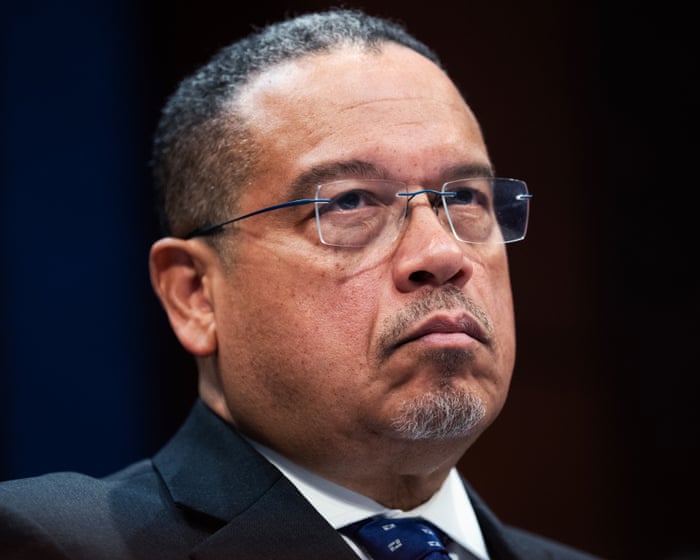
- The excerpt is specific and attributes the action to Attorney General Keith Ellison, naming the principal actors and the legal remedies sought—good clarity and attribution. It is a short excerpt without direct quotes, legal citations, or fuller context, which limits depth but not basic reliability. The reporting emphasizes accountability and legal process rather than sensationalism, names parties, and avoids dehumanizing language—aligns with truthfulness and respect for dignity. It provides limited restorative or victim-centered context and limited explicit attention to compassion or peacemaking, which prevents a higher score.
- Distinctive contribution
- Confirms the AG's assertion that Governor Abbott has not signed extradition papers and provides a timeline detail (Castro's arrest in Texas in May).
- Framing
- Straightforward, procedural reporting that attributes the claim to Attorney General Ellison and focuses on the status of extradition paperwork.
- Omissions or uncertainty
- Does not describe the underlying allegations (wounding/lying), does not mention the lawsuit seeking judicial intervention, omits the Cameron County sheriff or any statements from Texas officials, and gives no legal explanation for any delay or refusal to sign extradition papers.
- Why these scores
- Concise and properly attributed to the AG, with a concrete timeline detail (May arrest). As an excerpt it is narrowly focused and lacks broader context or secondary sourcing, but it accomplishes a clear factual purpose reliably. Neutral, factual attribution without sensational language, which respects dignity and truthfulness. The brief excerpt does not misrepresent or exploit suffering, but it also does not provide explicit attention to victims or restorative justice concerns.
Biblical Reflection
Scripture in context
This outlook does not yet include contextual Scripture citations. Do not treat a general biblical theme as an exegetical conclusion.
Faithful Response
Free every morning
Get the Daily Briefing
The stories shaping today—sourced carefully and considered through Scripture. No outrage bait.
Confirm by email. Unsubscribe at any time.
Reflection and Discussion
- 1How should Christian love for neighbor shape our response when a state agent is accused of harming someone?
- 2What structures in civic life encourage accountability or enable impunity, and how should Christians engage them as citizens and neighbors?
- 3How do we balance insistence on truth and justice with mercy and the protections of due process in public conversation?
- 4How can our congregations offer pastoral care and public witness that both supports victims and resists dehumanizing those accused?
Sources
Reporting links are evidence inputs; Sanctuary News' biblical reflection is commentary.
- 1.Minnesota sues Texas to force extradition of ICE agent accused of lying about shootingprimary_reporting
- 2.Minnesota AG sues Texas governor to extradite ICE agent for trialadditional_reporting