News Summary
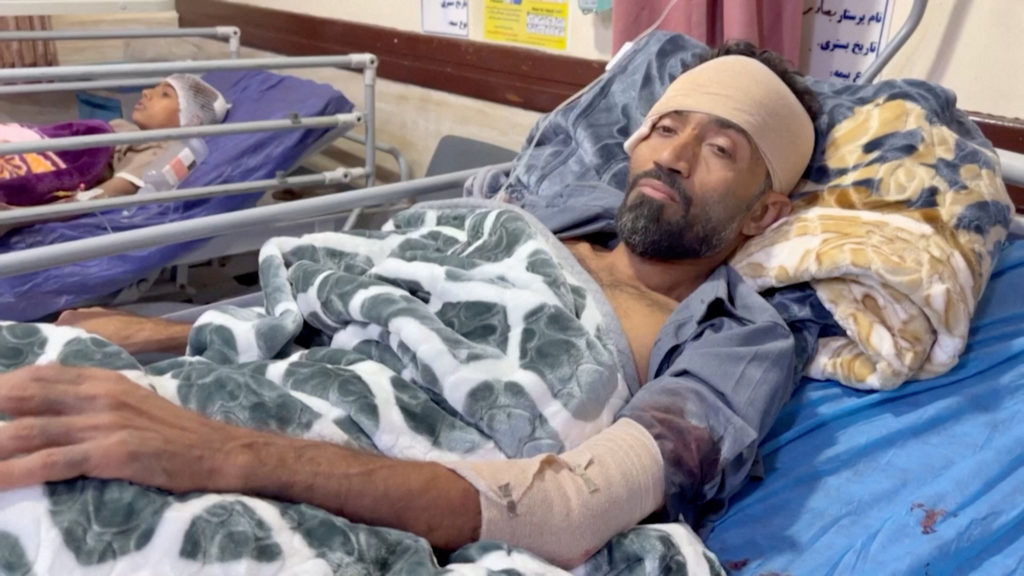
Reporting from PBS NewsHour and NPR indicates that Iran launched strikes on neighboring Gulf states early Wednesday in apparent retaliation for overnight U.S. bombardments. PBS attributes to Iranian officials the allegation that a U.S. strike struck a wedding party and was deadly; that specific casualty claim appears only as an Iranian claim in the supplied reporting and lacks independent verification in those excerpts. NPR corroborates renewed hostilities and situates the exchange within a six-month conflict that reporters say has contributed to higher oil prices and broader economic and political consequences.
Source and Framing Analysis
PBS NewsHour frames the immediate sequence of events (U.S. bombardment followed by Iranian strikes) and responsibly attributes the sensitive allegation about a wedding being hit to Iranian officials rather than presenting it as independently confirmed. NPR corroborates the occurrence of renewed attacks while emphasizing macro-level consequences—duration of the conflict, economic effects (reported spike in oil prices), and domestic political ramifications—broadening the context beyond operational detail. Both outlets present the exchange as part of an ongoing cycle of action and retaliation, but neither supplied excerpt offers independent on-the-ground verification of the wedding-casualty allegation, nor do they name which Gulf states or specific facilities were struck, provide casualty figures, or detail weapon types. Those absences create important uncertainties for readers and for public discourse.
Free every morning
Get the Daily Briefing
The stories shaping today—sourced carefully and considered through Scripture. No outrage bait.
Confirm by email. Unsubscribe at any time.
How sources covered this story
Sanctuary separately assesses reporting quality and alignment with Christian virtues. The virtues assessment considers truthfulness, dignity, compassion, justice, peacemaking, humility, and care for vulnerable people. It does not assess a publisher's faith or reward religious language.
Compare 2 reports
Rank 1
PBS NewsHour: Iran fires on its Gulf neighbors, retaliating for U.S. strikes after a wedding was hitReporting 78/100Virtues 75/100
- Distinctive contribution
- States that Iran fired on U.S. allies in the Gulf and that Iranian officials say American bombardment included a deadly strike on a wedding party, adding a concrete alleged civilian-casualty claim and the sequence of action–reaction.
- Framing
- Neutral, brief; uses clear attribution ('Iranian officials say') rather than presenting the casualty claim as independently verified.
- Omissions or uncertainty
- No independent verification of the wedding strike or casualty numbers; no specifics on which U.S. allies or which Gulf states were fired upon; no timing beyond 'early Wednesday'; no on-the-ground sources or evidence cited.
- Why these scores
- For a one-sentence excerpt it responsibly attributes a serious allegation to Iranian officials and reports the sequence of events. It is concise and not sensational, but lacks detail, independent verification, and sourcing that would be needed for a higher score. The excerpt is measured and attributes claims rather than asserting them as fact, avoiding sensationalism and preserving dignity. It does not overtly demonstrate compassion or restorative context (e.g., details about victims), but it also does not dehumanize or exploit suffering.
Reporting 72/100Virtues 70/100
- Distinctive contribution
- Summarizes macro-level impacts: spike in oil prices, disruption to the global economy, and political pressure on President Trump's Republican Party ahead of midterm elections.
- Framing
- Consequential framing: treats the conflict as having measurable economic and political fallout; no attribution or data given in the excerpt to support the claims.
- Omissions or uncertainty
- No quantitative detail on oil-price changes or economic indicators, no sources or attribution for the claims, no geographic breakdown of economic effects, and no evidence tying the events directly to the specified political consequences.
- Why these scores
- The excerpt offers useful high-level context relevant to readers but is unspecific and lacks sourcing or quantification in the supplied text. As a concise situational summary it is serviceable but limited. Neutral, non-inflammatory wording that informs about harms (economic and political) without dehumanizing language. The brief excerpt neither displays notable compassion or advocacy for victims nor shows harms such as sensationalism or exploitation.
Biblical Reflection
Truth and mercy should shape the Christian response to this cluster of events. Truth requires distinguishing confirmed facts from attributed claims and resisting the spread of unverified allegations. Mercy summons attention to likely civilian vulnerability, urging prayer and support for humane relief and impartial inquiry where civilian harm is alleged. Peacemaking calls the church to pursue de-escalation, protect the dignity of all affected people, and avoid partisan triumphalism that dehumanizes neighbors. Practically, this means informed prayer, pastoral care for anxious communities, advocacy for humanitarian access and transparent investigation, and measured public witness rooted in compassion and justice.
Scripture in context
- 1Matthew 5:9 — In the Sermon on the Mount Jesus names peacemakers as those who reflect God’s character and blessedness. — This passage urges Christians to pursue reconciliation and protection of the vulnerable amid conflict—shaping responses that prioritize de-escalation, truthful witness, and care for civilians rather than celebration of military advantage.
Faithful Response
Pray specifically for civilians in affected Gulf communities, for bereaved families, and for wisdom and restraint for leaders on all sides.
Do not circulate unverified allegations; when sharing reports, clearly attribute claims and note when independent confirmation is absent.
Support reputable humanitarian organizations providing aid to civilians in the region and encourage congregations to give to verified relief efforts.
Call on public officials and international bodies to enable impartial investigations and safe humanitarian access where civilian harm is alleged.
Provide pastoral spaces for lament, teaching on Christian convictions about peacemaking and the dignity of noncombatants, and practical care for those anxious or grieving.
Free every morning
Get the Daily Briefing
The stories shaping today—sourced carefully and considered through Scripture. No outrage bait.
Confirm by email. Unsubscribe at any time.
Reflection and Discussion
- 1When reports of civilian casualties emerge, how can I hold urgent compassion while exercising responsible skepticism about unverified claims?
- 2How can my congregation practice peacemaking and protect the dignity of vulnerable people without becoming partisan?
- 3What concrete steps can I take (prayer, giving, advocacy) that direct care to civilians affected by these strikes rather than only engaging in political commentary?
Sources
Reporting links are evidence inputs; Sanctuary News' biblical reflection is commentary.
- 1.Iran fires on its Gulf neighbors, retaliating for U.S. strikes after a monthlong lulladditional_reporting
- 2.Iran fires on its Gulf neighbors, retaliating for U.S. strikes after a wedding was hitprimary_reporting