News Summary
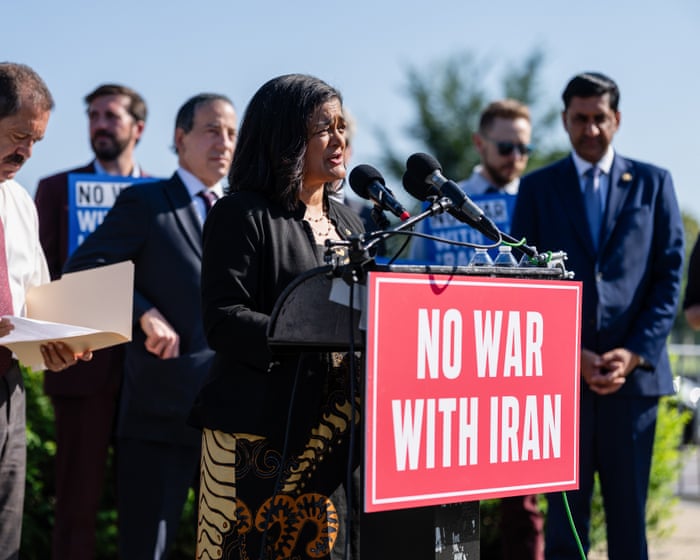
Reported facts: The House voted 214–208 to pass a war powers resolution directing President Trump to withdraw U.S. forces from the conflict with Iran; Rep. Pramila Jayapal sponsored the measure; four Republicans joined Democrats in favor; coverage describes this as the second such vote. Attributed claims: The administration says the resolution is unconstitutional and will not comply; reporting links the vote to renewed fighting in the region and a rise in oil prices. Uncertainty: Whether the resolution will affect actual military deployments, how courts would rule on constitutionality, and whether the Senate will act are unresolved.
Source and Framing Analysis
The supplied reporting consistently frames the measure as a congressional rebuke with limited immediate legal effect; Guardian explicitly calls it largely symbolic and notes the administration's constitutional objection. The articles do not provide judicial analysis or operational detail about what a withdrawal order would require, nor do they document names of the four Republicans in this package — those are material gaps for readers assessing practical consequences. Coverage links the vote to regional fighting and oil-price movements, a causal claim that the pieces do not fully document with economic data.
Free every morning
Get the Daily Briefing
The stories shaping today—sourced carefully and considered through Scripture. No outrage bait.
Confirm by email. Unsubscribe at any time.
Biblical Reflection
This vote is a clear expression of Congressional concern about U.S. military involvement in the Iran conflict and an assertion of legislative war powers, but it does not by itself change U.S. military policy because the White House has rejected its constitutionality. The partisan split and narrow margin show deep political disagreement about the use of force, and the resolution functions primarily as a formal rebuke and political check rather than an enforceable directive. Christians should notice both the legitimate role of lawmakers to seek restraint in war and the limits of symbolic measures when lives and national security are at stake.
From a pastoral perspective, the event highlights the biblical tension between the responsibilities of governing authorities and the primacy of pursuing peace. It also calls Christians to careful discernment: to weigh claims about urgency and consequence against available evidence, to resist being driven by partisan loyalties, and to advocate for policies that protect the vulnerable, honor truth, and seek peace where possible. The measure’s symbolism can still be spiritually and morally significant insofar as it calls public attention to war’s costs and presses leaders toward de-escalation.
Scripture in context
- 1Romans 13:1-7 — Paul’s letter to Roman Christians includes instruction on the role of governing authorities: that governments bear the sword and are instituted to maintain order and restrain wrongdoing in a broken world. The passage addresses the real tensions Christians face when political power is used for violence or protection. — The passage invites Christians to respect governing structures while also holding them accountable to justice and restraint; it calls believers to pray for leaders and to press for policies that protect the common good without glorifying violence.
- 2Matthew 5:9 — In the Sermon on the Mount, Jesus teaches about the character of those who belong to God's kingdom, including the blessing on peacemakers in a world marked by conflict. — This teaching presses Christians to prioritize peacemaking and to consider whether political actions and policies contribute to reconciliation and protection of the vulnerable, especially when lives are at stake.
Faithful Response
Pray regularly for elected leaders, military personnel, and civilians affected by the conflict, asking God for wisdom and protection.
Seek accurate information from multiple reputable sources before forming or sharing strong judgments; avoid reducing complex national-security questions to partisan slogans.
Advocate for policies that pursue de-escalation, prioritize noncombatant protection, and provide care for veterans and refugees harmed by war.
Model neighbor-love by listening to those most affected (service members, families, Middle Eastern communities) and supporting humanitarian relief efforts.
Free every morning
Get the Daily Briefing
The stories shaping today—sourced carefully and considered through Scripture. No outrage bait.
Confirm by email. Unsubscribe at any time.
Reflection and Discussion
- 1How does the distinction between symbolic political statements and enforceable policy affect our moral evaluation of government action?
- 2In what ways should a Christian prioritize peacemaking and truth-telling when national security claims and partisan loyalties collide?
- 3What evidence would make you more confident that a congressional measure will lead to real de-escalation rather than only political posturing?
Sources
Reporting links are evidence inputs; Sanctuary News' biblical reflection is commentary.
- 1.US House passes war powers resolution directing Trump to withdraw US military from Iranprimary_reporting
- 2.House again rebukes Trump on Iran, approving resolution to limit war powersadditional_reporting
- 3.4 House Republicans rebel against Trump, vote with Dems to block Iran war powersadditional_reporting