News Summary
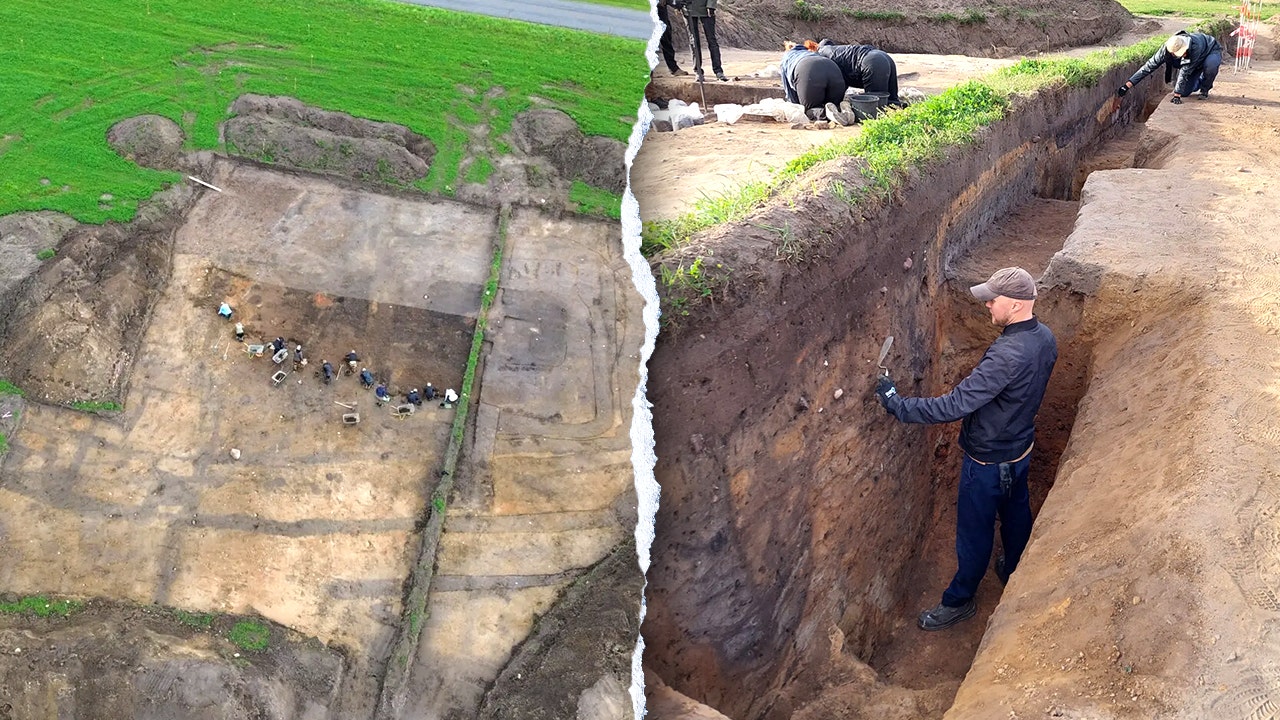
Archaeologists working at Hedegård in Central Jutland, Denmark, have uncovered a 2,000-year-old temple and evidence of a large fortified Iron Age settlement that appears to have been a regional power center around the time of Christ (roughly 50 B.C. to 50 A.D.). The temple measured about 49 by 53 feet and likely resembled a tall, almost-square, tower-like building with an outer colonnade. Excavators found two construction phases, a raised central clay platform and an ornamented hearth, plaster fragments suggesting white-painted walls, and evidence that the structure was deliberately cleared and later burned. The wider settlement produced rich graves, many weapon burials, luxury goods, Celtic weapons, Roman “prestige” items, and rare glass beads probably from the Middle East or Egypt—indicating far-reaching trade and cultural connections. Researchers say Hedegård was strategically located, militarized, governed by an elite, and active for only about three generations before disappearing. Multiple Danish museums and international researchers collaborated on the excavation.
Biblical Reflection
This discovery is a vivid reminder of persistent biblical themes: human societies seek the sacred, build centers of power, accumulate wealth, and practice religious rites—sometimes in ways Scripture warns are idolatrous. The Hedegård temple and its elite burials show how political, military, economic and religious life were intertwined; the Bible repeatedly criticizes gods made by human hands and the trusts people place in power, weapons and prestige (see, e.g., the prophets’ denunciations of idolatry). At the same time, archaeology can cultivate humility: these once-dominant centers rose and fell, underscoring Scripture’s message about the transience of earthly authority and the permanence of God’s purposes. Christians should therefore respond in two balanced ways: 1) with appreciation for careful stewardship—preserving historical truth, guarding against looting, and honoring the dignity of past peoples whose religious longings were real though misdirected; and 2) with prophetic clarity—recognizing the ways power, wealth and ritual can mislead and calling others to the true worship revealed in Christ. The find also reminds us that God is sovereign over all history, working through and around pagan cultures in ways we may only later see. Finally, avoid romanticizing the past: the archaeological glamour of prestige goods should not distract from pastoral concerns for justice, mercy and faithfulness here and now.
Scripture in context
This outlook does not yet include contextual Scripture citations. Do not treat a general biblical theme as an exegetical conclusion.
Faithful Response
No prescribed response is offered. Consider the reflection prompts below in your own church context.
Reflection and Discussion
- 1What does the discovery of an ancient temple tell you about the human search for the divine, and how does that shape your understanding of worship?
- 2In what ways might we be tempted to idolize power, wealth or heritage today, and how can Scripture correct that?
- 3How can Christians responsibly encourage preservation of archaeological sites while pointing people to the lasting truth of the Gospel?
Sources
Reporting links are evidence inputs; Sanctuary News' biblical reflection is commentary.
This outlook currently relies on fewer than two linked sources. Broaden verification before teaching from it.
- 1.Original reportprimary