News Summary
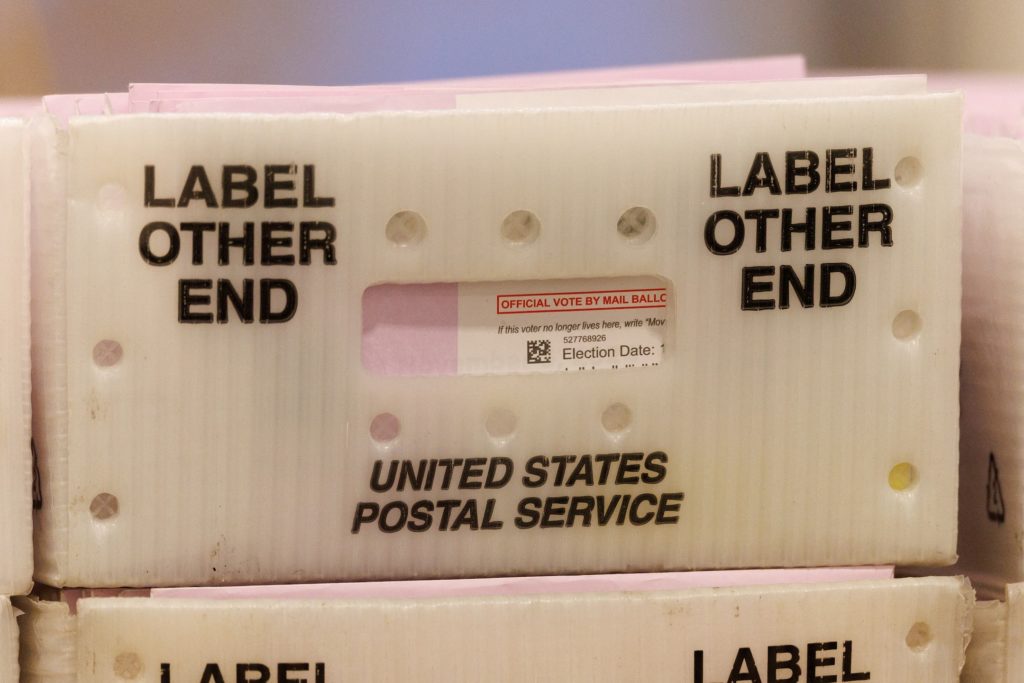
The administration filed a request with the U.S. Supreme Court asking the Court to lift a temporary injunction that is blocking a U.S. Postal Service plan tied to mail-in ballots. Two mainstream outlets corroborate that filing: PBS NewsHour reported the request as part of a news wrap and added that, in proceedings before a federal judge, the administration was unable to say whether the computer system supposed to govern the project was operational; NPR reported the Supreme Court filing and explicitly framed the dispute as tied to efforts to restrict mail-in voting ahead of the midterm election. Available summaries do not include the injunction text, the identity of the court or judge who issued the block, the precise operational changes proposed, or the legal briefs the administration and opponents filed with the Supreme Court.
Free every morning
Get the Daily Briefing
The stories shaping today—sourced carefully and considered through Scripture. No outrage bait.
Confirm by email. Unsubscribe at any time.
How sources covered this story
Sanctuary separately assesses reporting quality and alignment with Christian virtues. The virtues assessment considers truthfulness, dignity, compassion, justice, peacemaking, humility, and care for vulnerable people. It does not assess a publisher's faith or reward religious language.
Compare 2 reports
Rank 1
PBS NewsHour: Trump again appeals to Supreme Court on mail voting restrictions as midterms loomReporting 78/100Virtues 72/100
- Distinctive contribution
- Reports the administration's failure to tell the judge whether the computer system for the project was operational — a concrete procedural detail not present in the other supplied excerpts.
- Framing
- Straight news reporting focused on legal procedure and implementation uncertainty; frames the action as an appeal of a court order and highlights a capability/operational question.
- Omissions or uncertainty
- No date, judge's name or court location, details of the new rule, technical specifics about the computer system, or possible legal/administrative consequences are provided in the excerpt.
- Why these scores
- Concise, specific, and attributable: identifies the actor (Trump administration), the legal action (asking Supreme Court to reject a judge's order), and adds an illustrative detail (system operational uncertainty). Limited context and missing identifiers reduce the score from the top tier. Neutral, factual reporting that avoids sensationalism or dehumanization and provides useful procedural detail. Does not explicitly address human-impact or vulnerable groups, so scores above average but not in highest band.
Reporting 72/100Virtues 71/100
- Distinctive contribution
- Frames the action specifically as tied to a USPS plan and explicitly labels the block as temporary; emphasizes the connection to efforts to restrict mail-in voting for the midterm election.
- Framing
- News summary framing that characterizes the measure as an attempt to restrict mail-in voting and locates it in the context of the upcoming midterm elections.
- Omissions or uncertainty
- No detail on the content of the USPS plan, which court issued the block, judge identity, technical implementation questions, or the administration's legal arguments in the excerpt.
- Why these scores
- Clear, attributable reporting that corroborates the central legal-development claim and situates it in electoral context; limited excerptary detail prevents a higher score. Neutral, factual wording that avoids inflammatory language and helps readers understand a development with civic implications; lacks explicit attention to vulnerable populations or moral analysis but does not undermine dignity or truthfulness.
Biblical Reflection
From a Christian perspective, disputes over rules that shape who can vote are moral concerns because they affect the dignity and participation of neighbors, especially those who rely on mail to vote. Christians should pursue truth and accountability, show mercy to those who may be disenfranchised by policy changes, and practice humility in public judgments. That includes seeking primary documents, supporting nonpartisan voter-assistance for vulnerable neighbors, praying for impartiality among judges and officials, and holding decision-makers to standards of justice and care rather than partisan advantage.
Scripture in context
- 1Isaiah 1:17 — Isaiah challenges religious ritual that lacks ethical action and calls the community to learn to do right, seek justice, and defend the oppressed. — This passage invites Christians to treat civic and legal processes as moral concerns: protecting fair access to the ballot is a concrete way to defend vulnerable neighbors and pursue justice in public life.
- 2Philippians 2:3-4 — Paul exhorts believers to humility and to consider others' interests above their own. — When voting rules and procedures are contested, this teaching calls Christians to resist partisan self-interest, to listen to how changes affect others, and to prioritize the common good over partisan advantage.
Faithful Response
Pray for judges, postal and election officials, and all parties involved to act with integrity, impartiality, and concern for those most at risk of exclusion.
Seek primary documents before forming firm public judgments: the injunction, the text of the USPS plan at issue, and the administration’s Supreme Court filing (and any opposing briefs).
Support nonpartisan voter-assistance efforts that help people who rely on mail ballots (information sessions, help requesting ballots, connections to legal aid) regardless of party.
Advocate for transparent, well-documented policy changes and for accessible judicial explanations so the public can understand how rulings affect voter access.
Hold to both mercy and accountability: insist on due process in legal proceedings while pressing leaders to be answerable if policies harm vulnerable voters.
Free every morning
Get the Daily Briefing
The stories shaping today—sourced carefully and considered through Scripture. No outrage bait.
Confirm by email. Unsubscribe at any time.
Reflection and Discussion
- 1Which matters most to you in disputes over voting rules: strict adherence to legal procedure, the practical effect on voter participation, or both? How can you hold those commitments together?
- 2How might partisan loyalties shape your initial reaction to short news summaries? What steps will you take to verify context and primary documents before drawing conclusions?
- 3What practical steps can your household or congregation take now to help members and neighbors who depend on mail ballots, regardless of the eventual legal outcome?
Sources
Reporting links are evidence inputs; Sanctuary News' biblical reflection is commentary.
- 1.Trump asks Supreme Court to lift block on USPS plan to restrict mail votingadditional_reporting
- 2.News Wrap: Trump asks Supreme Court to lift block on mail ballot orderprimary_reporting