News Summary
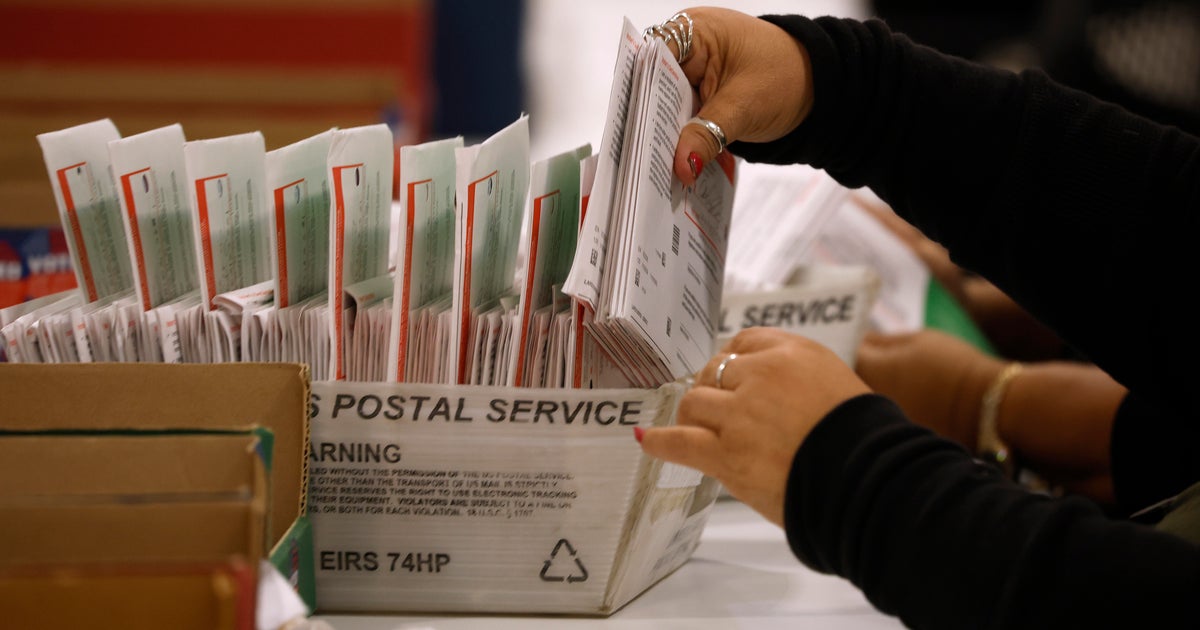
A coalition of 24 U.S. states and the District of Columbia has filed suit seeking to block a new U.S. Postal Service rule affecting mail voting; plaintiffs say the rule violates the Constitution and federal law (reported by CBS). Related reporting says a federal judge in Boston recently canceled a nationwide order that had been blocking USPS work tied to a presidential directive on mail‑in voting (reported by NPR), though that procedural change may be temporary. The Guardian reports the Postal Service says new mail‑ballot requirements are in effect and describes a requirement that state election officials submit voter rolls for inspection. None of the supplied reporting includes the Postal Service rule text, the complaint, or full court orders, leaving key legal and operational details unresolved.
Free every morning
Get the Daily Briefing
The stories shaping today—sourced carefully and considered through Scripture. No outrage bait.
Confirm by email. Unsubscribe at any time.
How sources covered this story
Sanctuary separately assesses reporting quality and alignment with Christian virtues. The virtues assessment considers truthfulness, dignity, compassion, justice, peacemaking, humility, and care for vulnerable people. It does not assess a publisher's faith or reward religious language.
Compare 5 reports
Reporting 82/100Virtues 75/100
- Distinctive contribution
- Names U.S. District Court Judge Indira Talwani and explicitly links the prohibition to an executive order by President Trump.
- Framing
- Neutral and contextual — frames the prohibition as an action by a specific judge and situates it within a presidential executive-order effort.
- Omissions or uncertainty
- Does not specify the exact regulatory requirements at issue, which parties challenged the rule, the court schedule, or the legal reasoning behind the prohibition.
- Why these scores
- Provides specific, attributable facts (judge name, connection to an executive order) that materially increase clarity. Balanced wording and useful context for readers following the litigation. Respectful, precise reporting that avoids sensational language; naming officials and linking to policy context supports truthful and transparent reporting without evident demeaning or partisan language.
Reporting 79/100Virtues 73/100
- Distinctive contribution
- Describes a specific court action (cancellation of a nationwide ruling) and signals that additional blocking action may be imminent, highlighting the fluid litigation posture.
- Framing
- Neutral, procedural framing that emphasizes ongoing uncertainty in the litigation.
- Omissions or uncertainty
- Does not name the judge, explain the rationale for canceling the nationwide ruling, give dates, or identify which court issued the canceled ruling or the prospective new block's source.
- Why these scores
- Effectively summarizes an important procedural shift and responsibly flags ongoing uncertainty. Additional attribution and detail would strengthen the report but the supplied text is accurate and measured. Measured, factual reporting that responsibly communicates uncertainty and avoids alarmism; respects public interest in fair process without rhetorical excess.
Reporting 76/100Virtues 72/100
- Distinctive contribution
- Specifies the scale and legal theory of the challenge: 24 states plus D.C. suing and arguing constitutional and federal-law violations.
- Framing
- Neutral presentation of who sued and the legal basis they assert.
- Omissions or uncertainty
- Does not list which states, which court the suit was filed in, the procedural posture, or details of the rule being challenged.
- Why these scores
- Provides a clear and newsworthy factual summary (number of states, claim of constitutional/federal-law violation). Lacks granular attribution and procedural detail but serves its purpose as a headline-level report. Straightforward reporting of a legal action that treats parties and claims respectfully and without sensationalism; helps readers understand civic processes relevant to fairness and justice.
Reporting 78/100Virtues 70/100
- Distinctive contribution
- States that the USPS announced the new requirements are in effect and that the rules would require state election leaders to submit voter rolls for inspection; also notes expectation of further legal challenges.
- Framing
- Somewhat adversarial wording ('seeks to crack down on the practice') but overall conveys factual claims about the USPS announcement and the scope of the proposed oversight.
- Omissions or uncertainty
- Does not specify which parts of the rule are in effect, the legal authority cited, the timing, which states would be affected, or the court response; the language carries mild editorial tone.
- Why these scores
- Includes detailed, newsworthy claims about policy substance and the USPS's own announcement. Slightly editorial phrasing reduces pure objectivity but the supplied text still conveys important specific information. Conveys potentially consequential information without demeaning language; the critical phrasing ('crack down') adds a mildly adversarial tone but does not itself violate norms of truthfulness or dignity in the supplied excerpt.
Reporting 74/100Virtues 70/100
- Distinctive contribution
- States clearly that a federal judge is considering whether to continue a block on the USPS rule imposing new requirements for mail voting.
- Framing
- Neutral, factual statement of a judicial decision point (consideration whether to continue a block).
- Omissions or uncertainty
- Does not name the judge or court, does not describe the rule's specifics, plaintiffs/defendants, timing, or legal arguments.
- Why these scores
- Clear, straightforward factual sentence appropriate for a short news item. Accurate but terse; lacks identifying details (judge, legal basis, parties) that would increase usefulness. Neutral, non-inflammatory wording that neither dehumanizes nor sensationalizes; factual and restrained, though brief and lacking explicit attention to affected voters or fairness context.
Biblical Reflection
This dispute sits at the intersection of lawful governance and the common good. Christians are called to respect governing authorities and the rule of law while insisting that laws and administrative actions be just and protective of the vulnerable. When administrative changes affect voting access, aim for clarity, fairness, and neighbor‑love over partisan advantage. That means seeking primary documents (the rule text and court filings), supporting legal processes that adjudicate rights, and acting with humility and patience. Practically, the church should prioritize nonpartisan voter education and assistance for those most at risk of losing access (the elderly, disabled, rural voters), pray for judges and election officials, and model truth‑telling that names uncertainty and seeks remedies preserving both institutional functioning and human dignity.
Scripture in context
- 1Romans 13:1-7 — Paul addresses Christians living under civil authority and urges respect for governing authorities insofar as they maintain order and justice, while also recognizing limits to human power. — This passage invites Christians to respect lawful authority and participate faithfully in civic life, while also recognizing the need to call authorities to account when actions undermine justice or civic participation. Pursuing legal review and peaceful advocacy over disputed administrative rules can be an expression of faithful civic responsibility.
Faithful Response
Pray for clarity, fairness, and protection for voters who may be affected, and for judges, election officials, postal workers, and public servants to act with integrity.
Seek and read primary documents before forming a settled public view: obtain the Postal Service rule text, the states' complaint, and relevant court orders or docket entries.
Provide practical, nonpartisan assistance to protect voting access — offer voter information, help with absentee/mail ballot requests, transportation, and assistance for voters with mobility or access needs.
Engage public officials respectfully and request transparent, evidence‑based explanations and contingency plans that protect voters’ rights and the timely delivery of ballots.
Avoid amplifying unverified or partial claims; model calm, accurate communication within congregations and community networks.
Free every morning
Get the Daily Briefing
The stories shaping today—sourced carefully and considered through Scripture. No outrage bait.
Confirm by email. Unsubscribe at any time.
Reflection and Discussion
- 1What specific primary documents (rule text, complaint, court orders, docket entries) should we request or review before forming or sharing a firm judgment?
- 2How can our congregation care for and protect the political participation of vulnerable neighbors regardless of how litigation unfolds?
- 3When should church leaders speak publicly about this dispute and when should they wait for more facts from the legal record?
- 4How do we balance respect for lawful authority with the call to seek justice when administrative actions potentially limit civic participation?
Sources
Reporting links are evidence inputs; Sanctuary News' biblical reflection is commentary.
- 1.24 states sue to block new Postal Service rules for mail votingprimary_reporting
- 2.Judge clears the way for Postal Service work on Trump's mail-in voting order for nowadditional_reporting