News Summary
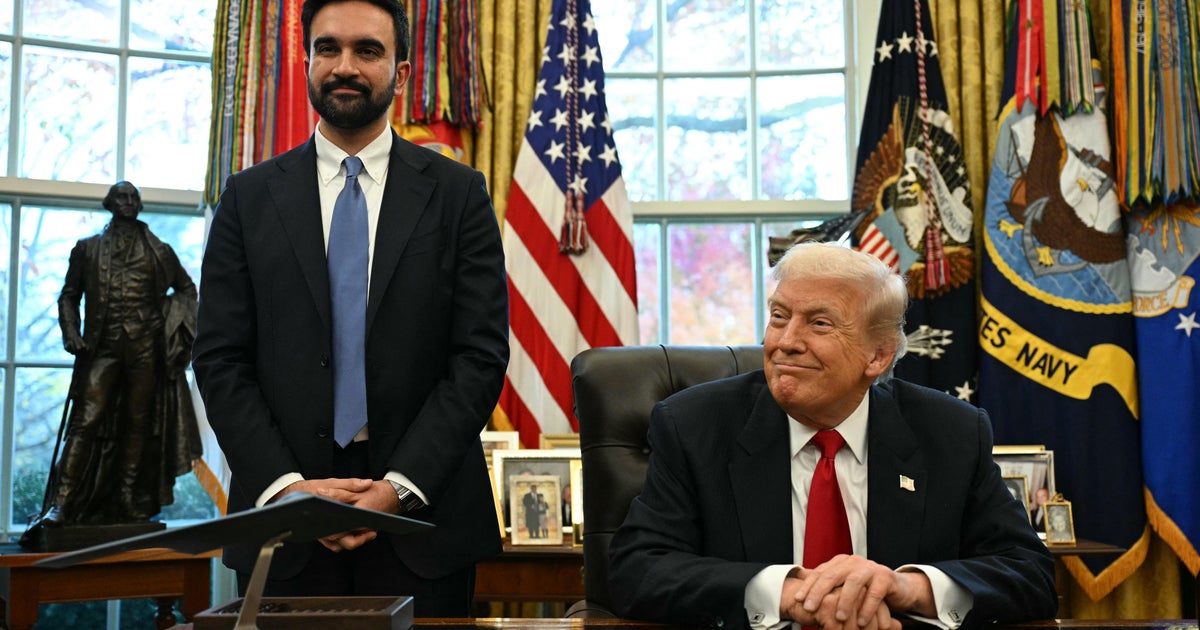
Multiple outlets report that President Donald Trump met with New York City Mayor Zohran Mamdani in New York City. CBS earlier reported the two had met "at least twice" since Mamdani's election. Fox reported the meeting would be hosted at Gracie Mansion and characterized it as their 'third face-to-face meeting' occurring 'on Monday.' The Guardian supplied post-meeting reporting describing the encounter as cordial, reporting a closed-door meeting at Gracie Mansion and attributing to Trump a remark that he hoped Mamdani would be "a great mayor," while describing the discussion as "wide-ranging" and touching on affordable housing and immigration. Reporting so far provides no full agenda, no comprehensive attendee list, and no documented binding commitments or detailed outcomes.
Source and Framing Analysis
CBS (concise, cautious): reports that Mamdani and Trump have met multiple times using the phrase 'at least twice,' signaling uncertainty about precise counts and providing minimal context. Fox (logistics + political frame): supplies specific logistical details (Gracie Mansion; 'on Monday') and a precise count ('third face-to-face meeting') and situates the encounter amid a 'high-stakes midterm push'—an interpretive framing that treats the meeting partly as political. The Guardian (post-meeting detail): reports on the meeting's tone (friendly), names topics discussed (affordable housing, immigration), notes it was closed-door at Gracie Mansion, and attributes a warm comment from Trump that Mamdani might be "a great mayor." Where sources disagree or add single-source details, readers should treat interpretive claims (political motive, whether the meeting was strategic) as judgment rather than established fact and await primary statements from the White House and Mayor's office for definitive information.
Free every morning
Get the Daily Briefing
The stories shaping today—sourced carefully and considered through Scripture. No outrage bait.
Confirm by email. Unsubscribe at any time.
How sources covered this story
Sanctuary separately assesses reporting quality and alignment with Christian virtues. The virtues assessment considers truthfulness, dignity, compassion, justice, peacemaking, humility, and care for vulnerable people. It does not assess a publisher's faith or reward religious language.
Compare 3 reports
Rank 1
The Guardian: Trump and Mamdani appear friendly after ‘wide-ranging’ meeting at Gracie MansionReporting 84/100Virtues 78/100
- Distinctive contribution
- Provides an explicit Trump quote expressing an unusually warm assessment, situates the meeting as 'wide-ranging' with topics named (affordable housing, immigration), and frames the meeting against prior partisan attacks calling Mamdani a symbol of 'communism.'
- Framing
- Presents the encounter as unusually cordial, highlights partisan context by noting Republican portrayals of Mamdani, and emphasizes limited disclosure about substantive disagreements.
- Omissions or uncertainty
- Does not provide direct quotes from Mamdani beyond 'wide-ranging,' gives no specifics on any policy agreements or concrete outcomes, and does not report who else attended or length/details of the closed-door session.
- Why these scores
- The excerpt is precise about what was said and not said, attributes claims (quotes, Mamdani's characterization of the meeting), and gives useful context about partisan framing. It responsibly notes uncertainty (limited details) rather than overclaiming. Minor downside: the supplied excerpt uses charged terms ('communism') as a summary of opponents' rhetoric but attributes that framing rather than asserting it as fact. Reporting is even-handed and non-demonizing, includes direct attribution and candid acknowledgment of limited information, and avoids exploitative sensationalism. It offers context that helps readers judge claims, which aligns with virtues of truthfulness, humility, and regard for dignity.
Reporting 72/100Virtues 72/100
- Distinctive contribution
- States explicitly that the pair have met 'at least twice' since Mamdani's election, reinforcing claims of prior interactions.
- Framing
- Straightforward factual claim with no additional context in the supplied text.
- Omissions or uncertainty
- No details on dates, topics, tone, locations of prior meetings, who attended, or sources for the 'at least twice' claim; lacks direct quotes or attribution in the excerpt.
- Why these scores
- Concise and factual for its apparent purpose; useful verification of prior meetings. Score limited by minimal detail and lack of sourcing or context in the provided excerpt. Neutral, non-inflammatory wording that respects subjects' dignity. The short excerpt shows no evidence of sensationalism or dehumanization, aligning with truthfulness and restraint.
Reporting 66/100Virtues 65/100
- Distinctive contribution
- Specifies this will be their 'third face-to-face meeting' and explicitly locates the meeting at Gracie Mansion on Monday, offering a concrete count and timing.
- Framing
- Matter-of-fact announcement focused on logistics (host, location, timing) and purpose (issues affecting NYC residents); the supplied excerpt lacks broader political framing in itself.
- Omissions or uncertainty
- No information about agenda specifics, attendees, outcomes, or sourcing for the 'third' meeting claim; no direct quotes or detail on how matters will be addressed.
- Why these scores
- The line is clear and likely accurate for a headline/brief, but the excerpt is sparse on sourcing, attribution, and substantive detail. That limits its journalistic depth in the supplied text. Neutral and non-inflammatory language in the excerpt; the lack of context or depth neither advances nor undermines virtues like compassion or justice. Score modest due to minimal content rather than evident fault.
Biblical Reflection
From a Christian perspective, evaluate this public encounter by whether it advances truth, mercy, justice, peacemaking, humility, and care for vulnerable neighbors. Such meetings can be opportunities for cooperative problem-solving on housing, homelessness, public safety, and services for the poor, but they can also become political spectacle. Christians should pray for humility and accountability from both leaders, prioritize evidence of concrete steps that protect and uplift those most at risk, avoid partisan idolization, and press for follow-through that serves the common good. Public trust is strengthened when leaders pursue the vulnerable with concrete policies and when citizens insist on accountability delivered with dignity.
Scripture in context
- 1Mark 10:42-45 — Jesus teaches his disciples about the nature of true leadership in contrast to worldly ambition, holding up service and self-giving as the way of greatness. — When political leaders meet publicly, Christians should evaluate whether their actions reflect servant leadership—seeking the good of others—rather than displays of power or self-promotion.
- 2Philippians 2:3-4 — Paul urges the church toward humility and mutual concern, calling believers to regard others' interests and model self-emptying love. — Believers watching civic encounters are reminded to prioritize the common good, demand humility from leaders, and shape public engagement to protect dignity and serve those in need.
Faithful Response
Pray by name for President Trump and Mayor Mamdani, asking for wisdom, humility, and a focus on the vulnerable in New York City.
Seek primary information: wait for formal statements, press releases, or post-meeting summaries from the White House and the Mayor's office before drawing firm conclusions about outcomes.
Advocate constructively: identify concrete local needs (housing, homelessness services, public safety, city services) and communicate clear priorities to elected officials regardless of partisan framing.
Model humility and civility in public conversation: evaluate actions and documented results rather than relying solely on partisan narratives or rhetoric.
Free every morning
Get the Daily Briefing
The stories shaping today—sourced carefully and considered through Scripture. No outrage bait.
Confirm by email. Unsubscribe at any time.
Reflection and Discussion
- 1What concrete evidence should citizens require after this meeting to determine whether it served the common good?
- 2How can Christians hold leaders accountable for results (policy changes, funding, program implementation) rather than rhetoric or spectacle?
- 3In what practical ways can a congregation engage local government to advocate for neighbors who are most at risk in the city?
- 4How do humility and mutual respect between leaders of differing political perspectives affect the wellbeing of the communities they serve?
Sources
Reporting links are evidence inputs; Sanctuary News' biblical reflection is commentary.
- 1.Trump to meet Mamdani tomorrow in New York Cityprimary_reporting
- 2.Trump to meet with Mamdani in New York amid high-stakes midterm pushadditional_reporting