News Summary
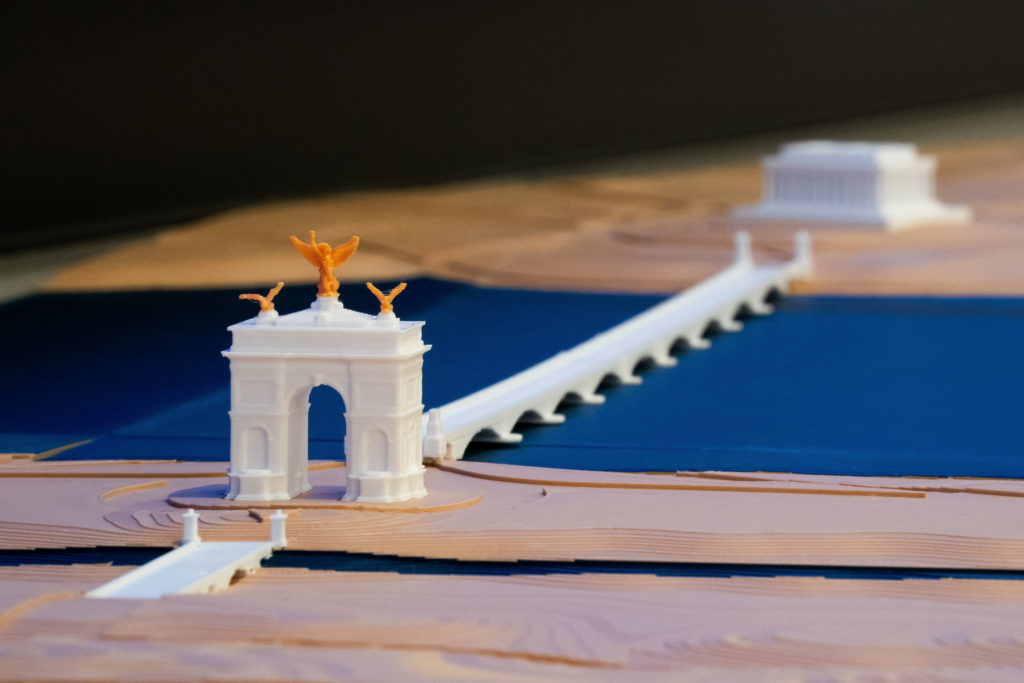
Multiple news outlets report that former President Donald Trump described his proposed Washington, D.C. triumphal arch as a "military complex" that could host drones, position snipers, and store ammunition. Reporting from PBS, NPR, and Fox attributes these operational claims directly to Trump but does not supply engineering plans, operational command documents, funding details, or independent verification showing that the described military functions are planned, feasible, or legally authorized. NPR adds that a federal court is weighing the arch's legality. Fox's reporting in the supplied excerpts includes more concrete physical details (a reported 250-foot height and a siting near the Arlington Memorial Bridge) and an assertion about ammunition storage; those specifics do not appear corroborated in the other supplied pieces.
Source and Framing Analysis
All supplied pieces attribute the militarized characterization of the arch to former President Trump. The outlets differ chiefly in level of detail and framing: Fox News (in the supplied excerpt) reports the most concrete operational specifics—reporting a 250-foot height, proximity to the Arlington Memorial Bridge, drones, snipers, and ammunition storage—and presents those assertions plainly. PBS NewsHour emphasizes that Trump has called the project a "military complex" and links that language to his similar description of a proposed White House ballroom. NPR corroborates the core attribution and situates the claim within an ongoing legal process (a federal court is weighing the arch's legality). None of the supplied reporting includes technical designs, chain-of-command or funding documents, or expert/security analysis that would confirm feasibility, legality, or operational control. The variation in tone and specificity across outlets may shape readers' impressions even though the reporting consistently records what Trump reportedly said.
Free every morning
Get the Daily Briefing
The stories shaping today—sourced carefully and considered through Scripture. No outrage bait.
Confirm by email. Unsubscribe at any time.
How sources covered this story
Sanctuary separately assesses reporting quality and alignment with Christian virtues. The virtues assessment considers truthfulness, dignity, compassion, justice, peacemaking, humility, and care for vulnerable people. It does not assess a publisher's faith or reward religious language.
Compare 3 reports
Reporting 82/100Virtues 78/100
- Distinctive contribution
- Adds legal context by reporting that a federal court is evaluating the arch's legality in addition to describing Trump's security justification.
- Framing
- Presents the claim as Trump's assertion and situates it within an ongoing legal review, implying a contested proposal rather than settled fact.
- Omissions or uncertainty
- No direct quotes from Trump, no details about the court case (which court, what claims or plaintiffs), nor evidence or explanation for how military operations would be implemented.
- Why these scores
- The excerpt responsibly attributes claims to Trump and importantly notes active legal review, which adds necessary context and helps readers judge the claim; brevity limits detail but the essential context is present. The excerpt shows respect for truthfulness and justice by attributing claims and noting legal scrutiny; it refrains from sensational language and gives readers relevant context for evaluating competing claims.
Reporting 72/100Virtues 74/100
- Distinctive contribution
- Confirms Trump is calling the project a 'military complex' and presenting it as necessary for national security (mentions a 'White House ballroom' in that framing).
- Framing
- Frames the structure as a national-security necessity and reports Trump’s own characterization ('military complex').
- Omissions or uncertainty
- No quotation, no supporting evidence or specifics about the alleged military functions, no attribution of when/where he said this, and the reference to a 'White House ballroom' is ambiguous without further context.
- Why these scores
- Concise and directly attributes the characterization to Trump and his stated justification; however the excerpt is brief, lacks specifics or sourcing (exact quotes, timing), and includes an unclear reference ('White House ballroom') that could use clarification. The excerpt is factual and non-dehumanizing, attributing claims to their source and noting a security rationale; it neither amplifies rhetoric unnecessarily nor shows evident disregard for dignity, but it offers limited context on public safety or legal implications.
Reporting 64/100Virtues 65/100
- Distinctive contribution
- Gives specific physical and operational details (250-foot height, proximity to Arlington Memorial Bridge, and explicit mention of ammunition storage) not present in the other excerpts.
- Framing
- Direct and specific; reports operational claims in plain terms without qualification in the supplied excerpt, which can come across as assertive or sensational depending on reader expectations.
- Omissions or uncertainty
- No sourcing beyond 'Trump says' (no date, location, or quote), no evidence or explanation of feasibility, legal permissibility, safety implications, or who would operate the drones/snipers; ammunition quantities are unspecified.
- Why these scores
- The excerpt supplies specific and newsworthy details but is short on sourcing, context, or independent verification; the unqualified presentation of militarized elements could be seen as sensational without added context. While the excerpt attributes claims and does not dehumanize, its focus on weaponry and deployment without broader context about safety, legality, or impact gives it less alignment with virtues of care, humility, and concern for vulnerable people than a more contextualized report would.
Biblical Reflection
This story intersects symbolic politics, public security rhetoric, and stewardship of civic space. Christians should value truth, mercy, justice, peacemaking, humility, dignity, and care for vulnerable neighbors when responding. Legitimate concerns for public safety and preservation of memorials deserve careful, expert-led assessment. At the same time, repeatedly framing monuments and civic spaces in explicitly militarized terms risks normalizing force as the primary response to civic questions and centering personal legacy in matters of public consequence. Christians are called to verify factual claims through appropriate expertise and oversight; to ask who benefits from militarized framing and who may be harmed; to care pastorally for those anxious about securitization; and to pray for leaders to prefer the common good over triumphal spectacle.
Scripture in context
- 1Matthew 5:9 — Within the Sermon on the Mount, Jesus commends peacemakers as blessed and as children of God. — This counsel invites Christians to prioritize reconciliation and the cultivation of peace when evaluating policies and public rhetoric about force, and to be skeptical of moves that foreground martial power over neighbor-care and civic flourishing.
- 2Philippians 2:3-4 — Paul urges the community to value others above themselves and to model Christlike humility and self-giving. — This passage challenges leaders and citizens to ask whether civic projects serve personal legacy or the common good and to prefer humility and service over displays of dominance.
Faithful Response
Pray for discernment for leaders and for the welfare of all who use and steward public spaces.
Seek reliable, technical information (design plans, security assessments, legal opinions) before accepting or amplifying claims about operational capabilities.
Engage civic processes: ask elected representatives, relevant agencies, and permitting authorities for transparency about plans, funding, oversight, and legal authority.
Create or attend public forums where civic experts (engineers, planners, legal scholars, public-safety officials) can explain feasibility, risks, and oversight mechanisms to neighbors and congregations.
Provide pastoral care for congregants who feel anxious about increasing securitization or who work in public safety, and foster congregational formation that resists triumphalism and promotes peacemaking.
Free every morning
Get the Daily Briefing
The stories shaping today—sourced carefully and considered through Scripture. No outrage bait.
Confirm by email. Unsubscribe at any time.
Reflection and Discussion
- 1How should Christians balance legitimate concerns for safety with caution about framing civic projects in explicitly militarized terms?
- 2Who benefits when public monuments or buildings are described principally as instruments of force, and who may be marginalized or harmed?
- 3What standards of transparency, technical review, and democratic oversight should we insist upon before accepting claims that civic spaces will serve military or paramilitary functions?
- 4How can the church model humility and peacemaking amid partisan debate about security and public symbolism?
Sources
Reporting links are evidence inputs; Sanctuary News' biblical reflection is commentary.
- 1.Trump says his D.C. arch will serve as 'military complex' with snipers and dronesadditional_reporting
- 2.Trump says new arch will also deploy drones, position snipers and store ammoadditional_reporting
- 3.Trump says his planned arch would become a 'military complex' able to host drones and snipersprimary_reporting