News Summary
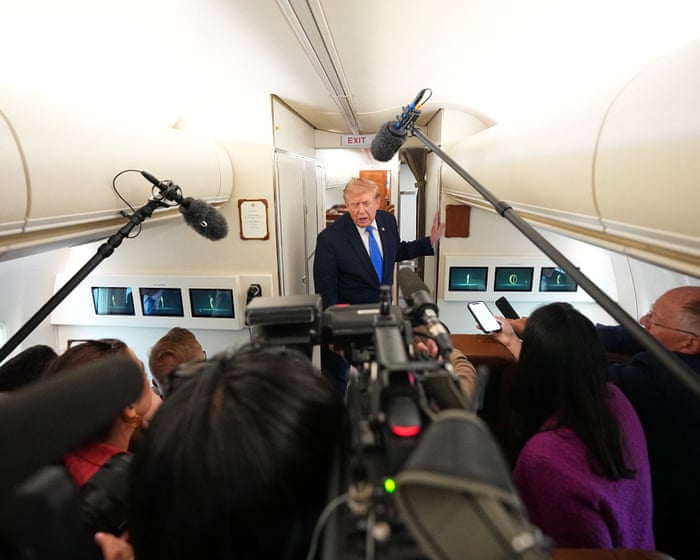
President Donald Trump publicly announced that he was banning CNN, MSNOW and Politico from White House grounds, saying their coverage was unfavorable and warning additional bans could follow. Multiple mainstream outlets (PBS, NPR, BBC, CBS, The Guardian) reported the announcement and that the affected organizations planned legal challenges. Subsequent reporting shows a federal judge temporarily blocked the administration from enforcing the ban and ordered restoration of the outlets' press credentials (reported by CBS and The Guardian). Some operational claims — notably that the president announced the ban via a Truth Social post, that certain reporters were denied entry and had press passes seized at a West Wing gate, and that major TV networks suspended pool coverage — appear in The Guardian’s reporting and are not corroborated in the other supplied excerpts.
Free every morning
Get the Daily Briefing
The stories shaping today—sourced carefully and considered through Scripture. No outrage bait.
Confirm by email. Unsubscribe at any time.
How sources covered this story
Sanctuary separately assesses reporting quality and alignment with Christian virtues. The virtues assessment considers truthfulness, dignity, compassion, justice, peacemaking, humility, and care for vulnerable people. It does not assess a publisher's faith or reward religious language.
Compare 12 reports
Reporting 80/100Virtues 82/100
- Distinctive contribution
- Reports that ABC, CBS, Fox News and NBC refused to participate in White House pool coverage, and notes CNN was unable to fulfill designated pool duties.
- Framing
- Frames the networks' actions as a coordinated refusal/protest in response to the ban; presents the practical consequence for coverage.
- Omissions or uncertainty
- Excerpt doesn't indicate whether the suspension was coordinated, how long it lasted, or quotes from network officials.
- Why these scores
- Provides a concrete, newsworthy detail about press behavior that affects access and coverage; clear and specific, though the excerpt lacks direct sourcing or quotes explaining networks' decisions. Highlights a collective stand protecting access to information and accountability (justice and care for the public), without demeaning individuals; reporting aligns with dignity and protective concern for civic goods.
Reporting 77/100Virtues 80/100
- Distinctive contribution
- Frames the action as part of a longer-running effort by the president to restrict coverage and highlights the First Amendment stakes.
- Framing
- Contextual and interpretive, linking the immediate dispute to an ongoing pattern and legal test.
- Omissions or uncertainty
- Doesn't supply detailed evidence of the broader pattern in the excerpt or specific incidents beyond this ban.
- Why these scores
- Provides useful context and a measured legal-frame description; good attribution in the excerpt, though the broader pattern claim would benefit from explicit examples in the supplied text. Emphasizes protection of constitutional rights and holds power to account, aligning with justice, truthfulness, and concern for vulnerable civic institutions.
Reporting 84/100Virtues 78/100
- Distinctive contribution
- Names the US district judge (Tim Kelly) and records the court's finding that the ban was 'likely unconstitutional' and links the order to a lawsuit filed by the organizations.
- Framing
- Legal-focused framing emphasizing constitutional implications and the judicial finding of likely unconstitutionality.
- Omissions or uncertainty
- Doesn't include the full text of the order, detailed legal reasoning, or precise next steps in the litigation from the excerpt.
- Why these scores
- Supplies specific, attributable legal facts (judge's name, likely-unconstitutional finding, connection to lawsuit). Good specificity and attribution for a short excerpt; limited only by absence of the order's full reasoning in the excerpt. Presents legal protection of press freedom (justice and truth) with clear attribution; avoids dehumanizing language and supports accountability, reflecting virtues of truth and justice in reporting.
Reporting 82/100Virtues 78/100
- Distinctive contribution
- Reports that passes were confiscated at a security gate by the U.S. Secret Service and names the affected reporter and crew, giving concrete procedural detail about how access was denied.
- Framing
- On-the-ground, incident-focused framing that highlights tactics used to enforce the ban.
- Omissions or uncertainty
- Doesn't include an official statement from the Secret Service or West Wing in the excerpt, or precise timing and documentation of the seizure.
- Why these scores
- Provides specific, attributable incident details (mechanism of denial, named personnel) that materially deepen understanding; would be stronger with direct sourcing from the Secret Service included in the excerpt. Reporting centers on concrete facts affecting individuals' rights to work and public accountability; presents the affected people by name without demeaning language, aligning with dignity and truth-telling.
Reporting 78/100Virtues 75/100
- Distinctive contribution
- Explicitly states the judge's order required immediate restoration of journalists' press credentials.
- Framing
- Straightforward factual lede summarizing the judicial action; neutral tone.
- Omissions or uncertainty
- Does not name the judge, give a case caption, specify timing beyond 'temporarily', or provide legal reasoning or plaintiff details.
- Why these scores
- Clear, accurate summary of the court action with useful specific (immediate restoration). Moderately limited by lack of judge name, legal reasoning, or context about the lawsuit. Neutral, factual reporting that defends access to journalists and avoids dehumanizing language; lacks additional context about impacts on people but responsibly reports a decision protecting press freedom.
Reporting 76/100Virtues 75/100
- Distinctive contribution
- States the outlets are suing and explicitly frames their argument as that the ban is unconstitutional.
- Framing
- Legal-action focus; frames the response as a constitutional challenge.
- Omissions or uncertainty
- Doesn't include filing dates, complaint excerpts, or legal grounds beyond the general constitutional claim in the excerpt.
- Why these scores
- Accurate and clear summary of the outlets' intended legal strategy; succinct but limited on procedural or evidentiary detail in the excerpt. Neutral reporting of efforts to defend First Amendment rights supports truth and justice; presents the outlets' standpoint without demeaning language.
Reporting 78/100Virtues 72/100
- Distinctive contribution
- Echoes that the president attributed the ban to 'unfavorable coverage' and warned more bans could follow, corroborating the administration's stated motive.
- Framing
- Neutral reporting of the president's stated rationale; succinct.
- Omissions or uncertainty
- No additional reporting or fact-checking in excerpt; lacks legal or procedural follow-up details.
- Why these scores
- Clear, attributable summary of the president's own stated reasons and threats; concise and reliable for that purpose but limited in scope in the excerpt. Factual attribution of speech supports truthfulness and accountability; neutral tone respects persons while reporting about actions that affect press freedom.
Rank 8
The Guardian: CNN, MS Now and Politico to sue Trump administration over White House ban – liveReporting 70/100Virtues 72/100
- Distinctive contribution
- Registers the outlets' intent to sue as part of live, rolling coverage; frames the move explicitly as protection of First Amendment rights.
- Framing
- Live/real-time framing emphasizing breaking-news and constitutional stakes.
- Omissions or uncertainty
- Live excerpt is brief and includes unrelated material in the supplied text; lacks procedural specifics.
- Why these scores
- Timely and accurate for live coverage; excerpt is brief and mixed with unrelated live-blog content, which reduces clarity and depth in the supplied text. Supports civic rights and accountability in a live-news format; neutral-toned and protective of public interest though not deeply contextual in the excerpt.
Reporting 76/100Virtues 70/100
- Distinctive contribution
- Summarizes broader historical pattern of a tense, 'fiery' relationship between the president and the media, situating the ban in that history.
- Framing
- Contextual/background framing emphasizing continuity with past behavior.
- Omissions or uncertainty
- Doesn't provide examples or evidence of the prior tension in the excerpt; no dates or incidents cited.
- Why these scores
- Helpful, concise contextual statement that situates the announcement; limited by absence of supporting examples or sourcing in the supplied text. Provides civic context and avoids inflammatory language; balanced and respectful in tone while informing readers about patterns of behavior.
Reporting 76/100Virtues 70/100
- Distinctive contribution
- Short summary that frames the action as 'the latest move to target media outlets over their reporting,' highlighting motive and pattern.
- Framing
- Interpretive framing that treats the ban as targeted action against media outlets.
- Omissions or uncertainty
- Does not include quotes from administration or affected outlets in the excerpt; limited detail on enforcement or legal response.
- Why these scores
- Accurate, concise reporting that clarifies motive and situates the event in a pattern; limited procedural detail in the supplied excerpt. Respects truth and emphasizes accountability; neutral and measured in tone without demeaning language.
Reporting 74/100Virtues 68/100
- Distinctive contribution
- Quotes the president's stated rationale for the ban (unfavorable coverage) and that he threatened additional media prohibitions.
- Framing
- Direct-source (video) presentation of the president's remarks; the excerpt reports his words and implied intent.
- Omissions or uncertainty
- Excerpt does not include the full video, exact wording, dates, or surrounding context; lacks independent verification of the alleged cause/effect.
- Why these scores
- Useful primary-source reporting of the president's statement, but the excerpt is short and lacks surrounding context or fact-checking of claims. Neutral presentation of authoritative speech supports truthfulness of attribution; lacks deeper contextualization that would strengthen justice and care-of-vulnerable-people considerations.
Reporting 70/100Virtues 62/100
- Distinctive contribution
- Explicitly reproduces the president's Truth Social language ('constant ‘reporting’ FAKE NEWS!') and characterizes the action as an unprecedented restriction and an attack on the First Amendment.
- Framing
- Normative and critical framing that interprets the ban as an assault on constitutional freedoms; combines direct quote with evaluative language.
- Omissions or uncertainty
- Excerpt does not show responses from the White House defending the action, nor legal analysis beyond the evaluative claim; the strong evaluative wording in the excerpt is not attributed to a named source.
- Why these scores
- Supplies both the president's own words and a clear critical interpretation; valuable for understanding rhetoric and perceived constitutional stakes. The excerpt's normative language reduces neutrality and would benefit from explicit sourcing or balancing quotes in the supplied text. Reporting upholds truth and defends the public good (press freedom), but the strongly judgmental language in the excerpt (
Biblical Reflection
A faithful Christian outlook urges defense of truthful public discourse and protection of institutions that enable civic accountability, while responding in mercy and humility. Christians should call for lawful, transparent procedures when access disputes arise, refuse to celebrate the silencing of voices even when we disagree with them, and care pastorally for journalists, staff, and citizens affected by civic ruptures. Pursue justice for the common good, speak truth in love, and prioritize the dignity and safety of vulnerable neighbors in civic conflict.
Scripture in context
- 1Ephesians 4:15 (summary reference) — Paul urges the church to grow together in unity and maturity by speaking truth while maintaining love and care for one another; the surrounding passage stresses orderly, edifying speech in the body of Christ. — Public speech and civic correction should combine truthfulness with love: Christians are called to name falsehood and seek accountability while preserving the dignity of others and the church’s witness.
- 2Micah 6:8 (summary reference) — The scriptural call to do justice, love mercy, and walk humbly with God grounds Christian engagement in public life. — Christians should pursue justice for the common good (including protecting structures that enable oversight and accountability), show mercy to individuals on all sides, and act with humility rather than seeking partisan advantage.
Faithful Response
Pray for leaders, journalists, judges, and those whose livelihoods are affected; ask God for truth, mercy, and protection for vulnerable people.
Seek verified information from multiple reputable sources before drawing firm conclusions; distinguish reporting of primary actions (announcements, court orders) from interpretation or opinion.
Advocate for lawful, transparent credentialing and dispute-resolution processes rather than endorsing unilateral bans or public shaming.
Model civility in congregational and public conversation: refuse to celebrate the silencing of voices and press for accountability through appropriate institutional means.
Provide pastoral care, media-literacy resources, and forums for measured conversation so congregations can respond with humility and informed conviction.
Free every morning
Get the Daily Briefing
The stories shaping today—sourced carefully and considered through Scripture. No outrage bait.
Confirm by email. Unsubscribe at any time.
Reflection and Discussion
- 1What does faithful speech look like when powerful leaders publicly condemn or ban media organizations?
- 2How should Christians weigh the need for media accountability against the danger of concentrated power used to silence scrutiny?
- 3When public institutions that help protect neighbors are threatened, where should the church stand to protect truth, justice, and the dignity of all involved?
- 4How can congregations cultivate practices (prayer, study, discernment) that reduce susceptibility to polarization and rumor?
Sources
Reporting links are evidence inputs; Sanctuary News' biblical reflection is commentary.
- 1.Donald Trump says he is banning CNN and Politico from White Houseadditional_reporting
- 2.Trump bans CNN, MSNOW and Politico from the White Houseprimary_reporting
- 3.Trump says he's banning CNN, Politico and MS NOW from the White Houseadditional_reporting