News Summary
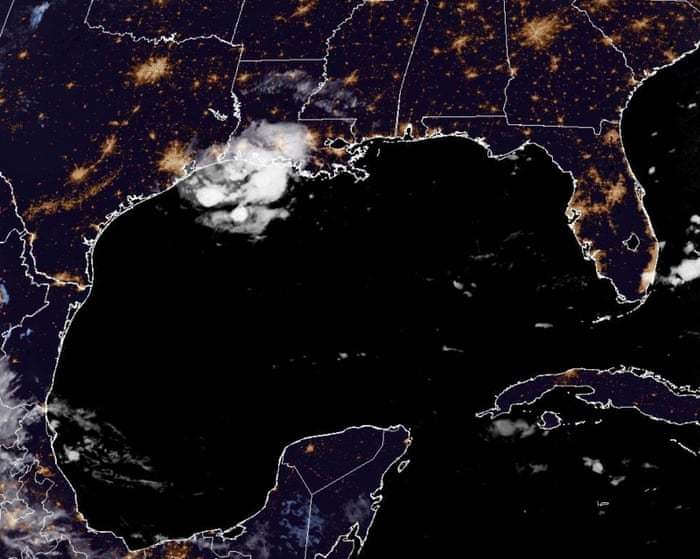
Tropical Storm Edouard, recently upgraded from a tropical depression, was tracking toward the U.S. Gulf Coast with National Hurricane Center (NHC) forecasts expecting strengthening and an increased risk of heavy rain and flooding for parts of Texas and Louisiana. The Guardian reported the upgrade and noted the NHC expected landfall in Texas later the same day; CBS News emphasized the NHC warning that some coastal areas could experience "near-hurricane conditions." Excerpts provided did not include precise wind speeds, rainfall totals, storm-surge forecasts, county-level watches/warnings, or evacuation orders.
Source and Framing Analysis
Both cited reports (The Guardian and CBS News) rely on the National Hurricane Center as the authoritative source and frame Edouard as an imminent meteorological hazard rather than a political or human-interest controversy. Distinct contributions: The Guardian’s excerpt highlights the recent upgrade from a tropical depression and explicitly mentions an expected landfall in Texas later that day; CBS News underscores the potential for "near-hurricane conditions." There is no substantive contradiction between the outlets in the supplied excerpts—differences are emphasis and wording. Common limitations across both excerpts: absence of granular, quantitative forecast products (specific sustained winds/gusts, rainfall totals by county, storm-surge heights), no forecast cone or map in the excerpts, and no detailed local watches/warnings or evacuation guidance. Overall framing is appropriate for short warnings: authoritative, non-sensational, and focused on public safety, but readers in affected areas should consult NHC and local emergency-management channels for operational detail.
Free every morning
Get the Daily Briefing
The stories shaping today—sourced carefully and considered through Scripture. No outrage bait.
Confirm by email. Unsubscribe at any time.
How sources covered this story
Sanctuary separately assesses reporting quality and alignment with Christian virtues. The virtues assessment considers truthfulness, dignity, compassion, justice, peacemaking, humility, and care for vulnerable people. It does not assess a publisher's faith or reward religious language.
Compare 2 reports
Reporting 78/100Virtues 72/100
- Distinctive contribution
- Specifies that the system was upgraded from a tropical depression to Tropical Storm Edouard and that NHC forecasters expect landfall in Texas later on Tuesday; explicitly highlights potential heavy rains and flooding for Texas and Louisiana.
- Framing
- Straightforward, weather-focused framing emphasizing the storm's development, expected strengthening, and flood/rain risk for Gulf Coast states. Language is descriptive and non-sensational.
- Omissions or uncertainty
- No wind-speed estimates, no storm track map, no forecast cone, no storm surge or rainfall totals, no timing beyond 'later on Tuesday,' no local watches/warnings or evacuation/preparation guidance, and no discussion of forecast confidence or uncertainty range.
- Why these scores
- Concise, accurately attributed to the National Hurricane Center and provides a material operational update (upgrade + expected landfall). The piece is limited in technical specifics (wind speeds, rainfall amounts, watches/warnings) and local preparedness details, which is acceptable for a brief news update but keeps it from a higher score. Neutral, non-exploitative reporting that focuses on imminent risk without sensational language; treats the situation with sober seriousness. Lacks explicit attention to vulnerable populations, safety guidance, or calls for compassion/assistance, so it does not score higher on care/justice dimensions.
Reporting 74/100Virtues 70/100
- Distinctive contribution
- States the possibility of near-hurricane conditions for parts of the Texas and Louisiana Gulf Coasts and explicitly credits the National Hurricane Center as the source of the warning.
- Framing
- Urgency-leaning weather warning framing (emphasizes strengthening and potential near-hurricane conditions) while remaining concise and tied to the authoritative source (NHC).
- Omissions or uncertainty
- Does not provide specific wind speeds, timing details beyond 'today', rainfall or surge projections, exact geographic scope, local watches/warnings, recommended safety actions, or forecast confidence metrics.
- Why these scores
- Clear, attributable to the National Hurricane Center and communicates a salient hazard (near-hurricane conditions). As a short alert it is effective, but it lacks quantitative specifics and local guidance that would increase utility and score. Factual and measured reporting tied to an authoritative source; avoids sensationalism and thus respects truthfulness and dignity. Like the other brief, it does not explicitly address needs of vulnerable people or offer guidance that would score higher for compassion or care.
Biblical Reflection
No biblical reflection is available.
Scripture in context
- 1Matthew 25:35-40 — A passage that pairs a judgment scene with concrete acts of mercy—feeding, clothing, sheltering, and visiting—framing practical care for those in need as central to faithful life. — When Edouard threatens Texas and Louisiana communities, the passage calls Christians to provide concrete help—food, shelter, transport, medical assistance, and compassionate presence—seeing such service as integral to discipleship rather than optional charity.
- 2Psalm 46 — A communal psalm that acknowledges danger and chaos while affirming God's presence and steadiness amid upheaval. — Psalm 46 encourages honest facing of fear, communal prayer and lament when disaster threatens, and acting with calm resolve—supporting both spiritual care and practical stewardship during preparations and response to the storm.
Faithful Response
Follow official guidance: continuously monitor the National Hurricane Center and local emergency-management channels for watches, warnings, and evacuation orders; do not rely solely on secondhand summaries.
Prioritize vulnerable neighbors: check on elderly, disabled, low-income, and isolated people; offer transport, shelter, or help arranging official sheltering when needed.
Prepare practical supplies: water, nonperishable food, medications, chargers, important documents in a waterproof container, medical equipment needs, and a basic first-aid kit.
Coordinate with authorities and trusted relief organizations (local emergency management, American Red Cross or local equivalents) to avoid duplicative or obstructive actions.
Communicate calmly and accurately: share only verified official updates, avoid amplifying unconfirmed rumors, and use congregation or community channels to distribute vetted instructions.
Prepare congregational capacity: establish a volunteer contact list/phone tree, identify people who can host displaced neighbors, organize meal teams, and plan for information hub or staging-space roles if safe and authorized.
Think ahead to recovery: plan for cleanup, temporary housing support, pastoral care for trauma and grief, and advocacy to assist neighborhoods that may be disproportionately affected by flooding and infrastructure disruption.
Free every morning
Get the Daily Briefing
The stories shaping today—sourced carefully and considered through Scripture. No outrage bait.
Confirm by email. Unsubscribe at any time.
Reflection and Discussion
- 1How will our household and congregation prioritize and protect people with the fewest resources or least mobility if Edouard causes significant flooding in Texas or Louisiana?
- 2What trusted official sources (NHC, local emergency management) will we commit to monitoring, and who in our community will relay clear, verified instructions?
- 3How can our response combine immediate mercy (shelter, food, transport) with attention to longer-term justice and recovery for impacted neighborhoods?
- 4In what ways does preparation for storms like Edouard shape our theology of stewardship, neighbor-love, and communal solidarity?
- 5How can clergy and lay leaders avoid either panic or complacency in communications while still offering comfort and practical help?
Sources
Reporting links are evidence inputs; Sanctuary News' biblical reflection is commentary.
- 1.Tropical Storm Edouard strengthens as it nears Louisiana, Texas coastsadditional_reporting
- 2.Tropical Storm Edouard expected to inundate parts of Texas and Louisianaprimary_reporting