News Summary
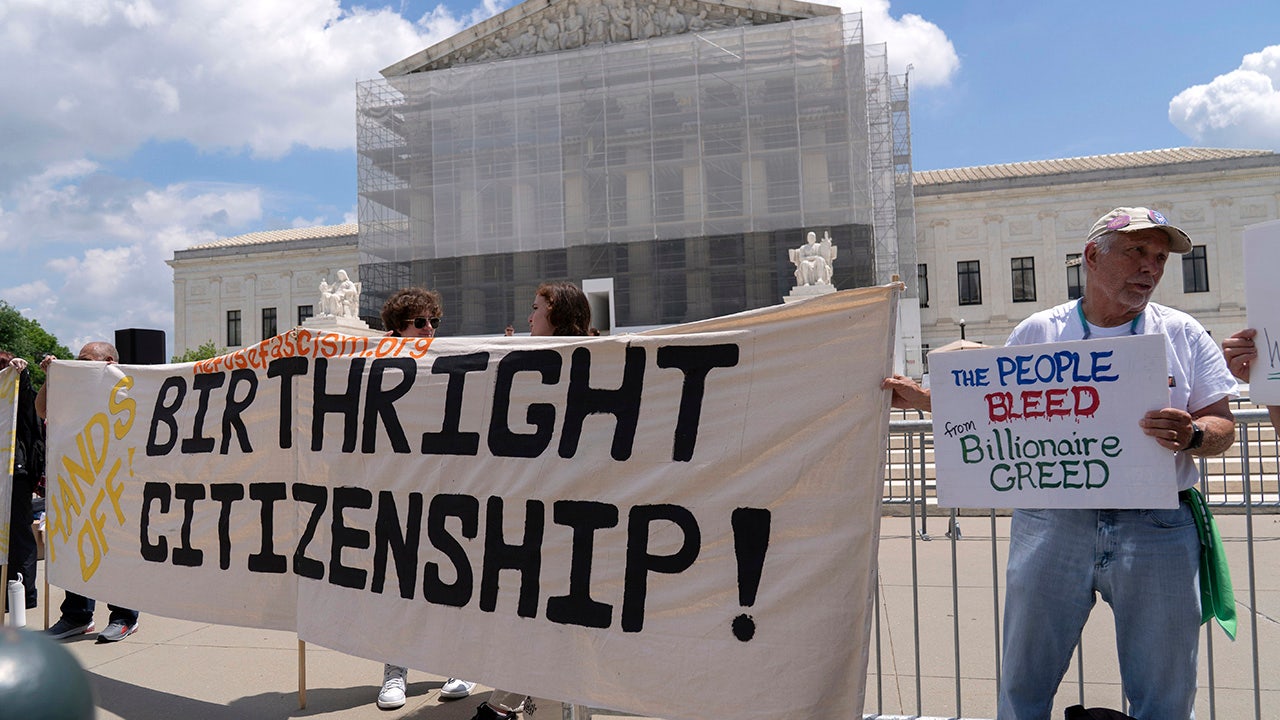
In Trump v. Barbara, the U.S. Supreme Court issued a 6-3 decision affirming that birthright citizenship under the Fourteenth Amendment remains the law of the land and rejecting President Trump’s executive order seeking to exclude certain children born in the U.S. from automatic citizenship. Chief Justice John Roberts, Justices Brett Kavanaugh and Amy Coney Barrett joined the court’s three liberal justices for the majority; Justices Clarence Thomas, Samuel Alito and Neil Gorsuch dissented. The case was brought by an immigrant using the pseudonym “Barbara.” The article reports strong conservative criticism of the ruling from figures including White House advisor Stephen Miller, Sen. Eric Schmitt and other Republican lawmakers who called for a constitutional amendment or new legislation. Supporters of the decision, including Sen. Alex Padilla and Rep. Jasmine Crockett, praised the Court for upholding longstanding precedent. Commentators and officials quoted in the piece argued the ruling has implications for immigration policy, national sovereignty, and concerns about “birth tourism,” while opponents warned of incentives for illegal entry; proponents emphasized legal precedent and protections for children born in the United States.
Biblical Reflection
Theologically and pastorally, this ruling raises two Christian imperatives that can feel in tension: fidelity to lawful institutions and care for vulnerable human beings. The factual core — that the Court reaffirmed a constitutional protection for children born on U.S. soil — is straightforward. The article’s framing leans heavily on alarmist political reactions and partisan rhetoric, which can obscure legal reasoning and human realities. Christians should be wary of language that dehumanizes immigrants or treats children as mere political instruments; such rhetoric conflicts with the biblical call to welcome the stranger and defend the weak. At the same time, legitimate concerns about orderly immigration, national security, and the rule of law deserve sober, evidence-based discussion rather than hyperbole. A faithful Christian response is to insist on truthfulness in public argument, to evaluate policy proposals by their likely effects on real people, and to pursue solutions that balance lawful governance with mercy and neighbor-love.
Scripture in context
This outlook does not yet include contextual Scripture citations. Do not treat a general biblical theme as an exegetical conclusion.
Faithful Response
No prescribed response is offered. Consider the reflection prompts below in your own church context.
Reflection and Discussion
- 1How does fear or political advantage shape the way leaders describe immigrants and children in public debate?
- 2Are we allowing legal disputes to turn human beings — especially children — into political tools rather than persons made in God’s image?
- 3What measures can Christians encourage that respect lawful governance while protecting and welcoming vulnerable families?
Sources
Reporting links are evidence inputs; Sanctuary News' biblical reflection is commentary.
This outlook currently relies on fewer than two linked sources. Broaden verification before teaching from it.
- 1.Original reportprimary