News Summary
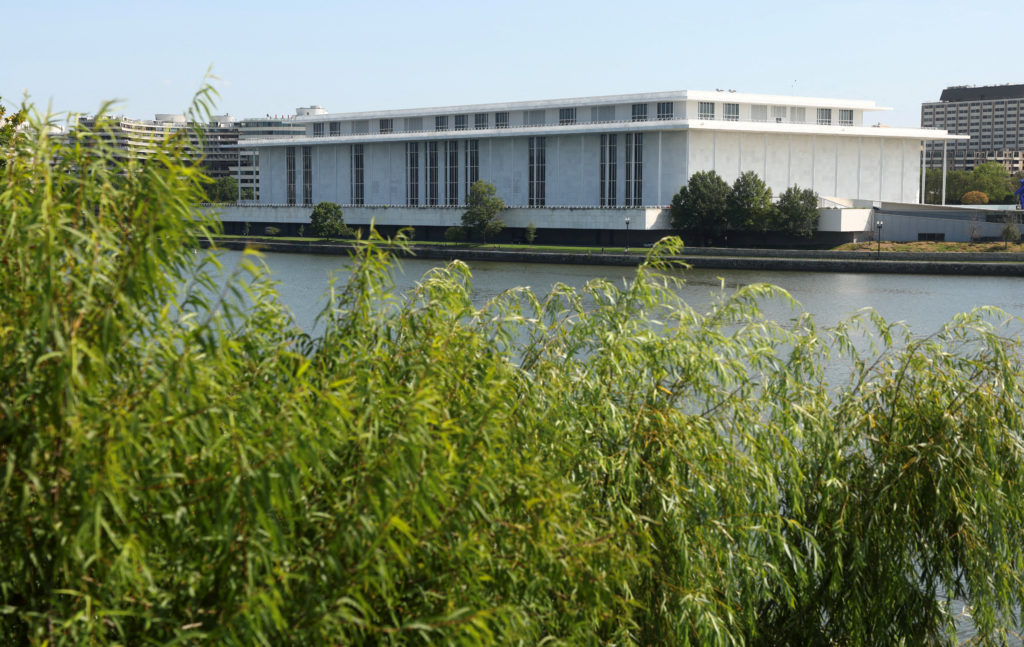
Multiple outlets report that the John F. Kennedy Center for the Performing Arts board voted to close at least part of the institution. PBS NewsHour (summarizing AP) attributes the vote to financial troubles and a dispute over placing President Donald Trump’s name on the venue, citing unnamed "people familiar with the matter." Fox News reported the board voted to immediately close the main building, citing safety and funding concerns and saying the outlet "confirmed" the vote. CBS News reported that a federal judge again blocked the board from adding President Trump’s name to the facade. NPR provided brief corroboration that the board voted to close. The supplied accounts rely largely on unnamed or anonymous sources in their excerpts; no on-the-record board statement, posted minutes, or detailed official rationale is included in the material provided.
Source and Framing Analysis
The supplied coverage converges on a single core claim — that the Kennedy Center board voted to close — but differs on motive, scope, and urgency. PBS NewsHour (via AP) frames the vote as linked to financial problems and a naming dispute over President Trump, attributing that causal link to unnamed "people familiar with the matter." Fox News frames the action as an immediate operational closure of the main building and emphasizes "safety and funding concerns," asserting independent confirmation. CBS supplies a legal-development detail reporting that a federal judge again blocked adding President Trump's name to the facade. NPR offers terse corroboration of the vote timing. Common weaknesses across reports include reliance on anonymous sources in the supplied excerpts, absence of an on-the-record board statement or posted minutes, and lack of specifics about vote totals, the concrete nature of any safety issues, timelines, and staff protections. These framing differences matter: accounts foregrounding a naming dispute suggest political and legal remedies, while accounts foregrounding safety/funding point to operational urgency and different remediation paths.
Free every morning
Get the Daily Briefing
The stories shaping today—sourced carefully and considered through Scripture. No outrage bait.
Confirm by email. Unsubscribe at any time.
How sources covered this story
Sanctuary separately assesses reporting quality and alignment with Christian virtues. The virtues assessment considers truthfulness, dignity, compassion, justice, peacemaking, humility, and care for vulnerable people. It does not assess a publisher's faith or reward religious language.
Compare 5 reports
Reporting 80/100Virtues 78/100
- Distinctive contribution
- Identifies the closure reasons as financial trouble and a naming dispute over putting President Trump's name on the venue, and attributes the information to people familiar with the matter (AP sources).
- Framing
- Frames the closure as driven by both fiscal problems and political/naming controversy, presenting it as a consequence of internal/external disputes rather than solely operational issues.
- Omissions or uncertainty
- Doesn't identify the named sources, lacks detail on the nature/scale of financial problems, no timeline for closure or repairs, and no documentation of deliberations or votes.
- Why these scores
- Gives substantive reasons and includes attribution to "people familiar"/AP sources, which improves verifiability compared with unattributed claims. Still limited by not naming sources or providing documentary evidence in the excerpt, but overall a solid concise report. Addresses matters of public accountability (financial stewardship, naming controversy) with restrained language and attribution, supporting truthfulness and justice-oriented reporting without sensationalism.
Reporting 78/100Virtues 75/100
- Distinctive contribution
- States that a federal judge intervened to block the board from adding President Trump's name to the facade, giving a legal-development detail not present in all other excerpts.
- Framing
- Frames the naming issue as an active legal dispute, presenting the judge's block as a continuing constraint on the board's options.
- Omissions or uncertainty
- No identification of the judge, court, case name, or specifics of the order (temporary injunction vs. final ruling). Timing is vague beyond "Earlier Tuesday." No sources cited in the excerpt.
- Why these scores
- Delivers a clear, consequential legal fact succinctly. The excerpt lacks court specifics and direct attribution (e.g., which court or order), which limits verifiability but the claim is focused and plausible. Neutral legal reporting that neither dehumanizes nor sensationalizes. Provides accountability-relevant information (judicial check) that aligns with justice and truthfulness, though the excerpt is brief.
Reporting 76/100Virtues 75/100
- Distinctive contribution
- Reports that fencing was erected around the main Kennedy Center building and ties that visible security/closure measure to the board's recent vote to close most of the center for repairs.
- Framing
- Frames the physical installation of fencing as an immediate follow-up action to a politically characterized board vote ("Trump-aligned"), emphasizing the tangible consequences of the vote.
- Omissions or uncertainty
- No named sources or official statements cited; no detail on which parts are closed, how long repairs will take, who authorized the fencing, or the specific reasons classified as "repairs." The term "Trump-aligned" is not defined or attributed.
- Why these scores
- Concise, specific, and newsworthy detail (fencing + timing). Lacks sourcing and fuller context (who ordered fencing, scope/duration of closure), but accomplishes a clear factual update responsibly. Neutral, factual wording without dehumanizing language; reports an action affecting public property and attributes political alignment but does not sensationalize or denigrate. Limited context reduces ability to highlight compassion or justice concerns.
Reporting 74/100Virtues 70/100
- Distinctive contribution
- States that the board cited safety and funding concerns as the reasons for an immediate closure and claims the outlet "confirmed" the vote on Tuesday.
- Framing
- Frames the closure as an urgent action motivated by safety and financial issues, emphasizing immediacy and operational concerns.
- Omissions or uncertainty
- No sourcing beyond the outlet's claim to have "confirmed" the vote; no specifics about the safety issues, the funding shortfall, or who provided the confirmation; scope of closure unspecified.
- Why these scores
- Provides a clear stated rationale for the closure (safety and funding) and timing. The excerpt's credibility would be stronger with named sources or documents; as presented it's a useful report but limited by lack of attribution details. Neutral presentation focusing on institutional safety and financial stewardship. No demeaning language; however, lack of sourcing reduces transparency, which modestly lowers alignment with truthfulness and humility.
Reporting 72/100Virtues 70/100
- Distinctive contribution
- Concise confirmation of the board's vote to close the historic center and a timing marker placing the vote on the prior day.
- Framing
- Presents the closure as a brief headline item within a broader news roundup, treating it as one of several current developments rather than as an in-depth story.
- Omissions or uncertainty
- No reasons for the closure, no sourcing, no details on scope/duration/authority; part of a roundup so inherently cursory.
- Why these scores
- Appropriately brief for a newsletter blurb and useful for confirmation of the basic fact and timing. Lacks sourcing and explanatory detail, which is acceptable in context but limits depth. Neutral, non-inflammatory summary. Limited detail prevents stronger alignment with virtues like compassion or justice, but the wording is factual and respectful.
Biblical Reflection
Truth and mercy must be held together. Truth calls us to press for transparent, verifiable information from institutional leaders (published minutes, safety reports, financial statements) and to avoid amplifying unverified claims. Mercy calls us to prioritize the wellbeing of those who will bear the immediate costs — hourly staff, contracted artists, educators, and partner organizations — and to press for humane transition plans and support. Pursue peacemaking rather than partisan advantage: advocate accountable governance while mobilizing practical care for vulnerable neighbors. Stewardship, reconciliation, and protection of human dignity should guide Christian responses when public institutions fracture.
Scripture in context
- 1Matthew 5:9 — Part of Jesus' teaching that calls followers to be peacemakers amid conflict. — When cultural conflict fractures community life, Christians are called to seek reconciliation and protective care for neighbors—pressing for truthful, nonviolent solutions rather than amplifying divisions for advantage.
- 2Parable of the Talents (Matthew 25:14–30) — A teaching about faithful stewardship where servants are entrusted with resources and are accountable for how they use them. — Leaders of public cultural institutions have a stewardship responsibility to manage resources prudently and safeguard people dependent on those resources; Christians should advocate for accountable stewardship and protection of vulnerable workers when institutions face crises.
Faithful Response
Pray for clarity, protection, and provision for Kennedy Center staff, artists, educators, and program partners while avoiding premature partisan judgments.
Seek reliable, on-the-record information before amplifying unconfirmed claims: request published board minutes, an official statement from the Kennedy Center, safety reports, and financial disclosures from authoritative sources.
Support affected arts workers practically — donate to vetted emergency funds, connect people to job and housing resources, and offer skills, referrals, or temporary space when able.
Advocate publicly and pastorally for institutional transparency and humane transition plans: ask leaders to publish timelines, specify affected spaces and programs, and detail staff protections, severance, or remedies for contracted artists.
Mobilize local congregational resources (benevolence funds, counseling referrals, temporary rehearsal or meeting space) and coordinate with arts nonprofits to reduce immediate harm to vulnerable neighbors.
Free every morning
Get the Daily Briefing
The stories shaping today—sourced carefully and considered through Scripture. No outrage bait.
Confirm by email. Unsubscribe at any time.
Reflection and Discussion
- 1How should my commitment to truth and neighbor-love shape my response when reports rely on anonymous sources and different outlets emphasize different causes?
- 2What practical steps can my congregation take this week to support artists, hourly workers, and others economically affected by an institutional closure?
- 3How can Christians call for both accountability of institutional leaders and mercy for staff and community members caught in the fallout?
- 4When cultural institutions become politicized, how do we pursue peacemaking and the common good without ignoring legitimate governance or safety concerns?
Sources
Reporting links are evidence inputs; Sanctuary News' biblical reflection is commentary.
- 1.Kennedy Center board votes to close over Trump naming dispute and financial trouble, AP sources sayprimary_reporting
- 2.Kennedy Center board votes to immediately close main building over safety, financial concernsadditional_reporting