News Summary
Source and Framing Analysis
Free every morning
Get the Daily Briefing
The stories shaping today—sourced carefully and considered through Scripture. No outrage bait.
Confirm by email. Unsubscribe at any time.
How sources covered this story
Sanctuary separately assesses reporting quality and alignment with Christian virtues. The virtues assessment considers truthfulness, dignity, compassion, justice, peacemaking, humility, and care for vulnerable people. It does not assess a publisher's faith or reward religious language.
Compare 9 reports
- Distinctive contribution
- Reports at least one death, large‑scale power outages with restoration efforts, and isolated communities on the southern end of the Big Island cut off from communication — specifics that materially illuminate the recovery state.
- Framing
- Human‑impact and recovery framing emphasizing ongoing harm and isolation; presents concrete consequences of Lala rather than abstract forecasts.
- Omissions or uncertainty
- Does not quantify the exact number of households without power, locations of the fatality, or timeline for restoration in the excerpt; attribution for casualty and outage figures is not shown.
- Why these scores
- Substantive, concrete reporting about human impacts and infrastructure with clear consequences; slight limitations because the excerpt lacks detailed sourcing and exact figures for some claims, but overall strong for impact reporting. Focuses attention on human suffering, isolation, and loss of life in a factual way that encourages empathy and response; aligns well with care for the vulnerable and justice‑oriented reporting.
- Distinctive contribution
- The specific claim that roughly 100 homes were swept off foundations on the Big Island, plus the observation that Lala fluctuated between tropical storm and hurricane strength.
- Framing
- Damage and aftermath framing emphasizing severe property destruction; factual and dramatic but presented as reporting on physical impacts.
- Omissions or uncertainty
- Excerpt does not indicate the source or verification for the '100 homes' figure, lacks dates/locations of the homes, and does not detail casualties or displacement figures in the excerpt.
- Why these scores
- Strong on conveying the scale of destruction, which is relevant context for subsequent threats. Slight deduction because the excerpt doesn't show sourcing or corroboration for the numerical damage claim. Highlights material harm to families and communities, prompting concern and potential aid; maintains factual tone and dignity in reporting the damage.
- Distinctive contribution
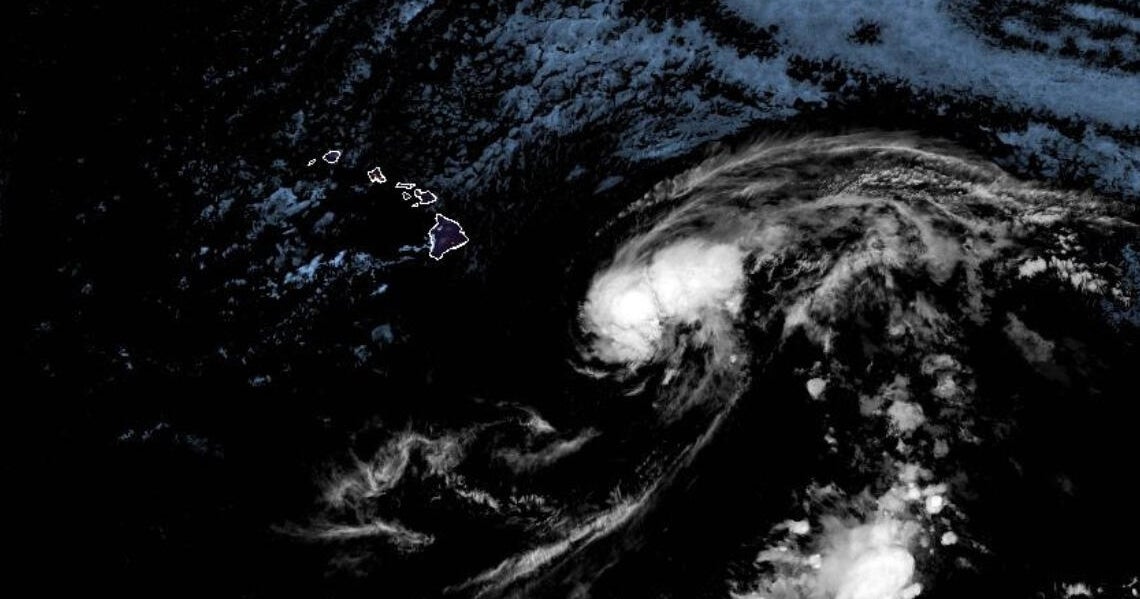
- Numeric forecast detail (storm location ~420 miles SE of Hilo, winds 60 mph/97 km/h), mention of possible strengthening to hurricane, and linkage to El Niño as a broader explanatory frame.
- Framing
- Forecast and policy framing (state of emergency) that situates the storm in scientific and administrative context; attributes numbers to NOAA.
- Omissions or uncertainty
- Does not provide final observed impacts in the excerpt; the climate linkage to El Niño is suggestive and may require more context to assess causality.
- Why these scores
- Provides well‑sourced numeric forecasting and policy context (state of emergency) and responsibly signals uncertainty about strengthening; strong explanatory value for readers. Informs the public about official warnings and systemic drivers, supporting truthful, preventive action and respect for public safety; neutral and informative tone aligns with prudence and care.
- Distinctive contribution
- Frames Moke as arriving 'just days after' Lala and notes NWS as the source saying the storm is gathering strength; highlights elevated vulnerability of areas previously affected by Lala.
- Framing
- Urgent and cumulative risk framing (compounding disasters); mixes attribution to the National Weather Service with strong language ('poised to slam').
- Omissions or uncertainty
- Excerpt contains a minor editorial concatenation error and does not provide precise rainfall totals, specific timing beyond 'Saturday evening', or detailed local impacts.
- Why these scores
- Provides important context about timing and vulnerability with NWS attribution. Slightly docked for a clumsy excerpt presentation and for using emotive phrasing ('slam') though the underlying warning is relevant. Highlights the plight of already‑harmed communities and warns of further risk, which aligns with compassion and concern for the vulnerable; neutral reporting without dehumanizing language.
- Distinctive contribution
- Explicit attribution of the rainfall estimate to NOAA and a plain‑language summary ('more than a foot'), which corroborates other numeric estimates while indicating source credibility.
- Framing
- Cautionary — highlights flood risk via NOAA attribution; brief and focused on the core forecast point.
- Omissions or uncertainty
- Does not specify distribution of rainfall across the island, timing, or localized hazards (e.g., mudslides), nor does it provide more precise inch estimates or impacted areas.
- Why these scores
- Clear, succinct reporting with direct attribution to NOAA makes this a responsible, useful excerpt for public understanding. Score reflects solid attribution and clarity despite brevity. Attribution to an authoritative source and straightforward warning serve truthfulness and care for public safety; neutral, non‑sensational tone supports dignity and prudence.
- Distinctive contribution
- Quantified rainfall totals (as much as 10 inches, up to 15 inches in isolated places) and explicit identification of windward and southeast slopes as areas at risk of life‑threatening flooding and mudslides.
- Framing
- Urgent hazard framing emphasizing life‑threatening flooding and mudslides; uses general attribution (“Forecasters expected”) but does not name a specific agency in the excerpt.
- Omissions or uncertainty
- Does not name which forecasting agency produced the estimates, omit timing (exact start/end of expected rainfall), and lacks geographic granularities (communities or elevation ranges).
- Why these scores
- Concise and specific about expected rainfall and hazards, which is well suited to public‑safety reporting. Score reduced slightly because the excerpt lacks explicit attribution to a named forecasting agency and precise timing/context. The excerpt responsibly warns of danger and implicitly cares for vulnerable people by highlighting life‑threatening risks; neutral tone and clear concern for safety support a positive alignment with truthfulness and care.
- Distinctive contribution
- Specifies that Moke will pass south of a direct hit and provides a concrete timing window for peak impacts on the Big Island.
- Framing
- Practical, hazard‑focused framing comparing Moke's impacts to those of Hurricane Lala; authoritative but the excerpt does not name the forecasting source.
- Omissions or uncertainty
- Doesn't identify the source of the forecast or provide numeric rainfall/wind figures in the excerpt; limited geographic granularity beyond 'Big Island.'
- Why these scores
- Useful, clear forecasting information with actionable timing; slight deduction for lack of specific attribution and numerical detail in the excerpt. Communicates imminent risk to a specific community, helping people take protective action; neutral, non‑alarmist presentation supports prudent care.
- Distinctive contribution
- Direct citation of the National Hurricane Center's warning and a clear starting timeframe for expected hazards, which supports understanding of official preparedness actions.
- Framing
- Authoritative, precautionary framing with explicit attribution to the NHC; focused on imminent hazards and official forecasted escalation.
- Omissions or uncertainty
- Doesn't include subsequent observed impacts or specific local consequences in this excerpt; the phrasing 'could become a hurricane' correctly conveys uncertainty but lacks probability estimates.
- Why these scores
- Responsible use of NHC attribution and cautious language about potential intensification make for solid public‑safety reporting; not a deep investigation but fit for purpose. Serves public safety by relaying official warnings and uncertainties; neutral and factual, supporting prudence and care without sensationalism.
- Distinctive contribution
- Explicit statement that cleanup from Hurricane Lala is still underway, which emphasizes community vulnerability ahead of Moke's arrival.
- Framing
- Brief, recovery‑focused framing linking current threat to prior storm impacts; does not provide technical forecasting detail in the excerpt.
- Omissions or uncertainty
- Does not include rainfall figures, timing, specific locations at risk, or the source of cleanup status; minimal detail limits standalone utility.
- Why these scores
- Serves as a concise contextual note tying Moke to recovery from Lala. Adequate for context but limited by brevity and lack of attribution or additional specifics in the excerpt. By drawing attention to ongoing recovery needs, the excerpt aligns with concern for those affected; neutral tone and no sensationalism support dignity and compassion.
Biblical Reflection
Scripture in context
This outlook does not yet include contextual Scripture citations. Do not treat a general biblical theme as an exegetical conclusion.
Faithful Response
Free every morning
Get the Daily Briefing
The stories shaping today—sourced carefully and considered through Scripture. No outrage bait.
Confirm by email. Unsubscribe at any time.
Reflection and Discussion
- 1How does our trust in God shape our willingness to heed scientific and civic warnings without either ignoring them or panicking?
- 2Who in our congregation and neighborhood is most vulnerable to this storm, and how can we intentionally prioritize them in our response?
- 3What concrete steps can our faith community take now to offer shelter, transport, or material support if the need arises, while coordinating with authorities?
- 4How will we avoid exploiting fear for attention or partisan aims, and instead witness Christlike mercy, calm, and service?
Sources
Reporting links are evidence inputs; Sanctuary News' biblical reflection is commentary.
- 1.Hurricane warning issued for the Big Island of Hawaii as Tropical Storm Lala approachesadditional_reporting
- 2.Hawaii under a hurricane warning as Tropical Storm Lala takes aimprimary_reporting