News Summary
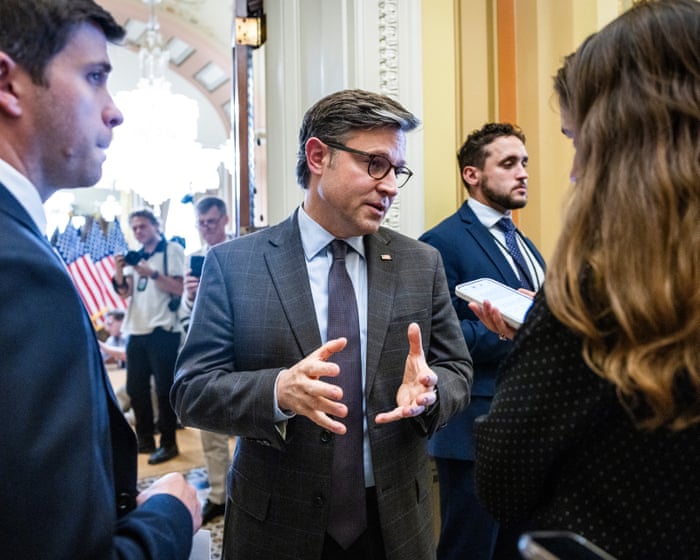
On September 1, 2026, the U.S. House of Representatives approved a continuing resolution (CR) to fund the federal government into early December. The Guardian reports the CR authorizes spending through December 11 and passed the House by a 370–48 roll-call vote (with 19 Republicans and 29 Democrats opposed); PBS NewsHour independently confirms that the House passed a short-term measure extending funding into early December. Reporting frames the action as a pragmatic effort to avert a government shutdown ahead of the November midterm elections while delaying longer-term budget negotiations.
Source and Framing Analysis
The Guardian supplies the most specific procedural details: an end date of December 11, a 370–48 roll-call margin, a partisan breakdown of the dissenting votes (19 Republicans and 29 Democrats), and the immediate next-step statement that the bill will go to President Trump. PBS NewsHour provides independent corroboration of the core outcome (a short-term funding extension into early December) but in a briefer form that omits vote totals, the exact end date, and procedural next steps. The Guardian frames the vote as a bipartisan move to "defuse a volatile dispute" ahead of midterms—an interpretive characterization that situates the action in the electoral calendar rather than a standalone factual claim. Both sources omit several material procedural details: whether the Senate has acted on identical text, whether the President has signed or will sign the CR, the CR’s full text (including any riders or specific funding changes), and the public explanations offered by members who voted against the measure. The only notable variation between sources is the degree of specificity about timing (Guardian: December 11; PBS: "early December").
Free every morning
Get the Daily Briefing
The stories shaping today—sourced carefully and considered through Scripture. No outrage bait.
Confirm by email. Unsubscribe at any time.
How sources covered this story
Sanctuary separately assesses reporting quality and alignment with Christian virtues. The virtues assessment considers truthfulness, dignity, compassion, justice, peacemaking, humility, and care for vulnerable people. It does not assess a publisher's faith or reward religious language.
Compare 2 reports
Reporting 82/100Virtues 78/100
- Distinctive contribution
- Gives exact vote total (370-48), the CR expiration date (11 December), and the count of dissenting members by party (19 Republicans, 29 Democrats); states the measure will now go to the president.
- Framing
- Framed as a bipartisan move to 'defuse a volatile dispute' ahead of the midterms, emphasizing avoidance of a shutdown and the political stakes (midterms will decide balance of power for final two years of Trump’s presidency). Tone is informational with mild emphasis on political context.
- Omissions or uncertainty
- Does not say whether the Senate has acted or will act, whether the president has signed or will sign the CR, what specific spending provisions or trade-offs are in the CR, how absences/other members affected the total, or reasons given by the dissenting members.
- Why these scores
- Supplied text is specific and attributed, giving vote counts and a clear date which are central facts. It provides useful political context (midterms, balance of power) without obvious factual overreach. It omits further procedural details (Senate, signature) and deeper explanation of dissenting votes, but as a concise news brief it responsibly conveys key facts. Neutral and factual presentation that avoids dehumanizing language and highlights a cooperative motive ('defuse a volatile dispute'), which aligns with peacemaking and care for civic stability. It neither sensationalizes nor exploits suffering; omissions are mostly informational rather than ethically problematic.
Reporting 70/100Virtues 72/100
- Distinctive contribution
- Concise confirmation that the House passed a short-term measure to fund the government into early December; serves as independent verification.
- Framing
- Straightforward, factual headline/teaser framing the vote as preventing another funding fight during the midterms; no evident editorial flourish in the supplied text.
- Omissions or uncertainty
- Extremely brief: supplies no vote totals, no partisan breakdown, no exact CR date beyond 'early December', no procedural next steps (Senate/presidential action), and no reasons for or against the measure.
- Why these scores
- Accurate and clear but minimal. As a short live-watch notice it accomplishes its likely purpose (alerting viewers) but lacks specificity and contextual detail that would increase its standalone informational value. Neutral, non-inflammatory wording that simply reports the procedural outcome. The brief text neither harms dignity nor sensationalizes the issue; its shortcomings are informational rather than ethical.
Biblical Reflection
From a Christian perspective, this temporary funding measure can be read as an act of practical stewardship that prevents immediate harm to people who depend on government functions—federal employees, beneficiaries of public programs, and communities that rely on federal services. Avoiding a shutdown protects neighbors from sudden economic and service disruptions, which aligns with our call to love and preserve life. At the same time, a short-term CR postpones substantive debate about priorities; faithful civic life requires both prudence to prevent harm and courage to pursue just, long-term solutions. Christians are called to combine truth and mercy: pray for leaders to exercise wisdom and humility, press for transparent deliberation and accountability, and care practically for those still vulnerable to policy uncertainty.
Scripture in context
- 1Romans 13:1-7 — Paul instructs early Christians about the role of governing authorities and the believer’s responsibility to respect civil order while remaining faithful to God. — This passage reminds believers that civil authority exists to promote order and protect people. Applied here: preventing a shutdown preserves public order and protects persons dependent on government services; at the same time, Scripture supports seeking accountability and promoting the common good.
- 2Luke 10:25-37 (Parable of the Good Samaritan) — Jesus redefines 'neighbor' by valuing compassionate action above ethnic or religious boundaries. — Policy choices that affect livelihoods and vulnerable people should be judged by whether they show practical compassion. Extending funding temporarily can be a neighborly act insofar as it prevents immediate harm; Christians should also press for policies that consistently embody that compassion.
Faithful Response
Pray specifically for members of Congress, the President, and all public servants to exercise wisdom, humility, and concern for the vulnerable as they manage short-term funding and negotiate longer-term appropriations.
Stay informed and ask elected representatives whether the Senate has approved the CR, whether the President will sign it, and whether the CR contains riders or substantive changes that affect local services you or your neighbors rely on.
Prepare local pastoral and benevolence support for federal hourly employees, contract workers, or program beneficiaries who remain vulnerable despite the stopgap funding.
Encourage congregants to engage civically in measured, truth-seeking ways—write or call representatives urging transparent deliberation and policies that protect those most at risk from funding disruptions.
Model humility and civility in public conversation: avoid partisan demonization while holding leaders accountable for stewardship of public resources.
Free every morning
Get the Daily Briefing
The stories shaping today—sourced carefully and considered through Scripture. No outrage bait.
Confirm by email. Unsubscribe at any time.
Reflection and Discussion
- 1Who in our congregation or community is most immediately affected when funding is extended by temporary patches rather than resolved long-term?
- 2When is it faithful to accept a temporary compromise to prevent harm, and when must we press for deeper reform?
- 3How can the church hold public leaders accountable for long-term stewardship of public resources while also providing immediate care to those harmed by policy uncertainty?
Sources
Reporting links are evidence inputs; Sanctuary News' biblical reflection is commentary.
- 1.WATCH LIVE: House passes short-term spending bill, staving off another fund fight during midtermsadditional_reporting
- 2.House passes funding bill to avoid shutdown before midtermsprimary_reporting