News Summary
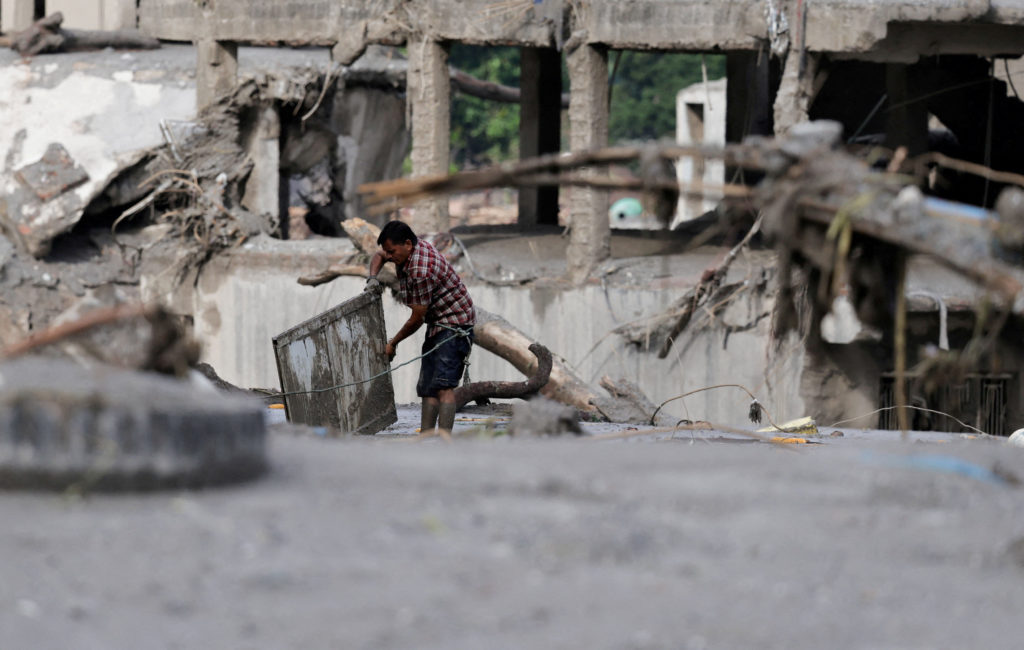
A glacier collapse along the Nepal–China (Tibet) border produced a torrent of water and mud that swept through communities, killing large numbers and leaving many people missing. PBS reported a glacier collapse that produced a torrent several stories high and said rescue teams were searching for hundreds of missing people, with more than 1,300 reported missing in early counts. NPR reported at least 1,500 missing, said many of the missing were foreign tourists, and described entire villages having been swept away. Reporting is preliminary and counts differ between outlets as rescue operations and verification proceed.
Source and Framing Analysis
Both supplied reports agree on the central occurrence: a glacier collapse triggered a sudden, large flood across communities on the Nepal–Tibet border and generated an urgent rescue response. Differences appear in emphasis and early numeric estimates. PBS emphasizes the glacier collapse as the immediate trigger and the scale of the torrent and reports more than 1,300 missing in initial tallies; NPR provides a higher missing-person estimate (at least 1,500), highlights that many missing may be foreign tourists, and uses language about entire villages being swept away. These discrepancies are typical in fast-developing disasters: initial counts come from different local sources or rescue teams and may be revised as access, identification, and coordination improve. Neither excerpt supplied a detailed technical explanation of the exact physical mechanism (for example, whether a glacial lake outburst, icefall, or downstream damming was the proximate cause) nor a consolidated official casualty list. Early framing focuses on human loss and urgency, which is appropriate for mobilizing aid but leaves technical, accountability, and longer-term implications unresolved.
Free every morning
Get the Daily Briefing
The stories shaping today—sourced carefully and considered through Scripture. No outrage bait.
Confirm by email. Unsubscribe at any time.
How sources covered this story
Sanctuary separately assesses reporting quality and alignment with Christian virtues. The virtues assessment considers truthfulness, dignity, compassion, justice, peacemaking, humility, and care for vulnerable people. It does not assess a publisher's faith or reward religious language.
Compare 2 reports
Rank 1
PBS NewsHour: Catastrophic floods kill hundreds in Nepal and Tibet, with more than 1,300 missingReporting 78/100Virtues 82/100
- Distinctive contribution
- Identifies a glacier collapse as the trigger, describes a water-and-mud torrent several stories high, and notes ongoing rescue-team searches along the Nepal–China border.
- Framing
- Frames the incident as a sudden, catastrophic natural event triggered by a glacier collapse that produced a powerful, destructive torrent; emphasizes immediate search-and-rescue activity.
- Omissions or uncertainty
- No specific casualty or missing-person counts in the excerpt, no named or attributed official sources, limited geographic precision beyond 'Nepal–China border,' no timeline beyond 'a day earlier' and the weekday, and no details on affected communities or numbers of displaced people.
- Why these scores
- Concise and specific about likely cause and immediate response; uses concrete, descriptive language. Deducts for lack of sourcing/attribution in the excerpt and absence of quantitative information and precise locations that would increase verifiability. Neutral, non-sensational language that highlights rescue efforts and human suffering; respects dignity by focusing on facts and response rather than spectacle. Score modestly above average for clear, responsible phrasing despite limited detail.
Reporting 72/100Virtues 76/100
- Distinctive contribution
- Gives a specific missing-person figure (at least 1,500), notes that many missing are foreign tourists, and says entire villages were swept away, emphasizing scale and possible international implications.
- Framing
- Frames the event as a large-scale, deadly flood with significant numbers missing and substantial destruction (entire villages lost), drawing attention to foreign tourists among the missing.
- Omissions or uncertainty
- No attribution or source for the 1,500 figure in the excerpt, no confirmed death toll or rescue/response details, no breakdown of nationalities or locations, and no timestamps or official verification noted — the count appears preliminary.
- Why these scores
- Provides a specific, consequential figure and a clear statement of impact, which is useful; however the excerpt lacks sourcing/attribution and contextual detail about how the estimate was obtained, making the claim provisional in the supplied text. Language is factual and highlights vulnerable groups (foreign tourists) without sensationalism; treats the event as a humanitarian emergency. Score reflects responsible tone but limited empathetic detail or context in the excerpt.
Biblical Reflection
Christians should first respond with lament, practical care, and truthful restraint. Theologically, this calamity calls for humility before creation and concrete mercy toward suffering neighbors—local residents and foreigners alike. Avoid amplifying unconfirmed casualty figures or speculative cause claims while prioritizing life-saving help, shelter, and dignified long-term recovery. Support coordinated, vetted relief efforts, pray for responders and survivors, and sustain attention beyond the news cycle to advocate for preparedness and protection of vulnerable communities.
Scripture in context
- 1Luke 10:25–37 (Parable of the Good Samaritan) — Jesus tells a parable in response to a question about who qualifies as 'neighbor.' The story contrasts religious pretense with concrete mercy shown by an unlikely rescuer to a wounded stranger. — The passage calls Christians to cross cultural, national, and ethnic lines to provide immediate, practical mercy to victims; faithful love is shown in costly, hands-on care—an orientation that should shape church and individual responses to this disaster.
Faithful Response
Immediate priorities: support life-saving rescue, medical triage, emergency shelter, clean water, and family-reunification efforts. De-prioritize premature public dissemination of unverified casualty figures.
Information ethics: avoid sharing or amplifying specific casualty or missing-person counts unless they are clearly attributed to named authorities; flag numbers as provisional.
Giving and partnerships: direct financial and volunteer support through established, reputable relief organizations with presence or proven access in Nepal and the Himalayan border region. Prefer groups that coordinate with local authorities and church networks.
Pastoral care: churches should create space for lament, prayer, and honest grief; offer specific guidance for congregational giving and avoid sensational narratives that exploit victims.
Long-term solidarity: commit to sustained assistance for reconstruction, trauma counseling, rebuilding livelihoods, and supporting resilience measures (early-warning systems, safe-housing, glacial monitoring) rather than one-off visibility gestures.
Advocacy and humility: press for transparent investigation of the event’s physical causes and for public investments that protect vulnerable communities, while resisting quick causal judgments that politicize suffering.
Free every morning
Get the Daily Briefing
The stories shaping today—sourced carefully and considered through Scripture. No outrage bait.
Confirm by email. Unsubscribe at any time.
Reflection and Discussion
- 1How can our congregation balance urgent rescue support with long-term commitments to recovery and resilience for affected communities?
- 2What steps will we take to ensure our public communications are truthful, cautious, and do not amplify unverified figures?
- 3In what practical ways can we partner with local churches and credible humanitarian groups to prioritize the most vulnerable—local residents, seasonal workers, and foreign visitors—without imposing outside agendas?
- 4How does the call to neighborliness in the Good Samaritan shape our response across national and cultural boundaries in this crisis?
Sources
Reporting links are evidence inputs; Sanctuary News' biblical reflection is commentary.
- 1.At least 1,500 missing after deadly Nepal-Tibet floodsadditional_reporting
- 2.Catastrophic floods kill hundreds in Nepal and Tibet, with more than 1,300 missingprimary_reporting