News Summary
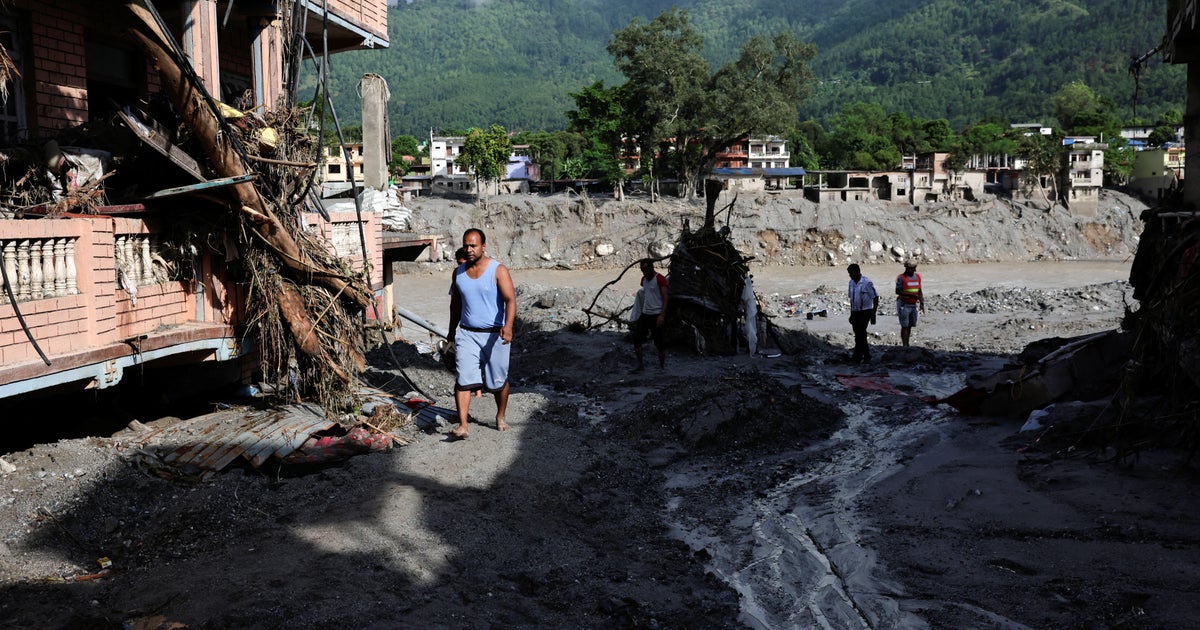
Catastrophic flash floods swept down valleys in Nepal and adjacent Tibetan border areas, destroying villages and causing mass casualties and displacement. Rescue teams recovered survivors and helicopters evacuated stranded people as authorities in Nepal and Chinese (Tibetan) areas mounted emergency responses. Reporting describes rescue operations pausing at one point when a lake formed at the border began to overflow and later resuming. Casualty and missing-person figures are still evolving in available reports: one outlet used the term "hundreds" killed and emphasized helicopter evacuations (CBS News), while another reported at least 469 dead and more than 1,300 missing and cited satellite imagery and early scientific commentary suggesting a high‑altitude glacier collapse or a debris dam near Gyirong as a possible trigger (The Guardian). These technical explanations and casualty totals are provisional and under review.
Source and Framing Analysis
Two supplied items together shape the developing picture but differ in emphasis and sourcing. The CBS News excerpt is concise and rescue‑focused: it independently corroborates that catastrophic flash floods occurred, that rescuers recovered survivors, and that helicopters lifted stranded people to safety; its supplied text used the phrase "hundreds" killed but did not supply an exact attribution for casualty totals or technical cause. The Guardian excerpt provides greater numeric specificity (reporting at least 469 dead and more than 1,300 missing) and an explanatory angle — describing a lake formed when a wall of mud and debris hit the border hub of Gyirong and citing satellite imagery and early scientific interpretation (including a possible glacier collapse). However, the Guardian excerpt in the supplied text did not attribute the figures or the causal hypothesis to a named official agency within the excerpt, and it presented the scientific explanation as preliminary. In short: CBS strengthens the immediate rescue narrative (including airborne evacuation); The Guardian supplies scope and a provisional cause. Important caveats: casualty counts and technical causes are evolving and should be treated as early, potentially revisable information until official counts and peer‑reviewed or formally attributed scientific findings are available.
Free every morning
Get the Daily Briefing
The stories shaping today—sourced carefully and considered through Scripture. No outrage bait.
Confirm by email. Unsubscribe at any time.
How sources covered this story
Sanctuary separately assesses reporting quality and alignment with Christian virtues. The virtues assessment considers truthfulness, dignity, compassion, justice, peacemaking, humility, and care for vulnerable people. It does not assess a publisher's faith or reward religious language.
Compare 2 reports
Reporting 72/100Virtues 78/100
- Distinctive contribution
- Gives numeric estimates of dead and missing, names Gyirong (Tibet) as a focal point, and describes the formation and overflow of a border lake caused by a wall of mud and debris as the mechanism for the catastrophic flash floods.
- Framing
- Widespread cross‑border catastrophe caused by sudden hydrological/geomorphological failure; emphasis on large-scale destruction and ongoing rescue.
- Omissions or uncertainty
- Excerpt lacks source attribution for casualty counts and cause (which agencies or officials provided the numbers), no precise timeline beyond 'Wednesday', no detail on rescue capacity or international aid, and the text is a truncated newsletter hook suggesting further detail elsewhere.
- Why these scores
- Supplies important numbers and a plausible causal description that substantially advance understanding. The supplied excerpt is a newsletter summary and omits sourcing and fuller context; vivid language ('obliterated villages') is strong but not evidently sensational. Overall solid for a brief dispatch but would benefit from explicit attribution and fuller detail. Centers human harm (deaths, missing) and the destructive process, conveying seriousness and empathy. Language is vivid but principally descriptive rather than exploitative; it encourages concern for victims and attention to causes, aligning with truthfulness and care for vulnerable people. Lacks explicit calls for justice or aid but does not violate dignity or fairness.
Reporting 75/100Virtues 75/100
- Distinctive contribution
- Affirms active rescue operations including helicopter evacuations and frames both Nepal and China as racing to respond; provides a succinct summary of immediate life‑saving actions.
- Framing
- Humanitarian emergency / urgent rescue operations with an international (Nepal–China) response.
- Omissions or uncertainty
- No precise casualty numbers or breakdown (deaths vs. missing), no locations beyond countries, no timeline or attribution of figures, no explanation of cause or scale of destruction, no named agencies or sources.
- Why these scores
- Clear, concise reporting of rescue activity and broad casualty scale appropriate for a brief lead. Lacks specific sourcing, exact figures, location detail, and context, but accomplishes the purpose of a short news update responsibly and without sensationalism. Neutral, factual language that centers victims and rescue efforts (compassion, care for vulnerable people). It avoids dehumanizing language or sensational fear. Limited moral or justice framing, but overall respectful and truthful.
Biblical Reflection
This is first and foremost a human tragedy that calls for immediate compassion and careful truth‑telling. Christians are called to grieve with those who grieve and to respond with practical aid: prioritize life‑saving support (search‑and‑rescue, emergency medical care, shelter, food, clean water) through vetted humanitarian partners. Public statements and congregational teaching should show humility: avoid amplifying provisional technical claims (for example, early suggestions of a glacier collapse) as settled fact until experts confirm them. Long‑term obligations include advocating for and supporting investments in early‑warning systems, resilient infrastructure, and climate‑adaptation measures that reduce vulnerability in high‑altitude and mountain communities. The Christian posture should combine mercy with humility and a commitment to justice for those disproportionately exposed to hazards, centering the dignity and needs of survivors over speculation.
Scripture in context
- 1Luke 10:25–37 (Parable of the Good Samaritan) — Jesus tells this story in answer to a question about who qualifies as a 'neighbor.' The Samaritan — an outsider to the injured man's community — stops to care for a stranger, providing immediate aid and ongoing support. — The parable models concrete mercy: tending wounds, transporting a person to safety, and funding recovery. In the present disaster, it directs Christians to prioritize practical care for people in acute danger regardless of nationality or background, to support rescue and relief through accountable channels, and to avoid politicizing provisional technical claims when the primary moral call is to help the vulnerable now.
Faithful Response
Give to reputable, vetted humanitarian organizations already operating in Nepal and cross‑border relief networks, prioritizing funds earmarked for search‑and‑rescue, emergency medical care, shelter, food, water, and longer‑term rebuilding.
Pray for victims, rescuers, medical teams, and leaders; cultivate humility in public statements and discourage the congregation from sharing unverified casualty figures or technical explanations until they are confirmed by authorities or scientific investigators.
Coordinate with diaspora and local faith communities to ensure culturally appropriate, accountable aid and to connect affected families with support and information.
Organize practical congregation actions (collections for relief, volunteer support for vetted coordination centers, phone‑based assistance for relatives of affected people) and provide pastoral care and spaces for lament.
Advocate to governments, donors, and development partners for investments in early‑warning systems, resilient mountain infrastructure, and community‑centered adaptation measures that reduce future vulnerability.
Free every morning
Get the Daily Briefing
The stories shaping today—sourced carefully and considered through Scripture. No outrage bait.
Confirm by email. Unsubscribe at any time.
Reflection and Discussion
- 1How does the command to love our neighbor shape what we do first when a disaster strikes communities far from our own?
- 2What responsibilities do we have to combine immediate mercy with longer‑term efforts to reduce structural vulnerability in places exposed to geological and climate‑linked hazards?
- 3How can congregations and Christian organizations avoid amplifying provisional scientific claims while still seeking to understand and respond responsibly to the causes of disasters?
Sources
Reporting links are evidence inputs; Sanctuary News' biblical reflection is commentary.
- 1.Nepal flash flood rescue efforts intensify as death toll risesprimary_reporting
- 2.First Thing: Rescue efforts continue as death toll rises in Nepal-Tibet floodadditional_reporting