News Summary
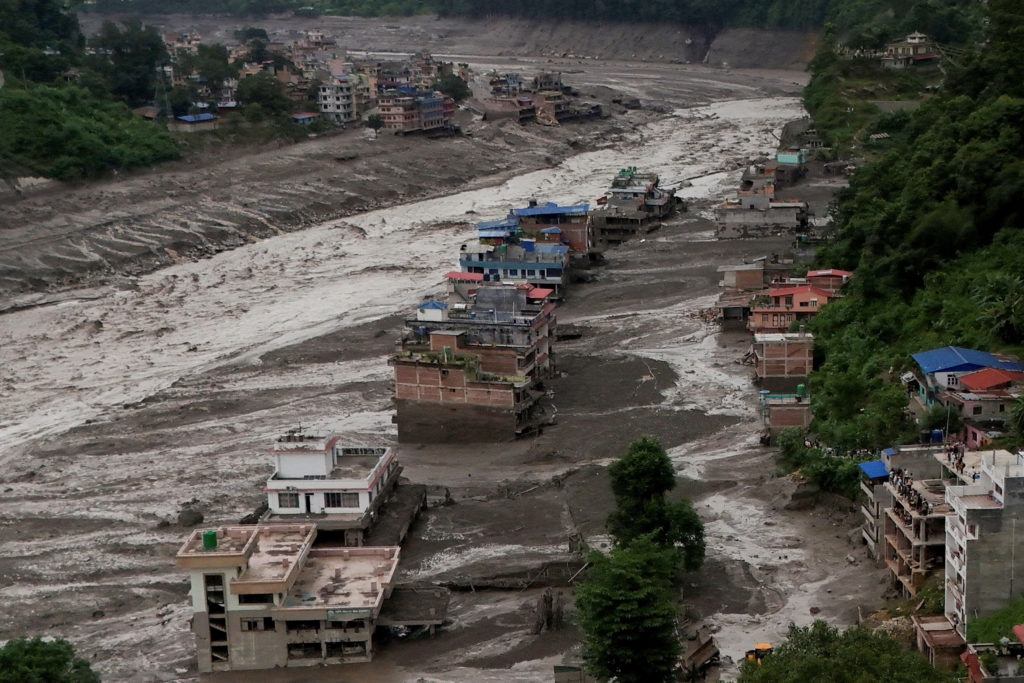
Multiple reputable outlets report that sudden flash floods struck a Himalayan border area between Nepal and China, producing mass casualties, many people missing, and major disruption to travel and rescue operations. PBS NewsHour reports at least 98 people killed and hundreds missing after waters swept through communities and halted travel. NPR reports a lower early fatality figure (at least 75) while emphasizing expert commentary linking such extreme mountain floods to climate vulnerability. CBS News reports villages were swept away and that Americans are among the hundreds reported missing. Reporting is preliminary: casualty totals, the immediate triggering mechanism, and nationality/location breakdowns remain unsettled as authorities continue search-and-rescue and compile official lists.
Source and Framing Analysis
Core agreement across PBS, NPR and CBS: a sudden, deadly flash flood hit a Nepal–China border area and caused large numbers of dead and missing, with rescue operations and travel disrupted. Distinctive framings: PBS supplies a specific early death toll and situates the event as occurring on the Nepal–China border while noting travel halts; NPR gives a lower early figure and foregrounds expert commentary linking such events to climate vulnerability (contextual frame); CBS emphasizes on-the-ground destruction (villages swept away) and notes that Americans are among the missing (audience-specific detail). Implications: differing early casualty figures are common in rapidly evolving disasters and require caution until authorities publish consolidated counts; expert commentary about climate vulnerability is valuable context but is interpretive rather than a settled proximate cause for this single event; nationality and location-by-location tallies remain provisional and should be treated as such until verified lists are released.
Free every morning
Get the Daily Briefing
The stories shaping today—sourced carefully and considered through Scripture. No outrage bait.
Confirm by email. Unsubscribe at any time.
How sources covered this story
Sanctuary separately assesses reporting quality and alignment with Christian virtues. The virtues assessment considers truthfulness, dignity, compassion, justice, peacemaking, humility, and care for vulnerable people. It does not assess a publisher's faith or reward religious language.
Compare 5 reports
Reporting 76/100Virtues 78/100
- Distinctive contribution
- Frames the disaster within climate-change context and cites experts noting regional vulnerability to extreme weather.
- Framing
- Contextual and interpretive — connects the event to broader climatic trends and expert opinion rather than focusing solely on immediate facts.
- Omissions or uncertainty
- Does not name the experts, present evidence or mechanisms connecting this specific event to climate change, or quantify the degree of attribution in the excerpt.
- Why these scores
- Valuable contextual framing that responsibly cites 'experts' and regional vulnerability; would score higher if the excerpt included named sources or specifics about the scientific basis for the linkage. Contextualizing disasters in systemic causes can promote justice and care for vulnerable communities by pointing to prevention and policy implications; tone is sober and expert-driven rather than alarmist.
Reporting 80/100Virtues 72/100
- Distinctive contribution
- Reports a specific death toll (at least 98), lists categories among the missing (tourists, workers, others), and notes travel disruption.
- Framing
- Straightforward and factual; uses 'at least' language to indicate provisionality of the death toll.
- Omissions or uncertainty
- Does not state the cause (glacier collapse vs. avalanche vs. flash flood) in this excerpt; timing limited to 'Wednesday' without date; no source attribution in the excerpt.
- Why these scores
- Provides concrete casualty figures and operational impacts with cautious language. Good balance of specificity and appropriate uncertainty, though the excerpt lacks attributions and fuller context on cause. Conveys human cost clearly and uses cautious language that respects uncertainty; highlights varied affected groups, supporting dignity and concern for victims.
Reporting 78/100Virtues 72/100
- Distinctive contribution
- Specifies that Americans are among the missing and characterizes the event as flash floods sweeping away villages and hundreds of tourists (attributed to authorities).
- Framing
- Attributive and cautious — includes 'authorities say' to indicate sourcing and avoid asserting unverified specifics as fact.
- Omissions or uncertainty
- No numeric totals for missing or dead are given in the excerpt; location described generally as 'a valley' without precise geography; source of flooding not named.
- Why these scores
- Useful, targeted reporting for affected audiences; uses attribution to authorities which is responsible. Lacks hard numbers in the excerpt but otherwise clear and responsibly framed. Identifies specific vulnerable individuals (foreign nationals, Americans), which supports dignity and potential aid responsiveness. Tone is sober and non-exploitative.
Rank 4
PBS NewsHour: Catastrophic floods kill hundreds in Nepal and Tibet, with more than 1,300 missingReporting 80/100Virtues 70/100
- Distinctive contribution
- Attributes the event to a glacier collapse and describes the flood as a torrent of water and mud several stories high; confirms active rescue searches for hundreds missing.
- Framing
- Neutral, descriptive — presents physical cause and observable effects in straightforward language without sensational adjectives; identifies timing (a day earlier) and rescue activity.
- Omissions or uncertainty
- No precise casualty numbers or breakdown by nationality; no sourcing for the glacier-collapse claim; ‘several stories high’ is qualitative and not quantified.
- Why these scores
- Clear, specific on cause and scale and notes ongoing rescue efforts; concise and factual. Limited by lack of numeric casualty breakdown, named sources, or corroborating detail for the glacier collapse. Factual and non-exploitative; highlights rescue activity which aligns with compassion and care for victims. Lacks explicit attention to vulnerable populations or humanitarian needs, but overall respectful and sober.
Reporting 75/100Virtues 70/100
- Distinctive contribution
- Gives a concrete missing-persons estimate (1,500) and emphasizes that many missing are foreign tourists.
- Framing
- Direct and concise; frames the figure as a minimum ('at least') and makes the foreign-tourist angle prominent.
- Omissions or uncertainty
- No source attribution for the 1,500 figure in the supplied excerpt; no fatality count, timing, or stated cause of the floods included here.
- Why these scores
- Provides a clear and consequential numeric estimate and highlights affected demographics; would be stronger with on-the-record sourcing for the figure and more contextual detail in the excerpt. Non-sensational and factual; noting foreign tourists may aid in mobilizing international assistance, reflecting concern for affected persons, but the excerpt lacks explicit humanitarian focus.
Biblical Reflection
Name the suffering honestly and respond with mercy. Christians should grieve with those who grieve, resist rushing to politicized or speculative conclusions, and prioritize concrete care: skilled rescue support, emergency shelter, medical aid, and long-term recovery centered on the dignity of survivors. Where systemic factors such as climate vulnerability or infrastructure failure may have increased risk, faithful witness combines truth-telling with justice-minded advocacy for adaptation and protection of the most vulnerable—calling for safer rebuilding without weaponizing the tragedy. Pastoral practice should begin in lament and presence, move toward practical neighbor-love (rescue, shelter, medical and material support), and maintain humility about facts that are still being settled.
Scripture in context
- 1Psalm 46 — A communal song that names God as refuge amid upheaval and natural disaster. — This passage invites calm confidence and calls Christians to be instruments of comfort and shelter for those facing sudden loss; it grounds compassionate service without denying grief.
- 2Matthew 25:31-46 (parable of the sheep and goats) — Jesus teaches about final accountability and identifies care for neighbors—feeding the hungry, sheltering strangers, visiting the imprisoned—as marks of faithful discipleship. — Applied to disaster response, the passage highlights that practical care—rescue, shelter, medical aid, and ongoing support for displaced families—is central to Christian obedience and neighbor-love.
Faithful Response
Pray specifically for victims, rescuers, medical teams, and affected communities; hold vigils and lament with those who mourn.
Support reputable, established relief organizations working on the ground (prefer monetary gifts through vetted partners; follow partner guidance about material aid and volunteer needs).
Offer pastoral presence and grief support to diaspora communities and congregation members who have ties to the affected region.
Avoid amplifying unverified casualty counts or speculative causes on social media; share only corroborated information from official sources or vetted relief partners.
Coordinate with ecumenical and humanitarian networks to channel help efficiently and avoid duplicative or poorly targeted interventions.
Advocate for just rebuilding and disaster preparedness that prioritizes safety and dignity for the most vulnerable.
Free every morning
Get the Daily Briefing
The stories shaping today—sourced carefully and considered through Scripture. No outrage bait.
Confirm by email. Unsubscribe at any time.
Reflection and Discussion
- 1How does our calling to love the neighbor shape how we prioritize aid, attention, and theological framing after this disaster?
- 2How should our community hold together urgent pastoral care and long-term advocacy (for example, on climate adaptation or safer infrastructure) without rushing to causal claims before facts are clear?
- 3What practices of humility and restraint should we adopt when sharing early casualty reports to avoid amplifying unverified claims or causing additional harm?
Sources
Reporting links are evidence inputs; Sanctuary News' biblical reflection is commentary.
- 1.At least 98 killed and hundreds missing after flash floods in Nepal and Chinaprimary_reporting
- 2.At least 75 killed and hundreds missing after flash floods in Nepal and Chinaadditional_reporting
- 3.Scores killed, Americans among hundreds missing after Nepal flash floodsadditional_reporting