News Summary
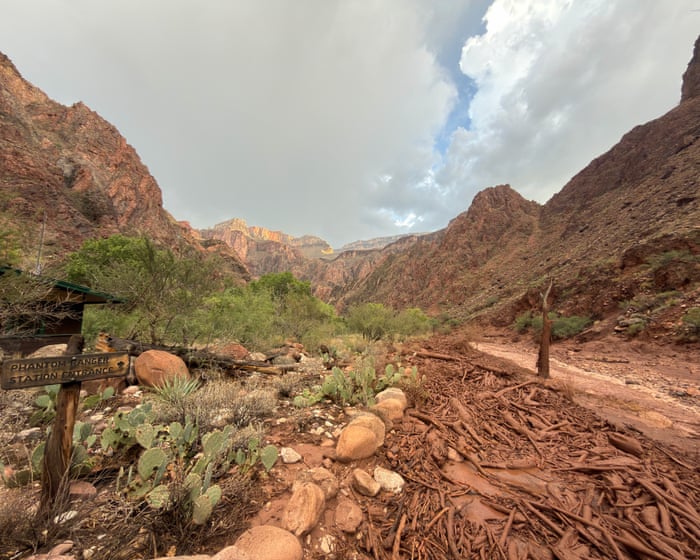
A sudden flash flood struck Bright Angel Canyon and the Phantom Ranch area of Grand Canyon National Park on Saturday. Early official and media reporting attributed figures to the National Park Service and state authorities: at least one confirmed death in early reports, roughly 15 people missing or unaccounted for, and large-scale evacuations and rescues (including airlifts) underway. Rescue operations and counts remained provisional across supplied reports; one supplied excerpt reported two fatalities, producing an unresolved discrepancy in early tallies. No victim identities, medical causes, or final search outcomes were available in the provided materials.
Source and Framing Analysis
Reporting from PBS NewsHour, The Guardian, and CBS News converges on the core facts: a flash flood struck Bright Angel Canyon/Phantom Ranch; there were confirmed fatalities reported in early accounts; multiple people were missing or unaccounted for; and dozens were evacuated with search-and-rescue activity in progress. PBS NewsHour supplied operational detail about more than 60 people being airlifted and the Park Service asking the public for information on unaccounted-for hikers. The Guardian pieces added place-based and historical context about Phantom Ranch and Bright Angel Creek and in different supplied excerpts reported both one and two deaths and varying rescue totals (e.g., 'nearly 80' rescued in one excerpt). CBS News corroborated location and scale and described the floods as 'violent.' Differences among sources are primarily numeric and reflect the fluid, early-reporting stage of the incident rather than conflicting narratives about what happened. Given that variation, treat casualty and missing-person counts as provisional and prioritize updates from the National Park Service or state authorities.
Free every morning
Get the Daily Briefing
The stories shaping today—sourced carefully and considered through Scripture. No outrage bait.
Confirm by email. Unsubscribe at any time.
How sources covered this story
Sanctuary separately assesses reporting quality and alignment with Christian virtues. The virtues assessment considers truthfulness, dignity, compassion, justice, peacemaking, humility, and care for vulnerable people. It does not assess a publisher's faith or reward religious language.
Compare 6 reports
Reporting 78/100Virtues 78/100
- Distinctive contribution
- Confirms two bodies recovered and cites the National Park Service saying 'more than a dozen' remain missing.
- Framing
- Straightforward factual reporting with explicit attribution to the National Park Service for the missing-person tally.
- Omissions or uncertainty
- Doesn't include rescue/evacuation counts (e.g., airlifted numbers) or location-specific historical context in the supplied excerpt.
- Why these scores
- Concise and responsibly attributed to the National Park Service; supplies a clear, verifiable fact (two bodies recovered). Limited detail in the excerpt but appropriately cautious. Measured and factual reporting that avoids sensationalism, attributes to an official source, and centers the human toll without dehumanizing language.
Reporting 78/100Virtues 78/100
- Distinctive contribution
- Reports that more than 60 people were airlifted from the canyon and that the National Park Service asked the public to report information about hikers/campers still unaccounted for.
- Framing
- Operational and community-focused — highlights rescue logistics (airlifts) and the Park Service's outreach to the public.
- Omissions or uncertainty
- The supplied excerpt does not state the fatality count explicitly (despite the title), and it lacks more precise attribution for the airlift count beyond 'the flooding ... led to' wording.
- Why these scores
- Useful operational detail and clear description of rescue actions and public outreach. The excerpt responsibly communicates the scope of the rescue without overstating certainty. Focuses on rescue efforts and community assistance; measured, helpful tone that supports dignity and care for those affected.
Reporting 80/100Virtues 75/100
- Distinctive contribution
- Reports 'nearly 80' rescued and two confirmed dead; notes a US Border Patrol technical search team deployment is expected; emphasizes renewed weather threats that could produce additional debris flows/flash floods or rock falls.
- Framing
- Urgent, operational—emphasizes ongoing search-and-rescue activity and the continuing danger posed by forecasted storms.
- Omissions or uncertainty
- Does not specify precisely where rescues occurred (e.g., Phantom Ranch/Bright Angel Creek) or provide named official sources/quotes in the supplied excerpt; 'nearly 80' is approximate and 'expected' Border Patrol deployment signals uncertainty about whether deployment is confirmed.
- Why these scores
- Clear, timely facts and useful operational detail. The excerpt uses cautious language ('expected', 'nearly') which responsibly signals uncertainty. The supplied text does not show direct attribution for the rescue/death figures within the excerpt, but overall reads as responsibly reported. Non-sensational, life- and safety-focused reporting that highlights rescue efforts and ongoing danger. Shows concern for victims and responders; uses measured language that respects uncertainty.
Reporting 75/100Virtues 75/100
- Distinctive contribution
- Names Phantom Ranch and Bright Angel Creek as the affected location, gives cultural/historical context about Phantom Ranch's role as a refuge, and reports 'Two dead and at least 15 missing.'
- Framing
- Contextual and evocative — situates the disaster in a historical and geographic setting (mythic/refuge image of Phantom Ranch) while reporting casualties.
- Omissions or uncertainty
- The excerpt does not provide sourcing for the casualty numbers, nor operational details about rescue efforts or broader evacuation/rescue counts.
- Why these scores
- Valuable contextual reporting that helps readers understand place and risk. The excerpt balances human-interest history with incident reporting, though the casualty figures in the excerpt are not accompanied by detailed sourcing in the supplied text. Provides humane context about the location and the people affected; tone is respectful and non-exploitative, combining concern for victims with cultural/historical awareness.
Reporting 75/100Virtues 75/100
- Distinctive contribution
- Confirms the event affected Bright Angel Canyon/Phantom Ranch and that the National Park Service reported more than a dozen people missing.
- Framing
- Direct, incident-focused reporting emphasizing the severity of the flash floods and the resulting missing-person situation.
- Omissions or uncertainty
- The supplied excerpt does not give exact rescue or evacuation counts (beyond 'more than a dozen missing') and does not mention the Border Patrol deployment or historical context.
- Why these scores
- Clear, attributed reporting of core facts. The excerpt is brief and corroborative; it responsibly conveys the severity but offers limited operational detail in the supplied text. Measured language, emphasis on human impact and official sourcing, avoided sensationalist wording in the supplied excerpt.
Rank 6
The Guardian: One dead and 15 people may be missing after flash flood in Arizona’s Grand CanyonReporting 74/100Virtues 74/100
- Distinctive contribution
- Reports 'One person died' and 'about 15 people were missing or unaccounted for' and that more than 60 people had been evacuated as of Sunday morning — a figure that conflicts with other supplied excerpts reporting two deaths or different rescue totals.
- Framing
- Newsupdate-style reporting focused on immediate casualty and evacuation counts; highlights uncertainty in early tallies.
- Omissions or uncertainty
- Does not explain why its death toll differs from other reports (timing/official updates), and the supplied excerpt does not show direct sourcing for the death count beyond 'according to the National Park Service' phrasing in the excerpt.
- Why these scores
- Reputable outlet providing timely figures and location specifics; the discrepancy with other supplied excerpts reflects the fluidity of early reporting rather than clear negligence. The excerpt responsibly uses approximations ('about 15'), but lack of explicit sourcing in the supplied text lowers the score slightly. Tone is factual and cautious about numbers during an unfolding emergency. The excerpt centers human impact and evacuation efforts without sensationalism, showing appropriate restraint and concern.
Biblical Reflection
This sudden disaster highlights human vulnerability and the limits of control. A Christian response names grief honestly while resisting sensational speculation and centers mercy, justice, peacemaking, humility, dignity, and care for vulnerable neighbors. Practically, that looks like steady accompaniment of survivors and families, supporting and cooperating with official responders rather than inserting unmanaged volunteers, protecting the privacy and dignity of victims, and offering trauma-informed pastoral care. Combine lament with concrete aid—prayer together with vetted giving, discernment about where to volunteer without burdening responders, and humility about what congregations can safely do.
Scripture in context
- 1Psalm 46 (general reference) — A biblical psalm that combines honest communal lament with trust in God amid natural calamity. — When sudden natural disasters come, the psalm’s movement—naming chaos without minimizing fear and pointing the community toward refuge and steadiness—can shape congregational lament and motivate practical assistance without panic or passivity.
- 2Matthew 25:31–46 (general reference) — Jesus’ teaching about final accountability that frames faithful life in terms of tangible care for the vulnerable. — This teaching invites evaluating disaster response by asking whether our faith produces concrete acts of care and protection for those most affected—rescuers, displaced visitors, injured people, and grieving families—not only expressions of sympathy.
Faithful Response
Pray publicly and privately for those killed, missing, injured, rescuers, and park staff; name grief honestly and resist premature certainty about details.
Give through established, vetted relief channels (official park-affiliated funds, recognized disaster-relief organizations) rather than responding to unverified solicitations.
Coordinate with local emergency authorities and the National Park Service before deploying volunteers; follow official guidance on safety, access, and needs to avoid adding burden to responders.
Provide trauma-informed pastoral care and referrals to mental-health professionals for survivors, evacuated visitors, park employees, and first responders; prioritize listening, presence, and confidentiality.
Protect privacy and dignity: do not circulate unconfirmed names, photos, or speculative accounts on social media; defer to official statements for casualty and missing-person confirmations.
Plan for sustained assistance (meals, respite for responders, vetted financial support) rather than only one-off gestures; institute safeguards and training for any congregation members who might assist directly.
Free every morning
Get the Daily Briefing
The stories shaping today—sourced carefully and considered through Scripture. No outrage bait.
Confirm by email. Unsubscribe at any time.
Reflection and Discussion
- 1How does our faith shape concrete action—beyond words—when neighbors face sudden natural disaster?
- 2What responsibilities do we have to support rescue workers, park staff, and displaced visitors both immediately and over the long term?
- 3How can our community resist sensationalism, protect victims’ dignity and privacy, and still call others to help responsibly?
- 4In what ways does this event call us to humility about human control and to practical stewardship of safety and creation?
Sources
Reporting links are evidence inputs; Sanctuary News' biblical reflection is commentary.
- 1.One dead and 15 people may be missing after flash flood in Arizona’s Grand Canyonprimary_reporting
- 2.1 dead, around 15 missing after Grand Canyon hit by flash floodsadditional_reporting