News Summary
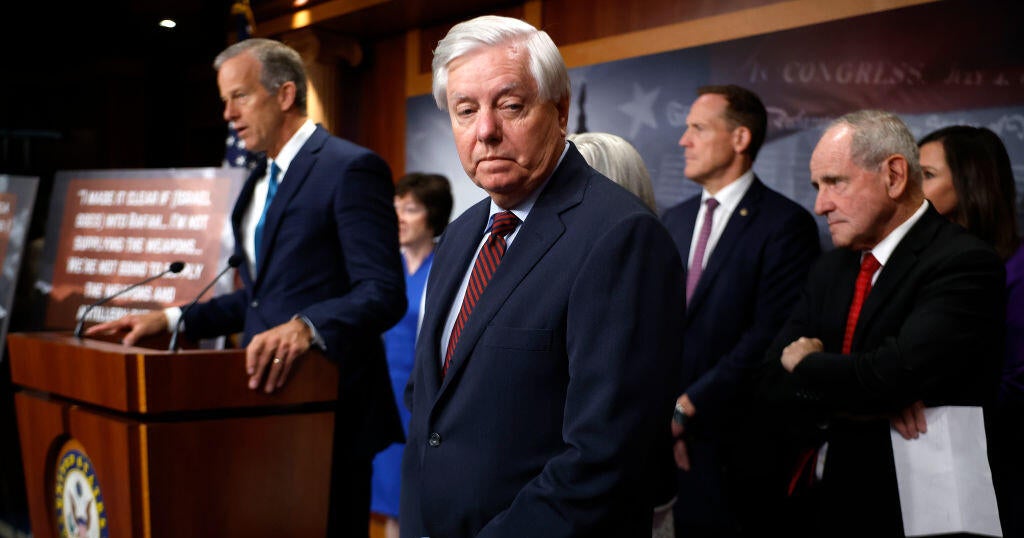
Congress returned to Washington with limited days before an extended August recess and the midterm elections, while lawmakers and staff were responding to the sudden death of Sen. Lindsey Graham. Republicans face internal division, driven in part by former President Trump's push for the SAVE America Act, a voting-regulations bill lacking sufficient Senate support. Hardline House Republicans, led by Rep. Anna Paulina Luna, blocked much floor business until the measure advances in the Senate; Speaker Mike Johnson attempted to merge the bill with the NDAA but hardliners rejected that move. Trump has urged a reconciliation package that would include the SAVE Act and $350 billion in defense funding, though key Senate Republicans have expressed skepticism. Graham’s role as Senate Budget Committee chair and his leadership on prior reconciliation efforts complicates prospects after his death. The Senate plans confirmation hearings this week for Acting Attorney General Todd Blanche and Jay Clayton for director of national intelligence; Graham’s death and absences like Sen. Mitch McConnell’s reduce GOP margins on committees. Lawmakers are also wrestling with the lapse of Section 702 of the Foreign Intelligence Surveillance Act (expired June 12) and its national-security implications; plans to extend or reform it have been delayed amid disputes, including over a temporary intelligence nominee. The NDAA faces additional opposition tied to the Iran war authorization and Democratic objections. Separately, senators had reached an agreement with the White House on a new Russia sanctions package championed by Graham; colleagues urged moving that bill forward as a memorial to him.
Biblical Reflection
This report documents partisan maneuvering, legislative logjams, and the human reality of sudden loss in public life. The article’s factual framing is largely straightforward, but it centers conflict and leverage—how policy priorities are often advanced through pressure tactics, bill attachments, and political bargaining. From a Christian perspective, the scene calls for careful discernment: grief over a colleague’s death rightly invites honor and continuity for constructive causes (such as the sanctions effort Graham advanced), yet the mixing of unrelated policy demands (attaching elections measures to defense or surveillance bills) risks prioritizing factional advantage over the common good. Christians should watch for where truth, humility, and neighbor-love are displaced by power plays that can erode public trust, threaten civil liberties, or weaken national security. The tensions around surveillance authority and defense funding are substantive moral questions—balancing protection of the vulnerable and the nation with respect for privacy and rule-of-law oversight. Pray for lawmakers to show courage to compromise where needed, the humility to put citizens ahead of party, and justice in how policies affect those with the least voice.
Scripture in context
This outlook does not yet include contextual Scripture citations. Do not treat a general biblical theme as an exegetical conclusion.
Faithful Response
No prescribed response is offered. Consider the reflection prompts below in your own church context.
Reflection and Discussion
- 1Are urgent legislative tactics (attaching unrelated measures to must-pass bills or using reconciliation) serving the common good or advancing partisan advantage?
- 2How do we weigh national security needs against civil liberties in ways that respect both neighbors' safety and their rights?
- 3In what ways might the politicization of mourning and memorial legislation help or harm the pursuit of truthful, lasting policy outcomes?
Sources
Reporting links are evidence inputs; Sanctuary News' biblical reflection is commentary.
This outlook currently relies on fewer than two linked sources. Broaden verification before teaching from it.
- 1.Original reportprimary