A little more detail
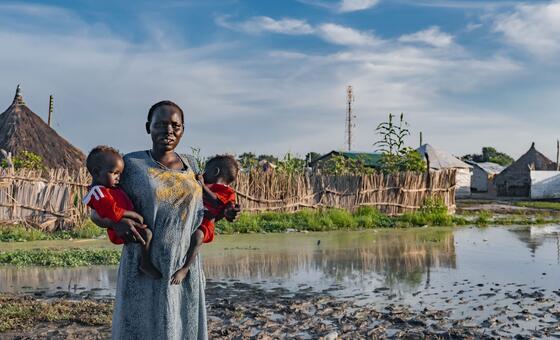
UN News reports that UN analysis estimates climate change could push 141 million additional women into extreme poverty. The piece says about 1.5 billion women and girls live in so-called “climate hotspots,” where high exposure to hazards—cyclones, droughts and other extremes—intersects with insecure work and entrenched gender inequality.
The supplied excerpt attributes these global figures to UN analysis but does not include methodological details, a timeframe, confidence intervals, or a regional breakdown. Those omissions limit evaluation of precision and policy implications.
Source and Framing Analysis
The report is framed around UN analysis and emphasizes the gendered nature of climate vulnerability. It highlights two large aggregated figures (141 million additional women in extreme poverty; ~1.5 billion women in climate hotspots). Key framing choices link environmental hazards with insecure work and structural gender inequality. The supplied excerpt omits methodological detail (models, timeframe, definitions, regional splits) and appears to be a single-source report, so independent corroboration and methodological transparency are needed to judge precision and policy relevance.
How sources covered this story
This section compares the evidence and framing in linked reports. The Christian assessment above addresses the conduct described in the story; it does not grade a journalist’s faith or the morality of covering an event.
Compare 1 reports
Reporting 72/100
- Distinctive contribution
- Quantifies the population affected (more than one in three women and girls, roughly 1.5 billion) and characterizes the term “climate hotspots” as places where high exposure to hazards (cyclones, droughts) intersects with insecure employment and entrenched gender inequality.
- Framing
- Framed as a global, large-scale problem emphasizing the intersectionality of climate hazard exposure and structural gendered socioeconomic vulnerability; uses the term “so‑called ‘climate hotspots’” to introduce a conceptual category linking environmental risk and social inequality.
- Omissions or uncertainty
- The excerpt does not say who produced the estimate, the underlying data or methodology, the time period, confidence intervals or margins of error, nor any regional breakdowns or definitions criteria for “climate hotspots.” It also lacks explicit attribution (report, study, agency) and does not specify policy implications or recommended actions.
- Why these scores
- The excerpt is concise and informative, giving a clear, attention‑grabbing statistic and a useful conceptual linkage. However, it omits sourcing and methodological detail that would be needed to evaluate the claim’s reliability and scope; those omissions limit the report’s usefulness for rigorous analysis, so a solid but cautious score is appropriate.
Christian commentary · About the conduct described in this story
Biblical Reflection
calls religious practice toward concrete justice—freeing the oppressed, feeding the hungry, sheltering the vulnerable—which grounds a Christian response to climate-driven poverty. The passage redirects worship into acts that protect human dignity rather than letting ritual substitute for care.
Practically, respond with prayer, concrete support for vetted groups that build women’s climate resilience, and civic engagement for policies that reduce hazard exposure and strengthen secure livelihoods. This analysis is based on UN reporting; see the citedPassages, clergyGuidance, and the impact score (82) for further context.
Scripture in context
- 1 — The prophet contrasts empty ritual fasting with tangible acts of justice: loosening chains, sharing food, sheltering the homeless, and not ignoring kin in need. — This passage asks believers to translate concern into deeds that relieve oppression and vulnerability—an appropriate lens for responding to climate-driven poverty that disproportionately affects women.
A suggested response for readers, separate from the assessment above.
Faithful Response
Give to vetted organizations that build women’s climate resilience in hotspots and support policies that reduce hazard exposure and expand secure livelihoods.
Reflection and Discussion
- 1How does this report change how I see climate risk as a justice issue rather than just an environmental problem?
- 2What assumptions about vulnerability or responsibility does this expose about our society and our church?
Sources
Reporting links are evidence inputs; Sanctuary News' biblical reflection is commentary.
This is a developing, single-source report. Details may change as more reporting becomes available.
- 1.Climate crisis could push 141 million more women into extreme povertyofficial_document