News Summary
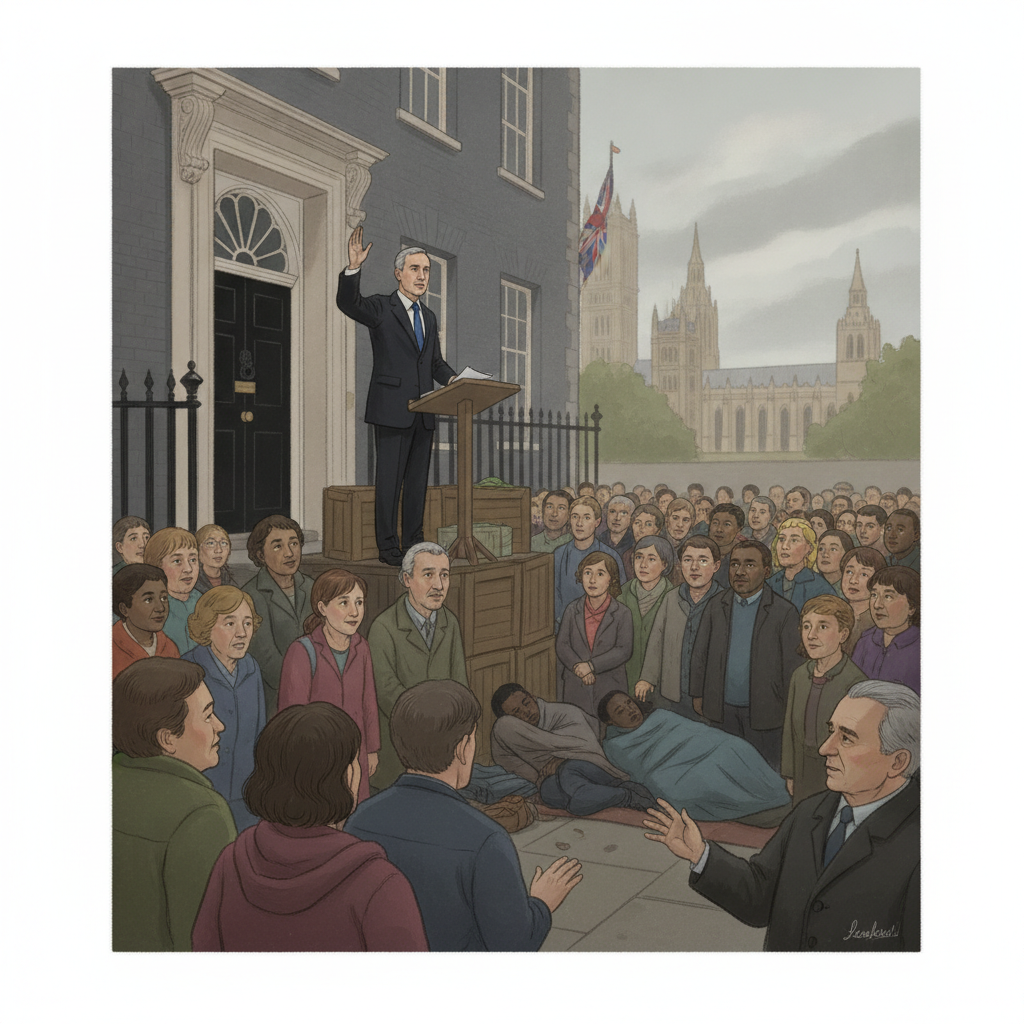
Facts: Andy Burnham delivered a public address outside 10 Downing Street as the United Kingdom's new prime minister, saying politicians 'need to be better.' He pledged to end people sleeping on the streets and promised a 'circuit breaker' to correct systemic problems he described as having arisen since the 1980s. Corroborating reporting notes he called for a shift of power away from London and that his prior criticism of Donald Trump could complicate relations with the U.S. Uncertainty: The speeches reported contain broad commitments but do not include specifics on policy mechanisms, timelines, budgets, or legislative plans to achieve the homelessness pledge.
Source and Framing Analysis
Both supplied sources report Burnham's first speech and major themes. PBS focuses on his remarks at Downing Street and the homelessness pledge; Fox emphasizes his call for decentralized power and mentions possible diplomatic friction tied to his past comments about Trump. Material uncertainties include how 'end[ing] street sleeping' will be operationalized, what the 'circuit breaker' entails, and the timeline and funding for reforms. Where the coverage introduces speculation (e.g., diplomatic friction), that is framed as interpretive context rather than direct policy reporting.
Free every morning
Get the Daily Briefing
The stories shaping today—sourced carefully and considered through Scripture. No outrage bait.
Confirm by email. Unsubscribe at any time.
Biblical Reflection
The speech signals a commitment to compassionate, justice-oriented priorities—especially addressing street homelessness—and a rhetorical call for political humility. From a Christian perspective, the emphasis on ending street sleeping aligns with biblical concerns for the poor and vulnerable and the call to pursue justice and care. At the same time, the speech contains broad promises without publicly available policy detail or timelines; Christians should welcome the stated intent while demanding concrete, accountable plans that protect the dignity of neighbors. The reporting also highlights political framing (decentralization of power, possible diplomatic friction), reminding believers to hold leaders accountable in truth and charity rather than uncritically applauding rhetoric or reflexively opposing political opponents.
Scripture in context
- 1Matthew 25:31-46 — Jesus speaks about the final judgment, identifying care for 'the least'—feeding the hungry, welcoming strangers, clothing the naked—as service to him; the passage contrasts acts of mercy with neglect in the life of discipleship. — This passage underlines why Christians should take political promises to address homelessness seriously: caring for those who sleep on the streets is a concrete expression of neighbor-love and spiritual responsibility, and it calls the church to both evaluate and partner with public measures that protect human dignity.
- 2Isaiah 1:17 — The prophet calls Israel to learn to do good, seek justice, defend the oppressed, and care for orphans and widows; the critique addresses religious form without ethical action. — Isaiah's call reminds the church that words of reform must be accompanied by concrete justice; leaders' speeches should be weighed against policies that tangibly defend and restore vulnerable people.
Faithful Response
Pray regularly for the new prime minister, policymakers, and those affected by homelessness, asking for wisdom, compassion, and accountability.
Engage local ministries that serve people sleeping rough—volunteer, give, and build relationships that inform advocacy.
Advocate for specific, evidence-based policies (housing-first models, funding for shelters and support services) while asking public leaders for transparent plans and measurable targets.
Hold leaders to their promises with charity: celebrate genuine progress, critique failures respectfully, and avoid partisan demonization.
Free every morning
Get the Daily Briefing
The stories shaping today—sourced carefully and considered through Scripture. No outrage bait.
Confirm by email. Unsubscribe at any time.
Reflection and Discussion
- 1Does this announcement prompt you to seek concrete information (timelines, budgets, accountability measures) rather than accept rhetoric alone?
- 2How might the church both welcome a leader’s promises of care for the vulnerable and simultaneously remain a faithful watchdog for justice?
- 3What partnerships between church and civic institutions would most effectively help end street sleeping in our local context?
Sources
Reporting links are evidence inputs; Sanctuary News' biblical reflection is commentary.
- 1.Andy Burnham says politicians 'need to be better' in first speech as UK's new prime ministerprimary_reporting
- 2.Andy Burnham takes over as UK prime minister, calls for 'new political model'additional_reporting