News Summary
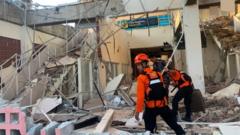
On 15 August 2026 a magnitude-7.7 earthquake struck off eastern Indonesia. Multiple outlets report at least 38 people killed, with collapsed buildings and panic reported in affected areas. Search-and-rescue operations are reported on Flores island. Authorities issued a tsunami warning that was later lifted after monitoring. Some coverage notes a separate magnitude-6.4 quake struck a different part of Indonesia the same day. Casualty, damage, displacement, and operational totals remain provisional as authorities complete assessments.
Source and Framing Analysis
Independent mainstream outlets converge on the core facts: a 7.7-magnitude quake in eastern Indonesia with initial reports of dozens of deaths. NPR emphasizes human impact (deaths, collapsed buildings, public panic) and context about the region’s seismic risk. BBC supplies a location-specific operational detail, reporting search-and-rescue on Flores island. CBS reports that a separate magnitude-6.4 quake occurred elsewhere the same day, widening the possible geographic footprint of needs. PBS NewsHour contributed two distinct details in later reporting: a higher early casualty figure in one headline and a public-safety detail that a tsunami warning was issued and later lifted after monitoring showed no significant sea-level change. Where sources diverge, those differences are attributable to rapidly changing, provisional information from different moments and local reports. The main reporting risk is treating single-source or early casualty counts as final; single-source operational details should be treated as useful but tentative until confirmed by consolidated official statements or multiple independent confirmations.
Free every morning
Get the Daily Briefing
The stories shaping today—sourced carefully and considered through Scripture. No outrage bait.
Confirm by email. Unsubscribe at any time.
How sources covered this story
Sanctuary separately assesses reporting quality and alignment with Christian virtues. The virtues assessment considers truthfulness, dignity, compassion, justice, peacemaking, humility, and care for vulnerable people. It does not assess a publisher's faith or reward religious language.
Compare 4 reports
Reporting 86/100Virtues 88/100
- Distinctive contribution
- Documents the issuance of a tsunami warning, the urging of coastal residents to move to higher ground, and the later lifting of the warning after the meteorological agency reported no significant sea-level changes.
- Framing
- Attributes actions to authorities and names the meteorological agency as the source of monitoring information; frames the warning as precautionary and then rescinded based on monitoring results.
- Omissions or uncertainty
- The excerpt does not include casualty figures, timing details, precise location of the tremor relative to specific islands or towns, or direct quotes from officials or residents; it does not describe the monitoring methods or give a timeline for when the warning was lifted.
- Why these scores
- The snippet uses clear attribution (authorities; Indonesia's meteorological agency), describes actions (warning issued, residents urged to move, warning lifted) and expresses the basis for lifting the warning (monitoring showed no significant sea-level changes). It is cautious and specific about agency actions. Lacks some granular detail (exact times, which agency spokesperson) but performs well for the apparent purpose of describing immediate hazard response. The language emphasizes protection of life (urging people to move to higher ground) and conveys responsible caution and later corrective action (lifting warning when monitoring didn’t show a threat). The excerpt avoids sensationalism and centers safety, aligning well with care for the vulnerable and truthfulness.
Reporting 72/100Virtues 85/100
- Distinctive contribution
- Reports that search and rescue efforts are under way specifically in Flores, an island in eastern Indonesia, pinpointing one area of active response.
- Framing
- Concise, factual: frames the situation as an ongoing search-and-rescue operation and provides clear geographic identification (Flores, eastern Indonesia). No sensational language in the supplied sentence.
- Omissions or uncertainty
- Does not give numbers of rescuers or survivors found/expected, timing, the scale of damage in Flores versus elsewhere, casualty figures in this excerpt, or sources for the search-and-rescue information.
- Why these scores
- The sentence is clear and properly limited in scope (describes an operation underway). It is short on detail and attribution in the supplied text, but as a concise situational update it is adequate. Lack of specifics prevents a higher score. Mentioning active search and rescue highlights concern for survivors and human dignity. The tone is measured and focused on helping those affected, reflecting compassion and care without sensationalism.
Reporting 78/100Virtues 80/100
- Distinctive contribution
- Corroborates magnitude (7.7) and casualty count (at least 38), notes collapsed buildings and public panic, and situates the event in a region 'prone to deadly quakes.'
- Framing
- Presents the event as a powerful quake with human consequences (deaths, structural collapse, panic) and adds a brief contextual statement about regional seismic risk; casualty number is expressed cautiously ('at least 38').
- Omissions or uncertainty
- The excerpt does not specify precise locations affected, timing, sources for casualty or damage figures, whether a tsunami warning was issued or lifted, or details about rescue efforts.
- Why these scores
- The passage uses cautious language ('at least'), reports multiple aspects (magnitude, deaths, structural collapse, public reaction) and offers useful context about the region's seismicity. It lacks attribution in the supplied text and specific local details, but otherwise reads as responsible brief reporting. The excerpt treats human consequences seriously (deaths, collapsed buildings, panic) and avoids sensational phrasing; mentioning regional vulnerability demonstrates humility and context. It neither exploits suffering nor omits attention to human impact.
Reporting 75/100Virtues 75/100
- Distinctive contribution
- Identifies that two separate quakes — 7.7 and 6.4 — struck different parts of the country on the same day, implying multiple affected areas rather than a single isolated event.
- Framing
- Concise factual statement presenting magnitudes and indicating geographic spread ('different parts of the vast country'), with brief casualty mention in the headline but no attribution or additional context in the supplied excerpt.
- Omissions or uncertainty
- The snippet lacks attribution for the magnitudes, timing, locations of the epicenters, details about casualties or damage distribution between the two quakes, and any official responses or warnings.
- Why these scores
- The line is clear and communicates a materially important fact (two quakes, magnitudes). However, the supplied excerpt is terse and lacks attribution, precise location/timing details, and supporting context. For a brief summary this is acceptable but not deeply informative. The wording is factual and non-sensational. It does not dehumanize victims and implies seriousness by noting fatalities, but the excerpt lacks explicit emphasis on safety or humanitarian response; overall it is neutral and responsible.
Biblical Reflection
A Christian response centers truth, mercy, justice, peacemaking, humility, and sustained care for vulnerable neighbors. Theologically and pastorally this means: (1) prioritize accurate, cautious reporting and avoid amplifying unconfirmed figures; (2) practice mercy by supporting life-saving relief, medical and trauma care, and immediate humanitarian needs; (3) uphold justice and dignity by partnering with local leaders and vetted Indonesian or regional relief agencies and respecting survivors’ agency; (4) practice humility and peacemaking by avoiding politicization, attention-seeking responses, or quick theological answers that minimize suffering; and (5) commit to sustained accompaniment — financial support, pastoral presence, trauma counseling, and advocacy for long-term rebuilding rather than one-off gestures.
Scripture in context
- 1Psalm 46:1-3 — A communal lament and declaration of God's presence and refuge amid upheaval and collapsing foundations. — In the quake’s aftermath this passage can comfort mourners and motivate the church to be a tangible place of refuge and practical care — offering shelter, presence, and steady support while acknowledging grief and fear.
- 2Matthew 25:35-40 — Jesus’ teaching that acts of mercy toward those in need—feeding, sheltering, visiting—are central to faithful discipleship. — This frames disaster response as integral to Christian discipleship: providing food, shelter, medical aid, and accompaniment to survivors is a primary expression of faithful witness and neighbor-love.
Faithful Response
Pray regularly and specifically for the injured, families of the dead, rescuers, and local leaders coordinating relief efforts.
Give to reputable relief organizations and verified Indonesian or regional partners; prioritize financial gifts over unsolicited material donations to avoid logistical burdens.
Coordinate through existing denominational or church disaster-response channels and partner with established local agencies to respect local leadership and survivors’ agency.
Avoid sharing unverified casualty figures, images, or location details on social media; instead amplify verified requests from local authorities and humanitarian groups.
Prepare pastoral care resources for congregants affected by the news and plan for sustained support (trauma counseling, rebuilding assistance, advocacy for vulnerable groups).
Free every morning
Get the Daily Briefing
The stories shaping today—sourced carefully and considered through Scripture. No outrage bait.
Confirm by email. Unsubscribe at any time.
Reflection and Discussion
- 1How does Scripture shape our immediate priorities—prayer, giving, advocacy—when we hear of mass suffering far from home?
- 2In what ways can our response honor the dignity and agency of local communities rather than imposing our own assumptions?
- 3What systems (church relief networks, partnerships with local agencies) should we strengthen now so we can respond more effectively and humbly in future crises?
Sources
Reporting links are evidence inputs; Sanctuary News' biblical reflection is commentary.
- 1.Powerful 7.7-magnitude earthquake kills at least 38 in Indonesiaprimary_reporting
- 2.Magnitude 7.7 earthquake strikes off Indonesia's coast, killing at least 38additional_reporting
- 3.Two powerful earthquakes hit Indonesia on same day, at least 38 deadadditional_reporting