News Summary
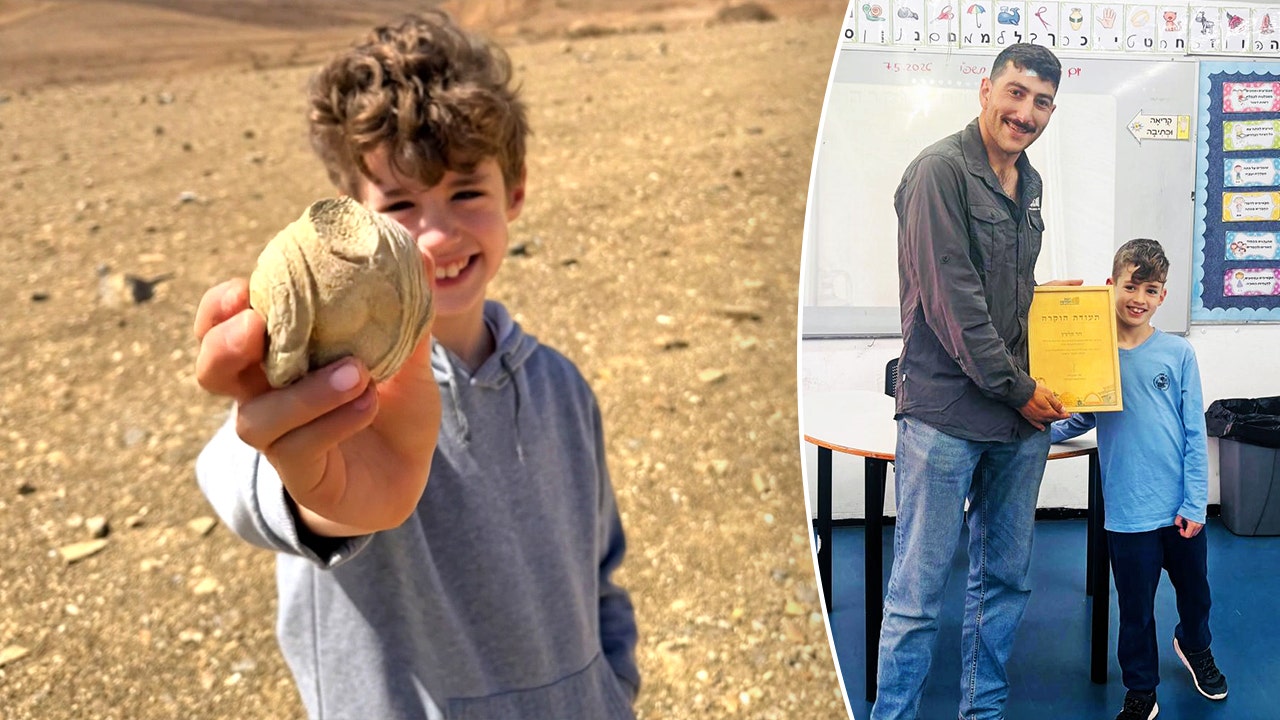
An 8-year-old boy, Dor Wolynitz of Rehovot, Israel, found a small 6x6 cm stone fragment while visiting the Ramon Crater in the Negev Desert during a family weekend organized by a paratrooper reserve unit. The Israel Antiquities Authority (IAA) dated the fragment to the fourth century A.D. (roughly 1,700 years old) and identified it as part of a Roman-era statuette carved from a phosphorite-type mineral native to the Negev. The fragment shows part of a human figure draped in a heavy mantle (himation) with carefully sculpted folds; archaeologists say it may represent the Roman god Jupiter or the Nabatean god Zeus-Dushara. Because it was a surface find, researchers note it likely moved from its original context by erosion or other natural processes; desert conditions can both preserve and expose artifacts. The family reported the find to Israel’s National Treasures Department; the boy received a certificate for handing it over and for civic responsibility. IAA staff described the piece as a relatively rare example of this style in the region and noted its local manufacture and the intersection of classical and local artistic traditions along ancient trade routes.
Biblical Reflection
This story highlights honest stewardship and civic responsibility—parents and child reported the find to authorities rather than attempting to keep or sell it. From a Christian perspective, archaeological finds like this invite humility: they remind us that the land and peoples have long histories and that God’s purposes and human cultures unfold over long times. The artifact itself represents beliefs and artistic skill of people who did not know the God revealed in Scripture; Christians should avoid romanticizing or syncretizing ancient pagan objects with Christian truth. Journalistic framing here emphasizes novelty and human interest (a child’s discovery) more than archaeological context; readers should note that surface finds lack controlled context and so cannot by themselves answer larger historical questions. Use the moment as an opportunity to teach truth and stewardship—honoring the past, caring for cultural heritage, and maintaining clear distinctions between archaeological interest and theological truth. Finally, the family's example models Christian virtues (truthfulness, respect for community resources, humility) that witness quietly to neighbors regardless of differing worldviews.
Scripture in context
This outlook does not yet include contextual Scripture citations. Do not treat a general biblical theme as an exegetical conclusion.
Faithful Response
No prescribed response is offered. Consider the reflection prompts below in your own church context.
Reflection and Discussion
- 1How does the article’s focus on novelty and human interest shape our understanding of the find compared with what archaeologists can actually conclude from a surface fragment?
- 2Are we tempted to treat ancient religious artifacts as endorsing their beliefs, or can we hold historical curiosity while affirming the truth of the gospel?
- 3What does the family's decision to report the find teach us about Christian witness in public life—especially regarding honesty and stewardship of shared cultural heritage?
Sources
Reporting links are evidence inputs; Sanctuary News' biblical reflection is commentary.
This outlook currently relies on fewer than two linked sources. Broaden verification before teaching from it.
- 1.Original reportprimary